How to choose thermal riflescope for hunting
Quick Answer
To choose the right thermal riflescope for hunting, focus on sensor resolution, detection range, magnification, and durability. Match the scope’s features to your hunting terrain and style — whether dense forests, open fields, or predator control. Consider models that balance image clarity, power, and comfort for extended use.Introduction
Thermal riflescopes have transformed modern hunting, allowing hunters to detect game in complete darkness and challenging weather conditions. However, with so many models and specifications available, choosing the right scope can feel overwhelming. The key is to understand which features actually impact performance in real hunting scenarios. This buying guide will walk you through the most important factors — from sensor resolution and detection range to durability and power options. You’ll also see how different Pulsar models, like the Thermion 2 and Talion series, are designed to suit specific hunting styles. With this knowledge, you can confidently select the best thermal riflescope for your needs.
Why choosing the right thermal riflescope matters
Selecting the right thermal riflescope is not just about convenience. It directly influences the accuracy and ethics of your hunt.
A reliable scope ensures clear target acquisition, allowing you to identify an animal’s size, age, and condition before shooting. This is crucial for ethical hunting, where precision shooting minimizes suffering and helps hunters make responsible decisions in the field. Responsible use of technology is part of ethical hunting practices.
The right optic also enhances adaptability to different environments. Whether you’re scanning dense woodland or open terrain at long range, a properly chosen scope provides the clarity and responsiveness needed to detect game quickly and track movement with confidence. By matching the device to your terrain and hunting style, you increase effectiveness and safety during night hunts.
We’ll get into more details very soon, but if you want a quick overview from an expert, here’s what Riccardo Tamburini, an Italian hunter with years of experience, has to say:
When a hunter asks me for a suggestion about the thermal scope to purchase, my first questions are: What is your average target distance? What is the detecting quality you need? And what is your budget?
Often, the best compromise is the XQ class, because it’s a mid-price scope family with great performance. Thanks to its high native magnification, it can be considered a good “ATV” scope. You’ll sacrifice a bit of field of view, but you’ll have a scope which guarantees you great precision and a good level of detecting quality.
If the hunter doesn’t have a budget limit, his scope is one of the Thermion 2 LRF 60 family, actually the state of the art of a thermal scope. It’s a bit heavy, so I suggest always using it from the stand because it could be difficult to manage it when stalking.

Key features to consider in a thermal riflescope
Choosing a thermal riflescope comes down to understanding which specifications make the biggest difference in the field. While every hunter has unique needs, several universal features directly affect detection accuracy, image clarity, and shot precision.
Below, we break down the most important ones to evaluate before purchasing.
Sensor resolution and image quality
The thermal sensor is the heart of any riflescope. A 320×240 sensor provides a basic level of detail and is sufficient for short- to mid-range hunts. In contrast, a 640×480 sensor delivers four times more pixels and, therefore, sharper images and more precise identification at longer distances.
Pixel pitch also matters: smaller pixels (12 μm) improve clarity and compactness, while larger ones (17 μm) can enhance sensitivity in low-contrast conditions.
Combined with NETD (Noise Equivalent Temperature Difference), which measures how well the sensor detects subtle temperature differences, these specifications determine how clearly you can see in fog, rain, or humid environments.
A lower NETD value (e.g., <20 mK) means superior sensitivity and image quality. Keep in mind that there is a difference between sensor NETD and system NETD. The first one shows the ‘raw’ sensor value. The second, also known as sNETD, shows the same value after image processing. You can read more about it here.
Detection range and field of view
A scope’s detection range, often expressed in meters, indicates how far it can detect heat signatures. On the other hand, recognition range defines the distance at which you can classify the target as a deer, boar, or predator.
In open terrain, long detection ranges of 1,500–2,000 meters allow for early spotting, but in dense forests, a wide field of view (FOV) is often more valuable than sheer distance. A wider FOV lets hunters scan quickly and maintain awareness of moving targets in tight spaces, making the balance between range and FOV crucial to match your terrain.
Magnification and zoom types (optical vs digital)
Magnification determines how closely you can observe your target, but the type of zoom is equally important. Optical zoom provides true image enlargement without loss of quality, while digital zoom magnifies the sensor’s pixels, which can reduce clarity at higher levels.
For long-range accuracy, a combination of moderate base optical magnification (e.g., 2x–4x) with smooth digital zoom extension works best. Hunters focusing on open plains may prefer higher base magnification, while those in woodland benefit from a lower base magnification for a wider FOV.
Read more: Scope magnification explained: Best zoom for hunting
Refresh rate and latency
Smooth tracking is essential when the game is on the move. A refresh rate of 30Hz can suffice for slower-paced hunting. Still, a 50 or 60Hz scope ensures fluid imaging and minimal latency, allowing you to follow fast-moving animals like coyotes or wild boar without motion blur. High refresh rates also reduce eye fatigue during extended use and improve real-time target acquisition.
Related: How to hunt coyotes at night
Reticle options and ballistics features
Modern thermal riflescopes go beyond imaging, offering customizable reticle patterns and integrated ballistics tools. Features such as a ballistic calculator and one-shot zeroing simplify setup and improve accuracy across varying distances.
Multiple reticle options allow hunters to adapt to personal preferences and specific hunting styles, whether prioritizing precision long shots or quick close-range engagements. Together, these functions transform the scope from a viewing tool into a complete shooting aid.
For some, features like these may become an afterthought. But our expert, Riccardo Tamburini, explains why they matter in real life:
Generally speaking, I’ve noticed that some hunters are lazy, and they prefer a skilled hunter to prepare the scope for their use. I spent a lot of hours at shooting range zeroing rifles of other hunters.
On the other hand, actually the software in a Pulsar scopes is very easy to use and anyone is able to zero their rifle in a handful minutes, shooting only two ammo.
Then, the possibility to match the scope with the Ballistic calculator is a great help, especially if the hunter is a reloader. But the library included is so wide that those who use the commercial ammos will find the right recipe for them, too (the app can be matched with all the daytime scopes on the market, too).
Now, you can also have a no-LRF scope to use the ballistic calculator, because you can set your scope with BC app simply use a LRF device like the Merger.
For step-by-step instructions, check our zeroing thermal riflescopes guide.
There is obviously a lot to consider when purchasing your thermal riflescope. It can feel overwhelming at the beginning, especially if this is your first device. When that’s the case, we advise you follow the professional’s guidance:
Talking about the most helpful features of a thermal riflescope, I think that the low value of sNETD plays an important role. It simply gives more details to better understand which kind of animal you have in front of you.
A big FOV is also important because when I’m frozen on an animal, I’ll always be able to see what is happening around the target. Latency is another important aspect, often undervalued by the hunters. A 0.5 seconds latency could make the difference between a shot well placed or a missed target. Especially during varmint hunting.

Matching thermal riflescope features to hunting scenarios
No two hunts are the same — and neither are the conditions that define them. The right thermal riflescope for dense woodland may differ greatly from the one suited for scanning open fields or controlling predators at night. Matching scope features to the environment and game you pursue ensures efficiency, comfort, and ethical results.
Here’s how Riccardo chooses his scope depending on situation:
Generally speaking, if you hunt in a wood, targeting a low-mid distance animal, the XP class (or higher) is the best for you. You’ll be able to get a lot of details like the nipples of a lactating boar female or the tusks of a great male. And you’ll always have a great field of view to scan the area around you (not easy with a scope mounted on a rifle); we are talking about a super dense environment, so a powerful device will be better.
In an open field, the XQ performs very well because the great base magnification helps to have a good image quality at mid distance, within 150-180 meters, which should be the limit in the nighttime shooting for 90% of the hunters.
It’s also true that a high-end device allows the hunter to adapt the scope to more different situations; a mid-price device has a lower application field. Only if you have very particular conditions, you’ll have to choose very particular devices like XG class, made for getting small targets at great distances.
Thermal riflescopes for close-range forest hunting
In dense forests, visibility is limited and targets often appear suddenly at shorter distances. Here, a wide field of view (FOV) matters more than maximum detection range.
Scopes with lower base magnification (2x–3x) and high sensitivity sensors (sNETD <20 mK) excel at picking out deer or wild boar moving quietly through cover. Compact and lightweight riflescopes, such as Pulsar’s Talion series, are ideal for mobile hunters who need quick reaction time and balance on the rifle during extended stalking.
Best choices for long-range open terrain hunts
Long-range detection becomes essential in open plains, farmland, or mountainous regions. A scope equipped with a 640×480 or higher resolution sensor, paired with a powerful optical zoom, provides the clarity needed for identifying animals at further distances.
Deer hunting across wide fields benefits from higher base magnification (4x or more), while integrated features like a laser rangefinder support precise shot placement. Pulsar’s Thermion 2 LRF models are designed for these conditions, combining high detection range with advanced ballistics calculators for confident long-range accuracy.
Adaptations for predator and hog hunting at night
Predator control and hog hunting often occur in total darkness, where speed and visibility are crucial. Fast refresh rates (50 or 60Hz) prevent motion blur when tracking running wild boar, while picture-in-picture and customizable reticle patterns help hunters stay on target.
Night visibility is enhanced by scopes with high-sensitivity sensors (<18 mK), which reveal heat signatures even in humid or foggy conditions. Compact scopes with long battery life, like the Talion XQ35 Pro, allow hunters to remain agile and effective during long night sessions without carrying heavy gear.
Pulsar’s latest addition, the Trail 3 LRF, takes a more structured approach by combining a compact, rail-mounted design with an integrated laser rangefinder and ballistic support, offering an alternative for professional predator and hog control in mixed terrain.
Read more: Best thermal scope for hog hunting
Read more: Best thermal scope for coyote hunting
Hunters who prefer handheld devices can explore our guide to the best thermal monoculars for hunting.
Durability and practical considerations
Beyond image quality and detection range, a thermal riflescope must withstand the demands of real hunting conditions. Durability, power management, and rugged design ensure the device remains reliable even after hours in the field and exposure to harsh environments. These practical factors often distinguish between a smooth hunt and missed opportunities.
Riccardo’s note:
One of the most important considerations to make when purchasing a thermal unit is that you’ll use it in very tough conditions: snow, rain, dense fog, extreme cold or hot conditions. Hunting near the sea is super hard because saltiness could be in the air even miles far from the sea. These are the greatest enemies for a digital device with electrical circuits inside. This is why it’s important to get an IPX certified unit (7 is better), tested one by one in the factory before being delivered to the warehouse.
Battery life and power options
Long hunts require dependable power. Many modern thermal scopes, like the Pulsar Talion series, offer up to nine hours of operation on a single charge. External battery packs or USB-C power banks can extend runtime, which is especially useful in cold weather where batteries drain faster.
Hunters should consider scopes with swappable batteries or flexible charging options to avoid interruptions during extended outings.
Recoil resistance and mounting systems
A thermal riflescope must be built to handle the shock of repeated recoil. High-end models are tested to withstand powerful calibers, ensuring consistent zero retention. Mounting systems also play a key role in both stability and flexibility.
Quick-release mounts allow hunters to switch optics efficiently, while multi-point prism mounts — found in compact designs like the Talion — ensure precise positioning without adding bulk.
Some hunters also prefer a rail-mounted, monoblock design for maximum structural rigidity. Pulsar’s latest addition, the Trail 3 LRF, combines this design with high recoil resistance and integrated ranging features, making it well suited for professional use where equipment reliability and zero retention are critical.
Read more: Trail 3 vs Talion Comparison
Weatherproofing and ruggedness (IPX Rating)
Hunting rarely happens in perfect weather, so waterproofing and rugged design are essential. Scopes with an IPX7 waterproof rating can withstand heavy rain and even brief submersion, protecting sensitive electronics.
Lightweight designs improve balance on the rifle and reduce fatigue during long stalks. Rugged magnesium alloy housings also shield against bumps, drops, and temperature extremes, ensuring the scope remains dependable in real-world conditions.

Pulsar thermal riflescope models to consider
Before you decide which features matter most, it helps to look at real riflescope options trusted by hunters worldwide. Pulsar offers two main series — Thermion and Talion — each designed for different hunting styles and conditions.
Before we go deeper into the differences, here’s Riccardo’s summary:
If the hunter goes hunting with an AR replica or a semiauto rifle, probably the best choice is the Talion, because it’s more compact and better suited for short barrel rifles. Talion is available in XQ and XG class to cover all the hunter’s needs.
I use a classic rifle, so my choice is the Thermion family; the Thermion is the state of the art in the Pulsar thermal scope offer: XQ class is probably the best quality/cost ratio device. I always suggest it to my friends.
If you are a professional hunter or a ranger, I think that the choice must be only the Thermion 2 LRF 60 family; it includes XP, XG and XL sensor devices and covers all the situations a hunter can go through during hunting. They are a real ATV devices, the most loyal companions when you need superb quality, great performances, robustness and reliability.
Below you’ll find what sets them apart and how to choose between them. For a side-by-side breakdown, read our detailed Talion vs Thermion comparison.
Pulsar Thermion series
The Pulsar Thermion series is designed for hunters who prefer the look and ergonomics of a traditional riflescope, but with the advantages of modern thermal imaging. These models combine high sensor resolution, extended detection ranges, and advanced features such as a built-in laser rangefinder in selected devices.
Thermion scopes are ideal for hunters seeking long-range precision and the handling of a classic optical scope, making them especially suited for deer hunting or open-terrain shooting.
Explore the full Pulsar Thermion series to find the right model for your hunting style.
Pulsar Trail 3 series
The Pulsar Trail 3 series features compact, rail-mounted thermal riflescopes built around a rugged monoblock design. With integrated laser rangefinding and ballistic support, Trail 3 is designed for reliable performance in demanding night hunting and predator control scenarios.
Explore the full Pulsar Trail 3 series to find the right model for your needs.
Pulsar Talion series
The Pulsar Talion series is a lightweight and compact solution, built for hunters who value mobility, versatility, and balance on the rifle.
Despite its smaller body, Talion riflescopes deliver excellent image quality, intuitive controls, and up to nine hours of battery life. Their streamlined design makes them a top choice for stalking hunts, predator control, or long sessions where carrying extra weight can be a disadvantage.
Explore the full Pulsar Talion series to find the right model for your hunting style.
Pulsar thermal riflescope model comparison
When comparing Pulsar thermal riflescopes, it helps to see how each model aligns with specific hunting needs. The table below highlights the Thermion and Talion series side by side, showing their design focus, detection range, and key features. Use it as a quick guide to match the right scope with your terrain, target species, and hunting style.
| Model | Design concept | Best for | Detection range | Key features |
|---|---|---|---|---|
| Thermion 2 LRF XL60 | Classic riflescope design | Mixed terrain, long-range hunting | ~2800 m | HD 1024×768 sensor, <20 mK sNETD, 2.5–20x magnification, integrated LRF, wide FOV |
| Thermion 2 LRF XG60 | Classic riflescope design | Long-range predator/varmint hunting in open terrain | ~2800 m | 640×480 sensor, 12 µm pixel pitch, 4–32x magnification, LRF, extended detection range |
| Thermion 2 LRF XP60 Pro | Classic riflescope design | All-weather hunting in humid or low-contrast conditions | ~1800 m | 640×480 sensor, <18 mK sNETD for fog/humidity, ballistic calculator, multiple reticles |
| Thermion 2 XQ50 Pro | Classic riflescope design | Versatile all-around scope for forest and mid-range hunts | ~1800 m | 384×288 sensor, smooth zoom, one-shot zeroing, customizable reticles |
| Talion XG35 | Compact riflescope | Lightweight, mobile setups for long stalks | ~1750 m | 640×480 sensor, wide FOV, multi-point prism mount, ergonomic controls |
| Talion XQ35 Pro | Compact riflescope | Predator and hog hunting at mid-range | ~1350 m | 384×288 sensor, compact build, intuitive quick-release mount, up to 9h battery life |
| Trail 3 LRF XQ50 | Compact rail-mounted riflescope | Predator and hog control in challenging conditions | ~1800 m | High thermal sensitivity, monoblock design, integrated LRF, ballistic support, balanced compact build |
| Trail 3 LRF XR50 | Compact rail-mounted riflescope | Predator and hog control at bigger distances | ~2300 m | Balanced compact build, extended detection range, long battery life, ballistic support |
Dive deeper: Best Pulsar thermal riflescope for hunting

Final buying checklist for hunters
Before making your final choice, run through this quick checklist to ensure the riflescope you select fits your needs:
- Budget – Decide on a realistic budget and balance it against the most important features.
- Hunting terrain – Match scope design to your environment: wide FOV for forests, long detection range for open fields.
- Shooting distance – Consider your average engagement range to choose the right magnification and sensor resolution.
- User experience – Look for intuitive controls, ergonomic design, and weight balance for long hunts.
- Battery life – Ensure the scope lasts through your typical outings, with options for swappable or external power.
- Durability – Check for recoil resistance and IPX7 waterproof ratings to handle real hunting conditions.
- Extra features – Evaluate whether you need a laser rangefinder, ballistic calculator, or customizable reticles.
Riccardo advises to remember that unless you have unlimited budget, you will likely need to make some compromises. Therefore, you must really evaluate the situations where you’ll be using the device most:
Often, the budget drives the choice. Today, the possibility to use a thermal unit is super wide: different seasons, weather conditions or environments need a versatile unit. Generally speaking, the high end devices cover all possible situations.
If your wallet suggests you to spend less, you must have a clear idea about what will be your typical scenario: as i already wrote, XQ class covers many uses but you’ll have to find a compromise, giving up to some features: less FOV or a limited shooting distance could be some of them.
Conclusion: Choosing with confidence
Selecting a thermal riflescope is ultimately about confidence — in your equipment, your shot, and your overall hunting experience. By weighing factors like resolution, detection range, magnification, and durability, you can ensure the scope matches your terrain and style.
Pulsar’s Thermion series delivers traditional design with long-range precision, while the Talion line offers lightweight versatility for mobile hunts. No matter which option you choose, investing in the right scope means better target identification, more ethical shot placement, and greater adaptability to real-world conditions. With proven models trusted by hunters worldwide, Pulsar makes it easier to head into the field prepared for any scenario.
Check out Pulsar thermal optics for safe, effective night hunting

FAQ
Are thermal riflescopes legal for hunting?
Legality depends on local regulations. In some regions, thermal scopes are permitted for predator or hog control, while others restrict their use for big game. Always check hunting laws in your state or country before using thermal optics to ensure compliance and ethical hunting practices.
What to look for in a thermal rifle scope?
Key factors include sensor resolution, detection range, magnification, and battery life. Durability features such as recoil resistance and an IPX7 waterproof rating also matter. For precision, consider scopes with built-in laser rangefinders or ballistic calculators to support accurate target acquisition and ethical shot placement.
What size thermal scope do I need?
The right size depends on your hunting style. For mobile hunts in dense forest, a compact, lightweight scope offers better handling. For long-range shooting in open terrain, larger models with higher resolution sensors and extended magnification are more suitable. Balance portability with performance for the best results.
What is the best magnification for thermal riflescopes in hunting?
A base magnification of 2x–4x offers a good balance between a wide field of view and clear target detail. Hunters in open terrain may prefer higher magnification for long-range accuracy, while forest hunters often benefit from lower magnification, which allows quicker target detection and improved situational awareness.
How far can thermal riflescopes see animals?
Detection ranges vary by model, but modern thermal scopes can detect large animals at 1,500–2,300 meters or more. Recognition and identification distances are shorter, often 400–800 meters, depending on resolution and environmental conditions. Higher-end Pulsar models provide an extended range while maintaining image clarity for accurate decisions.
What’s the difference between thermal and night vision scopes?
Thermal scopes detect heat signatures, allowing hunters to see animals in complete darkness, fog, or heavy cover. Night vision amplifies ambient light, requiring some light source, such as moonlight or IR illuminators. Thermal is superior for detection, while night vision can show more detail in lit environments.
Learn more in our full guide: Thermal vs night vision: which to choose?
Is it better to use a thermal scope day or night?
Thermal scopes perform effectively both day and night, since they detect heat rather than light. At night, they provide a clear advantage for spotting game in darkness. During the day, they can highlight hidden animals in brush or shaded terrain, making them versatile for round-the-clock hunting use.
About the Expert
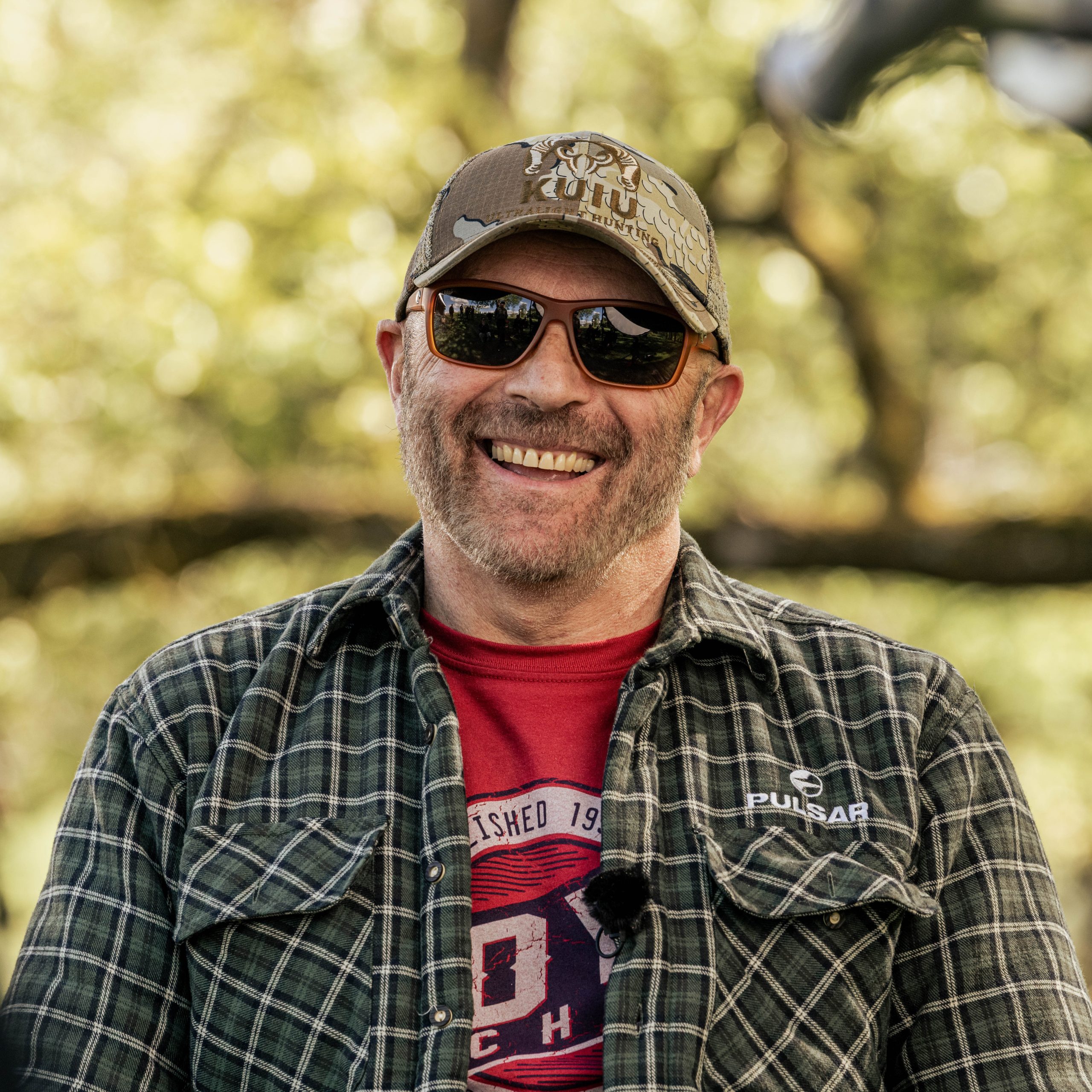
Riccardo Tamburini is a lifelong outdoorsman, hunter, fisherman, and professional wildlife photographer and filmmaker.
With over 35 years of experience across plains and mountains in Italy and abroad, he combines field expertise with a mechanical engineering background to explain the technology behind rifles, optics, and digital devices.