Best Pulsar thermal rifle scopes for hunting in 2026
Quick answer
If you just want the shortlist, here are our top picks from Pulsar’s 2026 lineup — matched to the way you hunt:
– Best overall / High-end performance → Thermion 2 LRF XL60
HD sensor, wide field of view, integrated LRF + ballistics. The all‑rounder for long‑range precision and scanning.
– Best for long‑range / Small targets → Thermion 2 LRF XG60
Highest base magnification (4×) and up to 32× zoom. Ideal for varmint and predator control at distance.
– Best for low‑contrast / Humid conditions → Thermion 2 LRF XP60
Low sNETD, or high thermal sensitivity, holds signatures in fog, rain, and coastal weather.
– Best mid‑range value → Thermion 2 XQ50 Pro / LRF XQ50 Pro
Balanced 50 mm optic with optional integrated LRF. A versatile choice for farmland and mixed terrain.
– Best compact premium → Thermion 2 XG50
640×480 sensor and 50 mm lens in a classic-design body. More reach and detail than XQ models without the bulk of a 60 mm.
– Best compact professional with LRF (NEW) → Trail 3 LRF
Pulsar’s newest thermal riflescope, combining a compact rail-mounted monoblock design with an integrated laser rangefinder and ballistic support.
• XQ50 — optimized for fog, rain, forests, and low-contrast hunting
• XR50 — designed for longer distances, open terrain, and precise shot placement Built for professional hunting, forestry, and pest control where reliability matters more than size alone.
– Best lightweight / Mobile hunting → Talion XG35
Compact, ergonomic, with a 640 sensor. Great for stalkers who want reach in a small package.
– Best for simplicity / Budget friendly → Talion XQ35 Pro
Sensitivity-focused, easy to operate in the field, and an overall great entry-level choice.
Find your local dealer

Pulsar lineup overview
In 2026, Pulsar’s thermal riflescope lineup answers the hunter’s most practical question: do you want maximum reach and ballistic automation, or do you want light weight and instant handling? The company divides its optics into two clear families, making that choice straightforward.
To make that choice clear, Pulsar now structures its riflescopes into three distinct families, each built around a different hunting reality.
Thermion 2 is the long‑range, feature‑rich platform. Built around large 50–60 mm objectives, high‑performance sensors, and dense micro‑OLED displays, these scopes are designed for detection, identification, and first‑shot precision at distance.
A hallmark of the Thermion 2 line is its new 60 mm series with its round, high‑resolution display and generous eyebox. Unlike the tunnel‑like view of many digital optics, the Thermion’s circular image fills the eyepiece naturally, giving hunters a traditional sight picture with comfortable head positioning. Combined with 65 mm of eye relief, it delivers both safety and a viewing experience that feels closer to premium glass than electronics.
Talion, by contrast, is the compact, ergonomics‑first family. With a 35 mm tube profile, swappable APS 5T batteries, and a tactile focus fin paired with a rapid‑swap battery system, Talion scopes are built for mobility and speed. These features let hunters adjust focus by feel alone and replace batteries in seconds, even in darkness.
Talion deliberately trades the last few hundred meters of detection for balance, simplicity, and fast handling — the qualities that matter most in woodland stalking, driven hunts, or bait work where opportunities appear and vanish quickly.
Trail 3 LRF is Pulsar’s newest riflescope family, created for hunters and professionals who want ballistic accuracy
and laser-assisted ranging in a more compact, rugged format. Designed as a rail-mounted monoblock, Trail 3 LRF integrates thermal imaging, a powerful laser rangefinder, and ballistic support into a single, field-ready system.
Rather than chasing maximum detection distance, Trail 3 LRF focuses on reliability in real hunting conditions. The XQ50 model is optimized for low-contrast environments such as fog, rain, and dense woodland, while the XR50 is built for longer shots across open terrain and mixed landscapes. This makes Trail 3 LRF a natural choice for professional hunting, forestry, and pest control, where consistency, durability, and fast decision-making matter more than sheer size.
For a second opinion, we turned to Freya Askjaer, a highly experienced Danish huntress. Here are the first things she believes you should know before picking a new thermal riflescope:
I’ve hunted long enough to know that thermal image quality is only as good as your habits behind the eyepiece. The best sensor in the world can’t fix sloppy technique. When I use a thermal scope, I keep the gain low, contrast mid, and palette simple. You don’t need it to look “pretty” — you need it to be readable.
I normally scan with both eyes open, right eye in the optic, left eye at the “real” world, always comparing. That contrast between digital and real vision keeps me anchored in the environment. When the picture suddenly blooms bright white in the field of view, I know it’s not a glitch. It’s an animal’s warm body. That discipline separates hunters from tourists with expensive gear.
Thermion vs Talion: The viewing experience
One of the most noticeable differences between Pulsar’s two riflescope families is what you see when you shoulder the rifle:
Thermion 2 → 60 mm models featuree a round, high‑resolution display that fills the eyepiece like a traditional glass optic. Combined with its generous eyebox and 65 mm of eye relief, it delivers a natural, comfortable sight picture that feels familiar to hunters used to premium daytime scopes.

Talion → Uses a rectangular AMOLED display (1440×1080 in current models). The image is crisp and detailed, but the squared edges make the view feel more “digital” compared to the Thermion’s circular presentation.

This distinction is more than cosmetic: the Thermion’s round display and wide eyebox make it easier to maintain a full sight picture under recoil or from less‑than‑perfect shooting positions, while the Talion prioritizes compactness and weight savings.
Thermion 2 vs Talion: side‑by‑side comparison
| Feature | Thermion 2 | Talion |
|---|---|---|
| Design philosophy | Long-range, feature-rich flagship platform | Compact, lightweight, ergonomics-first platform |
| Display shape | Round micro-OLED display with generous eyebox (traditional sight picture) | Rectangular AMOLED display (digital screen edges visible) |
| Eye relief | 50–65 mm (65 mm safe for heavy calibres) | 50 mm |
| Mounting | Standard 30 mm rings — traditional riflescope silhouette | Multi-point Weaver prism mounts (U, USQD, LQD options) |
| Battery system | Dual: internal + removable APS (≈ 7–10 h runtime) | Single APS 5T swappable battery (≈ 7–9 h runtime, rapid-swap design) |
| Signature ergonomics | Wide eyebox, ambidextrous focus wheels, wireless remote | Tactile focus fin, top-mounted controls for ambidextrous use |
| Integrated LRF | Available on LRF models (up to 800 m, ±1 m accuracy) | Not integrated (manual distance entry + Stream Vision Ballistics) |
| Detection range | Up to 2,800 m (60 mm optics, XL/XG models) | Up to 1,750 m (XG35) / 1,350 m (XQ35 Pro) |
| Weight | ~1.1 – 1.2 kg (heavier, stable platform) | ~0.78 kg (lightweight, mobile) |
| Best use case | Long-range precision, predator control, open-field hunting, stand / peg shooting | Woodland stalking, driven hunts, bait sites, mobile hunting |
Want a deeper dive into all specs, ergonomics, and use cases? Read our full Thermion vs Talion in-depth comparison
Understanding detection vs identification range
Detection range refers to the maximum distance at which a thermal scope can spot a heat source — such as a deer or hog/boar — as a visible signature. Identification range is shorter and more practical: it’s the distance at which you can confidently recognize the target’s species, posture, and behavior.
Pulsar scopes excel at both, but actual performance depends on terrain, weather, and target size. When comparing models, keep in mind that higher-resolution sensors and wider lenses improve not just detection, but identification clarity at meaningful hunting distances.
Matching optics to hunting style
These two families reflect the trade‑offs every hunter makes. Bigger optics and finer sensors deliver more reach and detail, but add weight, bulk, and power demand. Thermion addresses that with extended battery systems, integrated rangefinding, and its uniquely comfortable viewing experience. Talion answers from the other side: compact, dependable, and easy to carry all day.
For clarity, this guide divides the lineup into Primary and Secondary categories.
Primary covers the flagship Thermion 2 LRF 60 mm models — premium instruments with integrated rangefinding, ballistic calculators, HD‑class sensors, and dual‑battery systems built for extended sessions.
Secondary includes the smaller Thermion 35/50 mm variants and the Talion family — scopes that deliver strong thermal performance while prioritizing mobility, rifle balance, and simpler power logistics.
Finally, a note on positioning: the Primary 60 mm LRF models sit in the premium price band, reflecting their advanced sensors, optics, superb displays, and electronics. The Secondary models occupy a more accessible tier, offering hunters robust AMOLED displays, swappable APS batteries, and streamlined ergonomics without unnecessary complexity.
Primary category: the flagship Thermion 2 LRF 60 models
The Primary Category represents Pulsar’s flagship riflescopes — the Thermion 2 LRF 60 mm series. These are the models built for hunters who demand maximum reach, precision, and integration. With large‑aperture 60 mm lenses, high‑sensitivity European sensors, and Pulsar’s signature micro‑OLED display, they deliver the longest detection ranges and the most detailed images in the lineup.
What sets the Primary models apart is not just optical performance, but the seamless integration of technology. Each scope in this class features an embedded laser rangefinder (LRF) with up to 800 m measuring distance and ±1 m accuracy. Paired with the Stream Vision Ballistics app, the system can instantly calculate and display corrected points of aim, removing guesswork and ensuring first‑shot confidence at distance.
Power management is equally robust. The dual battery system is an internal cell plus a removable APS pack which provides up to 8.5 hours of runtime, with hot‑swap capability for extended sessions. Combined with rugged magnesium housings, IPX7 waterproofing, and recoil ratings up to .375 H&H / 9.3×64, these scopes are engineered for reliability in the harshest hunting environments.
In short, the Primary Category is where Pulsar places its most advanced optics, sensors, and electronics. These are the riflescopes for hunters who glass wide fields, shoot from high seats, or work open terrain where long‑range precision and ballistic automation make the difference between opportunity and frustration.
Read more: Thermion 2 LRF 60 unmatched precision
Model comparison
| Model | Key strength | Detection range | Field of view (H) | Target hunter audience |
|---|---|---|---|---|
| Thermion 2 LRF XL60 | 1024×768 HD sensor, wide FOV, exceptional clarity | ≈ 2,800 m | 11.7° / 20.5 m @ 100 m | The flagship performer: Pulsar’s highest-resolution thermal riflescope, built for hunters who demand extreme clarity, wide field coverage, and first-shot precision. From scanning open terrain to identifying game at distance, the XL60 delivers unmatched image detail and comfort — the top choice for serious long-range hunting. |
| Thermion 2 LRF XG60 | 640×480 sensor, higher base magnification (4×), zoom to 32× | ≈ 2,800 m | 7.3° / 12.8 m @ 100 m | The long-range specialist: Designed for predator and varmint hunters needing precision at distance. Its higher base magnification and 32× zoom make it ideal for open-country shooters pushing the limits of accuracy. |
| Thermion 2 LRF XP60 | 640×480 sensor tuned for high sensitivity; excels in poor contrast | ≈ 2,000 m | 10.4° / 18.1 m @ 100 m | The poor-weather performer: Tuned for high thermal sensitivity, this model excels in coastal, humid, or fog-prone regions. When contrast drops and conditions turn marginal, the XP60 holds image detail where others fade. |
Detailed model reviews: Which Thermion 2 LRF 60 is right for you?
Now that we’ve compared the key specs and use cases side by side, let’s take a closer look at what each model in the Thermion 2 LRF 60 lineup actually offers in the field. From the flagship XL60 to the contrast-focused XP60, each scope brings its own strengths depending on your hunting terrain, target species, and shooting style.
In the following reviews, we break down the unique advantages of each model — helping you decide which one best fits your specific needs.
Thermion 2 LRF XL60 – Best overall
Pulsar’s highest-resolution thermal riflescope, the Thermion 2 LRF XL60 is built for hunters who demand extreme clarity, wide field coverage, and first-shot precision. From scanning open terrain to identifying game at distance, it delivers unmatched image detail and comfort — ideal for farmland, high seats, and mixed terrain where versatility and resolution matter most.
Core specifications:
- Sensor: 1024×768 HD, <20 mK sNETD
- Lens: 60 mm F/1.1
- Display: Micro-OLED, 2560×2560 pixels
- Pixel pitch: 12 microns (µm)
- Magnification: 2.5× base, up to 20× (digital)
- Detection range: ~2,800 m
- Field of view (H): 11.7° / 20.5 m @ 100 m
- Eye relief: 65 mm
- Battery system: Dual (internal + APS), ~8 h runtime
- Integrated LRF: Yes, up to 800 m, ±1 m accuracy
- Weight: ~1.2 kg
Strengths and features:
- Exceptional image clarity at long range: The HD sensor and 60 mm lens capture subtle heat signatures — revealing fine details like branches, grass, or animal contours. Clarity remains consistent across the 2.5×–20× magnification range
- Extended detection for long-range hunting: Detects heat sources up to 2,800 meters, making it ideal for predator and varmint control at great distances
- Integrated laser rangefinder (LRF): Seamlessly integrated into the riflescope, offering precise distance measurements up to 800 meters with an accuracy of ± 1 meter
- Internal ballistic calculator: Uses the LRF data and a sophisticated internal algorithm to calculate and display the suggested Point of Aim (POA) directly on the screen, aiding accurate long-range shooting. Ballistic profiles can be uploaded via the Stream Vision Ballistics app
- Superior comfort and eye safety: A 65 mm eye relief ensures safe recoil distance, while the upgraded eyepiece provides a wide, relaxed field of view for long observation sessions.
- Smart recording and control: Features Recoil-activated and Shadow Recording, automatically saving every key moment. A Bluetooth remote control enables discreet, minimal-movement operation
- Wireless control: A Pulsar BT wireless Bluetooth remote control is included, duplicating regular buttons for maximum concentration and minimum movement while hunting.
Our expert experience & field test results:
In mixed terrain — rolling fields, wooded clearings, and humid lowlands — the Thermion 2 LRF XL60 showed standout clarity at its native 2.5× magnification. Detection was confident past 1,500 meters in dry conditions, with reliable species-level identification at around 600 meters. The 12.4° field of view allowed for broad scanning without excessive panning, and the image remained stable and high in contrast even during pre-dawn movement or post-rain humidity.
The integrated LRF returned accurate measurements on reflective targets out to 800 meters, and most testers reported dependable ranging on medium game inside 600 meters. While digital zoom held image sharpness better than in any other models, a slight detail loss became noticeable at maximum zoom. The high-resolution Micro-OLED display rendered fine thermal gradients cleanly, and the generous eye relief worked well across various shooting positions, including prone and supported stances.
Thermals don’t lie, but weather sure likes to mess with the truth. In thick fog, or after a heavy rainfall, the entire landscape can begin to glow with residual heat. That’s where scopes like the XL60 show their worth. Its sensitivity (<20 mK sNETD) keeps detail alive when the world turns flat grey. I’ve used it close to the coast where humidity eats contrast alive. Most scopes wash out, but this one still shows the outline of an ear flick or a backline of a deer against the mist. It’s not magic, it’s physics — and knowing when to trust the sensor versus when to back off the trigger is what separates an ethical shot from a guess. – Freya Askjær
Final thoughts:
If you want the best all-around thermal riflescope in Pulsar’s 2026 lineup, the Thermion 2 LRF XL60 is it. With its ultra-high-resolution sensor, wide field of view, and integrated rangefinding, it’s built for hunters who demand top-tier clarity, precision, and comfort in every shot — especially at long range. Whether you’re glassing open terrain or shooting from a high seat, the XL60 delivers performance without compromise
Explore more:

Thermion 2 LRF XG60 – Best for long-range / small targets
Designed for predator and varmint control in open country, the Thermion 2 LRF XG60 combines high base magnification with zoom up to 32× for exceptional detail at distance. It’s the scope for shooters who need reach, precision, and confidence when working wide fields or targeting small game at extended ranges.
Recommended for hunting small or fast-moving targets at long distances, such as foxes at distances of around 150 meters up to 300 meters. It is noted for having the highest base magnification in the Thermion 2 LRF range.
Core specifications:
- Sensor: 640×480, <20 mK sNETD
- Lens: 60 mm F/1.1
- Display: Round micro‑OLED
- Pixel pitch: 12 µm
- Magnification: 4× base, up to 32× (digital)
- Detection range: ~2,800 m
- Field of view (H): 7.3° / 12.8 m @ 100 m
- Eye relief: 65 mm
- Battery system: Dual (internal + APS), ~11 h runtime
- Integrated LRF: Yes, up to 800 m, ±1 m accuracy
- Weight: ~1.2 k
Key strengths:
- With a 4x base magnification (ranging up to 32x), the XG60 has the highest base magnification in the entire Thermion 2 LRF range, making it ideal for accurate engagement when maximum inherent zoom is necessary.
- Target example: It is a perfect fit for hunters targeting small animals, such as foxes, at extended distances thanks to the combination of 4x base magnification, lens, and sensor
- Extreme detection: The XG60 is capable of detecting heat signatures up to 2800 meters, or an extraordinary 3,062 yards
- Optimal environments: This capability makes it ideal for hunting across vast, open plains or for predator control in pastures or barren prairies, where hunters need a wide field of view and assurance that no target goes unnoticed at extreme ranges
- Fast-moving targets: The device exhibits no noticeable latency and provides near-instant image processing and display response. This real-time responsiveness is crucial when engaging animals that move quickly or sporadically, allowing hunters to react quickly and confidently.
Our expert experience & field test results:
In mixed fields, hedgerows, and rolling plains, the Thermion 2 LRF XG60 offered a solid blend of detection power and zoom flexibility. At its native 3× magnification, users reported dependable target detection beyond 1,800 meters, with species-level recognition inside 650 meters under stable thermal contrast. The 8.8° field of view felt tighter than entry-level scopes but was well suited for ridge watching and pasture setups where targets often appear deep in the frame.
The built-in LRF consistently ranged reflective surfaces and returned steady results on game-sized targets inside 600 meters. Compared to higher-resolution models like the XL60, the XG60 showed slightly earlier image softening at higher digital zoom. Still, the sensor and display pairing provided clean separation between animals and background heat, especially in dry or open terrain. Recoil handling and control layout remained comfortable for extended sessions on hunting rifles in the .30 caliber class.
Whether you choose Thermion 2 LRF XG60 or any other Pulsar riflescope, here’s an extra tip from Freya:
Every hunter who’s lost a shot due to a dead battery learns that lesson once. Power is as important as ammunition. The dual battery systems in Pulsar thermal rifle scopes are lifesavers, because you can bring extra batteries for the hunt. I store them close to my body in winter so the cold doesn’t weaken their runtime. Before every hunt, I run a five-minute check: optics, LRF test, focus wheel, and battery status. When you treat your thermal like a rifle system, not a gadget, it rewards you with reliability. No surprises for you when the shot really matters.
Final thoughts:
If pest control is something you find yourself doing often, Thermion 2 LRF XG60 is definitely worth an investment. Optimized for small, fast-moving targets at long distances, it offers power and clarity, supported by immersive viewing experience and a battery life that will last you the night and beyond.
Explore more:
Thermion 2 LRF XP60 – The best choice for high humidity
Tuned for high thermal sensitivity, the Thermion 2 LRF XP60 excels in coastal, humid, or fog-prone environments where contrast drops and conditions turn marginal. It’s the go-to choice for hunters who need reliable detection and image stability when weather threatens to compromise visibility.
Core specifications:
- Sensor: 640×480, <18 mK sNETD (high sensitivity)
- Lens: 60 mm F/1.0
- Display: Round micro‑OLED
- Pixel pitch: 17 microns (µm)
- Magnification: 3× base, up to 24× (digital)
- Detection range: ~2,000 m
- Field of view (H): 10.4° / 18.1 m @ 100 m
- Eye relief: 65 mm
- Battery system: Dual (internal + APS), ~11 h runtime
- Integrated LRF: Yes, up to 800 m, ±1 m accuracy
- Weight: ~1.2 kg
Key strengths:
- Exceptional low-contrast detection
The Thermion 2 LRF XP60 is optimized for performance in low-contrast environments like coastal terrain, fog, and humid mornings, thanks to its sub-18 mK sNETD thermal sensitivity.
- Integrated laser rangefinding accuracy
Built-in LRF capability provides precise distance readings up to 800 meters with ±1m accuracy, supporting confident target engagement and ethical shot placement.
- Versatile magnification and wide field of view
With a 3x base magnification and up to 24x digital zoom, plus a 10.4° field of view (18.1 m at 100 m), the scope adapts from scanning open meadows to close-range woodland tracking.
- Rugged, field-ready design with extended battery life
Dual-battery configuration (internal + APS) supports up to 11 hours of operation — ideal for long sits or active stalking. Weighing ~1.2kg, it balances power and portability.
- Hunter-centric ergonomics
65 mm eye relief accommodates recoil from high-caliber rifles while preserving a full image, and the classic 30mm tube format ensures compatibility with standard mounts.
Our expert experience & field test results:
Across forest edges, early-season meadows, and damp valleys, the Thermion 2 LRF XP60 delivered sharp thermal performance and fast terrain coverage at its 3× native magnification. Its 640×480 thermal sensor with an exceptionally low <18 mK sNETD rating captured subtle heat differences in fog, shade, and wet grass — scenarios where other optics often lose definition. The 10.4° field of view struck a solid balance: wide enough for scanning treelines, yet tight enough for mid-range targeting. Testers found detection consistent beyond 1,400 meters, with clear species identification up to 600 meters under variable contrast conditions.
Unlike some 640-class optics, the XP60 retained usable detail even with digital zoom, thanks to its low noise sensitivity and stable contrast rendering. The AMOLED display offered high readability even in gray dawns or light drizzle, and the recoil-tolerant eye relief allowed flexible shooting positions — well-suited for spot-and-stalk hunts or uneven ground setups.
Final thoughts:
If you’re looking an all-rounder that will dependently perform in conditions wet and dry, and distances near and far, the Pulsar Thermion 2 LRF XP60 is your go. With medium base mag and 60mm lens, it allows you to target game further away, while the optimal field of view remains comfortable for when the setting requires more situational awareness.
Explore more:
Before we move to the other models, our expert Freya shares what truly matters when evaluating a riflescope:
Manufacturers love charts describing detection range, NETD, pixel pitch. But specs are only the start, not the full story. The real measure comes at 02:00 in freezing wind, when your scope’s coating is frosted, your fingers are numb, and a single heat signature moves across the field. That’s when you see whether the housing sheds cold, the buttons respond through gloves, and the image stays stable when you follow the animal in thermal scope. The Pulsar units I’ve used all passed that test. They don’t just look good on paper; they work when you’re tired, cold, wet, and under time pressure. That’s field engineering done right.

Secondary category, compact and agile
The Secondary Category includes Pulsar’s compact and mid-range riflescopes — a combination of full-sized Thermion 2 models equipped with 384×288 and 640×480 sensors and the lightweight Talion family designed for mobility. These scopes deliver crisp thermal imaging and fast target acquisition while prioritizing rifle balance, ergonomic handling, and practical runtime. They’re built for hunters who operate by feel — with tactile focus fins, top-mounted controls, and swappable APS batteries that keep you hunting, not recharging. Whether you’re stalking through woodland, working bait sites, or shooting from mobile setups, this category offers dependable tools that perform without fuss — even in the dark, even in the rain.
What sets these scopes apart is their focus on ergonomic control and field practicality. Talion models feature top-mounted controls, tactile focus fins, and swappable APS 5T batteries for intuitive operation in low light. Thermion 2 mid-range models retain the dual battery system of their larger siblings, offering an extended runtime in a more compact form.
Together, these scopes represent Pulsar’s answer to real-world hunting scenarios where weight, speed, and simplicity matter just as much as resolution. Whether you’re stalking through dense terrain, working bait sites, or shooting from mobile setups, the Secondary Category offers tools that are built for responsiveness without compromising core thermal capability.
Model Comparison
| Model | Key strength | Detection range | Field of view (H) | Target hunter audience |
|---|---|---|---|---|
| Thermion 2 LRF XQ50 Pro | 384×288 sensor, 50 mm lens, balanced reach | ~1,800 m | 7.5° / 13.1 m @ 100 m | The balanced performer: built for hunters moving between woodland and open fields. The 50 mm lens extends reach without bulk — versatile for mixed terrain. |
| Talion XQ35 Pro | 384×288 sensor, tactile focus fin, APS 5T swappable battery | ~1,350 m | 10.7° / 18.2 m @ 100 m | The lightweight stalker: designed for driven hunts and mobile stalking where speed and balance matter. Intuitive top-mounted controls and tactile focus fin for use in darkness. |
| Talion XG35 | 640×480 sensor, compact body with premium clarity | ~1,750 m | 12.5° / 21.9 m @ 100 m | The compact powerhouse: premium sensor clarity in a body built for movement. Ideal for hunters covering ground on foot who want high-resolution imaging without extra weight. |
We’re just about to get into the details, but before that – an important note from Freya: if you can, always try the riflescope in the field before you commit.
The Talion’s tactile focus fin is one of those features you don’t appreciate until you’re knee-deep in cold mud, wearing gloves, heart racing because you’ve just heard a branch crack at 50 meters. When you can find your focus by feel, not sight, you stay invisible. No fumbling, no glow from the screen lighting up your face.
It’s those little ergonomic touches that make the difference between a clean stalk and a missed opportunity. After a few nights using the Talion XG35, I could adjust the focus without even breaking cheek weld. That’s the kind of design that’s made by hunters, not engineers in a lab.
Thermion 2 LRF XQ50 Pro – The balanced performer / Best mid-range option
Offering extended reach in a streamlined form, the XQ50 Pro suits hunters who move between woodland and open terrain. Its 50 mm lens balances field of view and detection range, making it a versatile tool for mixed environments where weight and cost are key considerations.
Specifications:
- Sensor: 384×288, <18 mK sNETD (high sensitivity)
- Lens: 50 mm F/1.0
- Display: AMOLED
- Magnification: 3× base, up to 12× (digital)
- Detection range: ~1,800 m
- Field of view (H): 7.5° / 13.1 m @ 100 m
- Eye relief: 50 mm
- Battery system: Dual (internal + APS), ~8 h runtime
- Integrated LRF: Yes, up to 800 m, ±1 m accuracy
- Weight: ~1.05 kg
Key strengths and features:
- Reliable 3× base magnification for realistic engagements
The Thermion 2 LRF XQ50 Pro delivers sharp imaging and stable identification at its native 3× magnification — the optimal balance for mid-range shooting without relying on digital zoom, which can degrade image clarity.
- Well-balanced field of view and reach
Its 50mm F/1.0 lens enables effective detection up to ~1,800 meters, while the 7.5° field of view (13.1 m at 100 m) preserves situational awareness across forest edges and open clearings.
- Integrated LRF with ±1m precision
The built-in laser rangefinder provides fast, accurate ranging up to 800 m, supporting confident, ethical shot decisions in varied terrain.
- Streamlined, lightweight profile for mobile hunts
At just ~1.05kg, the XQ50 Pro is easy to carry on foot or in elevated stands — ideal for hunters who prioritize maneuverability and efficiency.
- All-day power with dual battery system
Combined internal and APS battery setup ensures up to 8.5 hours of operation, meeting the demands of single-session hunts without added bulk.
Our expert experience & field test results:
In mixed hunting environments — forest edges, open pasture, and light fog — the Thermion 2 LRF XQ50 Pro performed reliably at its native 3× magnification. Detection remained confident up to 700 meters, with clear identification inside 300 meters. The 7.5° field of view proved useful for scanning terrain where game may appear at angles or in groups, and the image stayed stable even in cold, moisture-rich air.
The built-in LRF ranged reflective objects out to 750 meters, with consistent accuracy on live game inside 500 meters. Most testers avoided digital zoom due to visible image softening beyond 6×. The AMOLED display offered sharp contrast and heat separation during early morning or late evening hunts, and eye relief remained comfortable even with high-recoil calibers.
Freya adds an important note:
Don’t treat the LRF like a toy. Build a ballistic profile, then verify the shot placement at 200 and 300 m with the ammunition you’ll actually use for hunting. Angles, cold air, wind, and uphill shots all require you to move your point of aim. Once it’s proved on steel, it’s can proved on wild game.
Final thoughts:
The Thermion 2 LRF XQ50 Pro strikes a strong middle ground between affordability, thermal performance, and versatility. Its strength lies not in raw pixel density or long-range zoom, but in dependable real-world imaging at 3× — where most thermal decisions are actually made.
For hunters covering diverse terrain, who value simplicity, speed, and trustworthy ranging, the XQ50 Pro offers a compact and capable tool that won’t overcomplicate the process. It’s an ideal match for mobile hunters, cost-conscious users, or those looking to step into premium performance without the weight or price of higher-end models.
Explore more:
Talion XQ35 Pro – The lightweight stalker / Best for simplicity & entry level
Built for speed and simplicity, the Talion XQ35 Pro combines lightweight design, intuitive controls, and solid thermal performance for mobile stalking. It’s the scope for hunters who move fast through dense terrain and need gear that responds instantly – even in low light, even under pressure.
Specifications:
- Sensor: 384×288, <15 mK sNETD (high sensitivity)
- Lens: 35 mm F/1.0
- Display: AMOLED
- Magnification: 2.5× base, up to 10× (digital)
- Detection range: ~1,350 m
- Field of view (H): 10.7° / 18.2 m @ 100 m
- Eye relief: 50 mm
- Battery system: APS 5T swappable, ~9 h runtime
- Integrated LRF: No (manual distance entry + Stream Vision Ballistics)
- Weight: ~0.78 kg
Key strengths and features:
- Ultra-lightweight build for mobile stalking
At just ~0.78 kg, the Talion XQ35 Pro is built for hunters who move often and cover ground quickly. It’s easy to shoulder, carry, and aim without fatigue — ideal for mobile use in forested or broken terrain.
- Fast-response controls with minimal setup lag
Simple, tactile controls support instinctive operation in low light or under pressure. The Talion’s control dial and top-mounted focus ring are intuitive even with gloved hands — a major advantage during active stalks.
- 2.5× base magnification for close-quarters clarity
A native 2.5× magnification provides wide, stable imaging without over-magnifying the scene. This helps maintain situational awareness in thick cover, where fast target acquisition matters more than zoomed-in detail.
- High-sensitivity thermal detection in compact form
The <15 mK sNETD sensor and 35mm F/1.0 lens deliver crisp thermal imagery in low-contrast conditions, such as fog, dusk, or damp woodland — detecting heat signatures up to ~1,350 meters away.
- Wide field of view for terrain scanning
With a 10.7° horizontal field of view (18.2 m at 100 m), the Talion XQ35 Pro is ideal for spotting game as it emerges from brush or treeline — giving you more reaction time and a clearer picture of animal movement.
- Swappable APS 5T hattery for uninterrupted hunts
The new APS 5T battery provides up to 9 hours of runtime and can be replaced in seconds — no tools required. Perfect for day hunts that stretch past dusk or sessions with limited recharging access.
- Stream Vision Ballistics integration for range support
While it lacks an integrated LRF, the Talion supports manual range input and ballistic calculation via Pulsar’s Stream Vision Ballistics app — allowing for quick dope adjustment based on distance estimates.
Our expert experience & field test results:
In dense woodland and rolling farmland, the Talion XQ35 Pro proved highly responsive and easy to maneuver — especially during fast-paced stalks or short-notice shots. Its compact form and light weight (~0.78 kg) made it barely noticeable on the rifle, reducing fatigue during long tracking sessions or elevated positions.
The native 2× magnification offered excellent clarity and target recognition inside 150–250 meters, where most real-world encounters occur. Thermal detection remained sharp in humid mornings and cold evenings, with clean heat signatures visible even through patchy fog. The wide 10.7° field of view helped spot movement across cover gaps and field edges, often before binoculars could lock on.
Battery swaps using the APS 5T system were seamless — testers completed changes in under 10 seconds with gloves on. While it lacks a built-in LRF, pairing it with the Stream Vision Ballistics app allowed for quick, effective range compensation when approximate distance was known.
Legal and ethical note from a hunter who’s passed on more shots than she’s taken. Freya Askjær:
thermal optics finds animals; it doesn’t replace judgment. Use the technology to know exactly what you’re shooting at and what’s behind it. If the image doesn’t tell the truth, let it walk.
Final thoughts:
The Talion XQ35 Pro is purpose-built for mobile, reactive hunters who need thermal clarity without bulk or complication. Its strength lies in simplicity: fast startup, low weight, and clean 2.5× magnification make it perfect for woodland stalking or dynamic terrain where decisions are made in seconds.
While it doesn’t include an integrated rangefinder, its streamlined build, high-sensitivity sensor, and long battery life make it a dependable tool for short- to mid-range hunting. If you prioritize speed, maneuverability, and real-world visibility over long-range magnification or advanced ballistics, the XQ35 Pro delivers confident performance without distraction
Explore more:
Talion XG35 – Best lightweight / Mobile hunting
Delivering premium sensor clarity in Pulsar’s most mobile platform, the Talion XG35 is perfect for mobile shooters covering ground on foot, who need high-resolution imaging without the bulk. It’s the top choice for those who want flagship-level detection in a compact, agile form.
Specifications:
- Sensor: 640×480, <20 mK sNETD
- Lens: 35 mm F/1.0
- Display: AMOLED
- Magnification: 2× base, up to 16× (digital)
- Detection range: ~1,750 m
- Field of view (H): 12.5° / 21.9 m @ 100 m
- Eye relief: 50 mm
- Battery system: APS 5T swappable, ~7h runtime
- Integrated LRF: No (manual distance entry + Stream Vision Ballistics)
- Weight: ~0.78 kg
Key strengths and features:
- Flagship sensor in a lightweight platform
The Talion XG35 combines a high-performance 640×480 thermal sensor with a sub-20 mK NETD rating — delivering exceptional detail and contrast even in thermally complex or low-contrast conditions, all in a body weighing just ~0.78 kg.
- Extended detection range in compact form
A 35mm F/1.0 germanium lens supports detection out to ~1,750 meters, making the XG35 capable of long-range performance despite its small footprint — ideal for users who want reach without the weight of larger optics.
- Swappable APS 5T battery for all-day readiness
With 7 hours of runtime per battery and tool-free swapping, the Talion XG35 supports long hunts, cold-weather sessions, or high-volume scanning without power concerns.
- Stream Vision Ballistics support
While it doesn’t include an integrated LRF, the Talion XG35 is compatible with Pulsar’s Stream Vision Ballistics app — allowing manual distance input and real-time ballistic calculation for precision shooting.
- Built for on-the-move use
Its ultra-light, compact design, combined with tactile controls and quick-start functionality, make it ideal for hunters covering large areas on foot or navigating tight terrain where responsiveness matters.
Our expert experience & field test results:
In field trials across mixed terrain — from hilly pasture to dense woodland — the Talion XG35 stood out for its combination of sharp thermal detail and true mobility. The high-resolution 640×480 sensor delivered clear heat signatures at both close and extended distances, with excellent contrast during early morning fog and post-sunset cooldowns. Game was confidently identified inside 400 meters, with detection extending well past 1,200 meters even under light haze.
The native 2× magnification offered crisp recognition without over-zooming, and the generous 12.5° field of view helped maintain spatial awareness while scanning ridgelines or watching trail openings. Despite its resolution power, the scope felt compact and nimble — especially appreciated during long treks and reactive hunting. Battery performance held up across a full dusk-to-dark session, and control operation remained intuitive, even with cold-weather gloves.
Freya Askjær:
Magnification discipline saves trophies. Base magnification for the stalking, PIP for the shot. If you use excessive zooming on your thermal scope, you’ll lose context and confirmation of a good backstop. I’d rather take a clean 2.5–4× shot, with a rock-solid hold than a grainy 20× shaky and unstable shot.
Final thoughts:
The Talion XG35 delivers top-tier thermal performance in one of Pulsar’s most compact, hunter-friendly platforms. Its 640×480 sensor brings clarity normally reserved for heavier scopes — making it ideal for mobile hunters who demand detail without sacrificing agility.
While it lacks an integrated LRF, the XG35 compensates with precision optics, generous field of view, and compatibility with Pulsar’s Stream Vision Ballistics for range-supported adjustments. If your hunting style is active, terrain varies, and target recognition matters more than digital frills, the Talion XG35 offers a best-in-class balance of resolution, reach, and responsiveness
Explore more:

Trail 3 LRF — Compact professional precision
The Trail 3 LRF category represents Pulsar’s newest approach to professional thermal hunting — designed for users who need more than lightweight agility, but don’t require the size and bulk of full-scale long-range optics.
This category focuses on compact, rail-mounted monoblock riflescopes that integrate thermal imaging, a powerful laser rangefinder, and ballistic support into a single, rugged system. Trail 3 LRF scopes are built for real-world hunting and pest control scenarios where weather changes, distances vary, and first-shot accuracy is critical.
Rather than prioritizing extreme detection range or minimal weight, Trail 3 LRF emphasizes reliability, precision, and consistency in demanding conditions. These scopes are made for hunters who operate across forests, mixed terrain, and open fields — often in fog, rain, or low-contrast environments — and need dependable ranging and shot confidence without overcomplicating the setup.
What sets this category apart is its balance of professional capability and compact handling. The integrated laser rangefinder feeds accurate distance data directly into the ballistic workflow, reducing guesswork and supporting ethical shot placement. Combined with a monoblock housing and ergonomic controls, Trail 3 delivers a field-ready solution for users who value precision over minimalism.
Together, the Trail 3 LRF models form Pulsar’s answer to modern professional hunting needs — offering compact form, advanced ranging, and practical ballistic support without the size or complexity of traditional long-range platforms.
Read More: Pulsar Trail 3 LRF thermal riflescope in-depth review
Trail 3 LRF model comparison
| Model | Key strength | Detection range | Field of view (H) | Target hunter audience |
|---|---|---|---|---|
| Trail 3 LRF XQ50 | All-weather image stability and reliability | ~1,800 m | ~7.5° / ~13 m @ 100 m | The all-weather professional: built for fog, rain, humidity, and low-contrast environments. Ideal for forest and mixed-terrain hunters who need consistent, readable imagery when conditions are unstable. |
| Trail 3 LRF XR50 | Long-range clarity with shot-ready precision | ~2,300 m | ~5.0° / ~8.8 m @ 100 m | The long-reach specialist: designed for open fields and rolling farmland where target identification, ranging accuracy, and precise shot placement matter most. |
Read more:
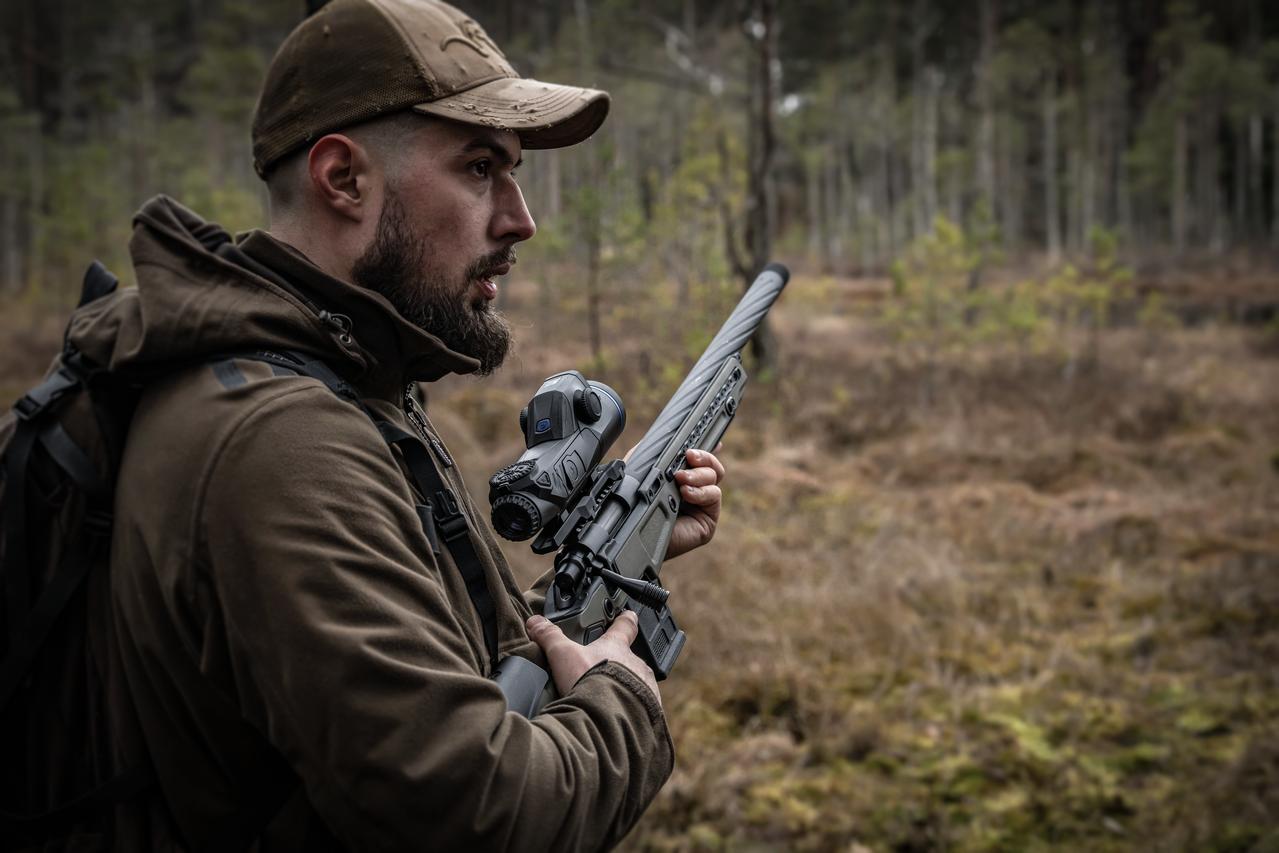
Trail 3 LRF XQ50 — Compact professional scope for low-contrast, short- to mid-range hunting
Built for short- to mid-range hunting when conditions are unstable, the Trail 3 LRF XQ50 delivers clear, stable thermal imagery in fog, rain, humidity, and low-contrast environments. Instead of prioritizing extreme distance, it focuses on reliability and image consistency, helping hunters spot and track targets confidently when visibility is limited in real-world hunting and pest control scenarios.
Its compact, rail-mounted monoblock design integrates thermal imaging, a powerful laser rangefinder, and ballistic support into a single rugged unit — making it ideally suited for forests, mixed terrain, and demanding weather, where dependable performance matters more than maximum range.
Specifications
- Sensor: 384×288, <15 mK sNETD (high sensitivity)
- Refresh rate: 50 Hz (smooth image when scanning and tracking)
- Lens: 50 mm F/1.0
- Display: Full HD AMOLED, 1920×1080
- Magnification:5× base, up to 14× (digital)
- Detection range: up to 1,800 m
- Field of view (H): ~7.5° / ~13.1 m @ 100 m
- Integrated LRF: Yes, up to 1,200 m
- Ballistic support: Integrated ballistic calculation
- Battery system: Rechargeable quick-change battery
- Battery life: up to 12 hours (realistic full-night hunting session)
- Weight (with battery): ~0.9 kg
- Operating temperature: −25 °C to +50 °C
Key strengths and features
Stable imaging in fog, rain, and low-contrast conditions
The XQ50 is optimized for environments where thermal contrast is weak and visibility fluctuates. Its high-sensitivity sensor and image processing prioritize calm, readable imagery, helping maintain target awareness in fog, humidity, rain, and dense woodland.
Practical base magnification for forest and mixed terrain
A native 3.5× magnification strikes a balance between field of view and target detail, making it well suited for short- to mid-range engagements. This reduces reliance on digital zoom and preserves situational awareness in tight or cluttered environments.
Integrated LRF for confident distance checks in complex terrain
The built-in 1,200 m laser rangefinder supports fast ranging across uneven ground, forest openings, and mixed terrain. Distance data feeds directly into the ballistic system, helping confirm ethical shot placement when visual depth perception is limited.
Compact monoblock design for demanding conditions
The reinforced one-piece housing improves durability and keeps the scope well balanced on the rifle. Its compact rail-mounted format is ideal for hunters operating in wet, cold, or unstable weather where reliability outweighs size or extreme reach.
Ergonomic controls for low-visibility operation
Assignable shortcut buttons and ambidextrous focusing wheels allow adjustments by feel alone. This is especially valuable when wearing gloves or operating in darkness, rain, or high-stress situations where visual menu navigation is impractical.
Our expert experience & field test results
The performance is very good, I’m amazed at the clearness and intuitive controls, also the LRF is amazing to have.
Matthias Schultner, Austria
It’s very good for wild boar stalking, I like that it is small and light. For fox hunting, Iiwould take something with a wider FOV. But for short-distance stalking and sitting shots at wild boar, it’s quick to scan the area. Also, it’s very good for searching for wounded animals.
Andrea Lysvold, Norway
Final thoughts
The Trail 3 LRF XQ50 is not about extreme range or maximum zoom — it’s about trustworthy performance when conditions are against you. For hunters who spend their nights in forests, mixed terrain, or weather-affected environments, it delivers professional-grade reliability in a compact, modern format.
If your priority is clear vision when weather turns difficult, combined with integrated ranging and ballistic support, the XQ50 is the most dependable choice in the Trail 3 lineup.
Explore more:
- In-depth review of Trail 3 LRF XQ50 (field tested)
- Find Local Dealers & pricing
Trail 3 LRF XR50 — Compact professional scope for longer distances and wider terrain
Designed for hunters who operate across open fields, rolling farmland, and wide terrain, the Trail 3 LRF XR50 delivers clear long-range imagery and shot-ready precision in a compact professional riflescope format. Rather than prioritizing lightweight simplicity, it focuses on extended detection, precise identification, and confident shot placement in real-world hunting and predator control scenarios.
Its compact, rail-mounted monoblock design integrates thermal imaging, a powerful laser rangefinder, and advanced ballistic support into a single rugged system — offering long-range capability without the size and bulk of traditional flagship optics.
Specifications
- Sensor: 640×480, <18 mK sNETD
- Refresh rate: 50 Hz (smooth tracking at distance)
- Lens: 50 mm F/1.0
- Display: Full HD AMOLED, 1920×1080
- Magnification: 3× base, up to 24× (digital)
- Detection range: up to ~2,300 m
- Field of view (H): ~8.8° / ~15.4 m @ 100 m
- Integrated LRF: Yes, up to 1,200 m
- Ballistic support: Integrated ballistic calculation
- Battery system: Rechargeable quick-change battery (LPS 7i)
- Battery life: up to 11 hours (extended night hunting sessions)
- Weight (with battery): ~0.9 kg
- Operating temperature: −25 °C to +50 °C
Key strengths and features
Long-range clarity with confident target identification
The XR50’s higher-resolution 640×480 sensor delivers finer detail and improved identification at distance, helping hunters confirm targets clearly across open terrain before committing to the shot.
Shot-ready base magnification for extended engagements
A native 3× magnification provides a stable starting point for longer-range observation without immediately relying on heavy digital zoom. This preserves image quality and reticle precision when engaging targets at distance.
Integrated LRF and ballistic support for precise shot placement
The built-in 1,200 m laser rangefinder feeds accurate distance data directly into the ballistic system, supporting disciplined, ethical shooting where margin for error is minimal.
Round Picture-in-Picture for precision without losing context
The circular Picture-in-Picture mode limits digital zoom to the aiming area, allowing precise shot placement while maintaining situational awareness in the surrounding field of view — a key advantage when tracking moving targets across wide terrain.
Compact monoblock design for professional long-range work
The reinforced one-piece housing keeps the scope balanced and durable while delivering extended reach in a compact format. It’s an effective alternative to full-size long-range scopes for hunters who want performance without unnecessary bulk.
Our expert experience & field test results
It’s a very good device as a first thermal device, and it also gives a lot of features for its size. I was amazed at the clearness and intuitive controls, and having the LRF is also amazing.
Matthias Schultner, Austrian hunter
The image is clear, when in focus, the image is sharp and crisp, the sensor gives a lot of information.
Andrea Lysvold, Norwegian huntress
Final thoughts
The Trail 3 LRF XR50 is built for hunters who need reach, clarity, and precision, but still want a compact professional platform. It bridges the gap between full-size flagship scopes and lightweight systems — delivering long-range confidence without the size penalty.
If your hunting takes place across open fields, wide farmland, or mixed terrain where distance defines the shot, the XR50 offers a balanced, modern solution built for real-world precision.
Explore more:
- In-depth review of the Trail 3 LRF XR50 (field tested)
- Find local dealers & pricing
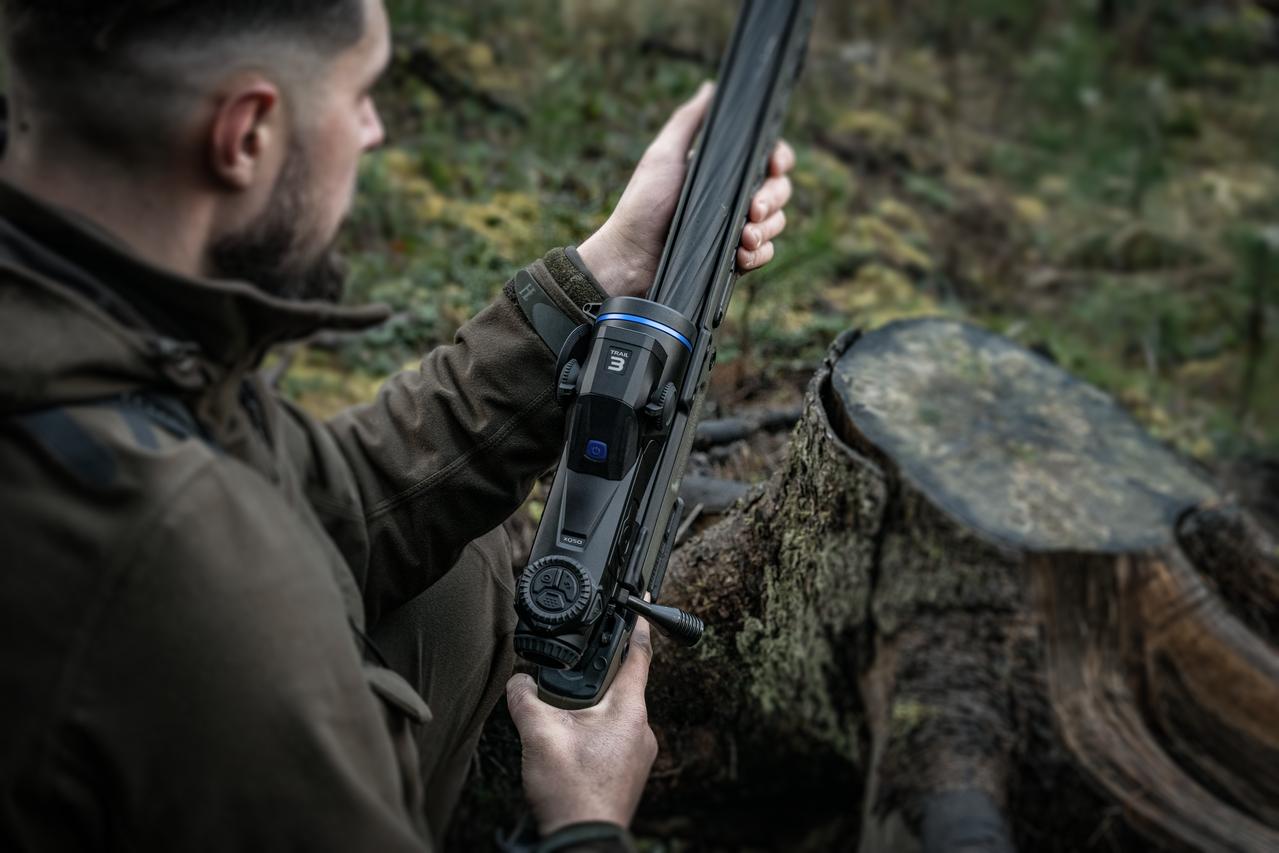
Prefer flexibility? Explore the best thermal clip-on scopes
If you already own a high-end daytime riflescope and want to extend its capabilities into the night, a thermal clip-on might be the smarter route.
Clip-ons like the Pulsar Krypton 2 FXQ35 and Krypton 2 FXG50 transform your trusted day optics into thermal systems without re-zeroing, offering modularity and regulatory flexibility many hunters value. They’re ideal for mixed hunting styles — from daylight stalks that stretch into dusk to regions where full thermal scopes are restricted.
Want a deeper comparison, expert insights from the field, and full specs on Pulsar’s clip-on lineup?
Read our complete guide: Best thermal clip-on scopes from Pulsar

Best for wild boar and hog hunting
Hog and wild boar hunts demand long-range detection, reliable target identification, and precision under complete darkness. Scopes like the Pulsar Thermion 2 LRF XL60 and Thermion 2 LRF XG60 dominate this category with industry-leading image resolution, integrated rangefinders, and ballistic accuracy built for serious night hunters.
If you prefer something lighter for mobile stalking, the Talion XG35 delivers impressive clarity and portability — perfect for farmland or mixed terrain hunts.
Explore the full guide: Best thermal scopes for hog hunting
Best for predator & coyote hunting
When it comes to predator and coyote hunting, speed, precision, and image clarity matter most. The Pulsar Thermion 2 LRF XG60 delivers superb long-range accuracy, the Thermion 2 LRF XP60 performs flawlessly in fog or humidity thanks to its <18 mK sNETD sensitivity, and the Thermion 2 LRF XL60 offers a wide HD view for close or distant shots.
If you’re interested in a deeper look at how these scopes perform in real predator-hunting scenarios — from calling coyotes under moonlight to scanning open plains — you’ll find more detailed insights and field results.
Read more here: Best thermal riflecopes for coyote hunting
How to choose the right thermal scope for your needs
Choosing a thermal riflescope isn’t just about image clarity or detection range — it’s about matching the optic to how, where, and why you hunt. Here’s how to make the right choice:
Define your hunting environment:
- Open fields or farmland → You’ll need a scope with a long detection and identification range, typically 50–60 mm lens and 640+ resolution sensor.
- Woodland or brush → Prioritize wide field of view, compact form, and fast handling. 35 mm lenses and lighter builds are ideal.
- Mixed terrain → Look for a balanced scope with mid-range lens (50 mm), moderate magnification, and decent FOV.
Know the range you actually shoot:
- If your shots stay within 100–150 meters, a 384×288 sensor will often suffice.
- If you’re shooting 250+ meters, go for a higher-resolution sensor (640×480 or 1024×768) and better thermal sensitivity (<20 mK aNETD).
- Consider laser rangefinding (LRF) for added accuracy beyond 200 meters.
Prioritize the features you’ll use:
- Need fast shots in tight spaces? → Look for lightweight, ergonomic models with top-mounted controls and quick battery swaps.
- Hunt in fog, rain, or humidity? → Choose scopes with high-sensitivity sensors and <25 mK NETD rating.
- Want to record hunts? → Ensure the scope has built-in video and Wi-Fi; some offer recoil-activated video capture.
Match to your rifle and loadout:
- Recoil rating matters — ensure your scope handles your caliber.
- Mounting: Does it fit 30 mm rings, or does it require a proprietary base?
- Weight balance: Heavier scopes are stable but can fatigue mobile hunters.
Set a budget — then buy for performance, not hype:
- Entry-level scopes (~€2,000–€2,500) offer solid performance for 100–200 m range.
- Mid-range (~€3,000–€4,000) adds better sensors, optics, and longer detection.
- Premium scopes (above €4,500) deliver unmatched detail, ballistic features, and integrated LRF — best for serious long-range hunters.
Read in-depth guide: How to choose the right thermal riflescope for hunting
Key features to compare before buying a thermal scope
Not all thermal scopes are created equal — and not every feature matters equally for your style of hunting. Here are the most important things to compare before making a decision:
Sensor resolution
This determines how sharp the thermal image looks, especially at distance. For most hunters, 384×288 is enough. If you hunt open terrain or shoot past 200 m, go for 640×480 or higher.
Thermal sensitivity (NETD and sNETD)
NETD is the sensor’s raw noise-equivalent temperature difference (mK). Lower is better — it describes the detector’s intrinsic sensitivity before optics or software.
sNETD is Pulsar’s system NETD measured on the finished scope after optics, electronics and image-processing are applied. It shows the out-of-box, processed sensitivity you’ll actually see with factory settings.
sNETD is often lower than the raw NETD because smoothing and filtering reduce measured noise. That can sharpen static scenes but may blur fine detail or add lag when panning.
Rely on the NETD to judge pure detector capability for fast scanning and moving targets, and use sNETD to judge everyday, factory-tuned performance. For low-contrast hunting aim for values under 25 mK (for both values) and verify with panning video or a short field check.
Lens size and field of view
Larger lenses (50–60 mm) offer better reach and detail. Smaller lenses (35 mm) give you a wider view and are easier to handle in dense terrain.
Magnification and zoom
Higher base magnification helps with target ID, but too much zoom can reduce image quality. Balance is key.
Laser rangefinder (LRF)
Essential for accurate distance reading, especially when hunting beyond 200 m or in uneven terrain.
Battery life and power system
Look for scopes with dual batteries or swappable packs. You want at least 6–8 hours of runtime without recharging.
Display shape and comfort
Round OLED displays offer a more natural sight picture, like a traditional day scope. Rectangular screens are more compact but can feel less immersive.
Build quality and mounting
Thermal scopes must handle recoil, moisture, and cold. Choose models with IPX7 waterproofing, shock resistance, and mounts that fit your rifle setup.

Why choose Pulsar
When hunters invest in a thermal riflescope, reliability and field performance matter more than marketing buzzwords. Pulsar has earned its position as a market leader by combining European‑made sensors, rugged engineering, and a feature set designed specifically for hunters. In 2026, that combination makes Pulsar one of the most trusted names in thermal optics.
European sensors and optics
– Pulsar uses LYNRED thermal sensors manufactured in France, known for their stability and low NETD values (often <20 mK in premium models).
– Wide‑aperture lenses (F/1.0–F/1.1) maximize heat signal collection, producing sharper images and longer detection ranges.
– This ensures consistent performance in fog, rain, and low‑contrast conditions where cheaper sensors often struggle.
Built for hunters
– Form factor matters: Thermion scopes mount on standard 30 mm rings and mimic the look of a traditional day scope, while Talion models are compact and ergonomically optimized for fast handling.
– Controls are intuitive: tactile focus wheels, ambidextrous layouts, and buttons designed for use with gloves make them practical in real hunting conditions.
– Battery systems: dual power packs in Thermion and APS 5T swappable batteries in Talion provide dependable runtimes and quick swaps in the dark.
Integrated technology
– Laser Rangefinder (LRF) integration is seamless in Thermion 2 LRF models, with ranges up to 800 m and ±1 m accuracy.
– Stream Vision 2 and Stream Vision Ballistics apps connect scopes to smartphones for ballistic profiles, firmware updates, and media transfer.
– Recoil‑Activated Video (RAV) and Shadow Recording ensure you never miss documenting a shot, even if you forget to press record.
Rugged and reliable
– All Pulsar riflescopes are IPX7 waterproof and tested to withstand recoil up to .375 H&H / 9.3×64.
– Magnesium alloy housings act as both armor and heat sinks, improving durability and sensitivity.
– Operating temperature ranges from –25°C to +50°C, covering everything from Nordic winters to hot summer stalks.
A complete ecosystem
– Pulsar offers a full lineup: monoculars for spotting, riflescopes for shooting, and apps for ballistic integration.
– Running a Pulsar spotter alongside a Pulsar riflescope ensures consistent image quality, shared profiles, and smoother workflows in the field.
Final thoughts
Choosing the best Pulsar thermal riflescope in 2025 comes down to one thing: how you hunt. Pulsar’s lineup is now clearly structured around three distinct approaches — Thermion 2 for hunters who prioritize long-range precision and ballistic automation, Talion for those who value mobility, simplicity, and ergonomic control, and the new Trail 3 LRF series for professionals who need compact handling combined with integrated ranging and shot confidence.
From high-seat shooters managing open fields, to woodland stalkers moving through dense terrain, to professional pest control operating in difficult weather, there’s a Pulsar riflescope purpose-built for your environment and style of hunting.
Need maximum reach, advanced ballistic automation, and extended runtime? → Go Thermion 2 LRF.
Prefer lightweight, intuitive handling with fast focus and quick battery swaps? → Go Talion.
Need professional accuracy with integrated LRF in a compact, field-ready platform? → Go Trail 3 LRF.
All three families reflect Pulsar’s commitment to European-made sensors, rugged build quality, and performance proven in real hunting conditions — not in controlled lab settings.
But whichever model you choose, don’t forget that the riflescope is just a tool — it cannot replace you.
Thermal scopes can make you feel invincible, almost like nothing can hide from you. But seeing more doesn’t mean you should shoot more. Pulsar thermal optics show you every warm body in the brush. It’s tempting to take marginal shots because the image seems so clear. I’ve learned to slow down, to confirm movement, posture, and background before I touch the trigger. The technology is powerful, but ethics stay the same: positive identification, a safe backstop, and a clean shot.
That discipline keeps hunting honest, and it keeps the respect between hunter, game, and the land intact. The best thermal hunters I know use their scope to know more — not to kill faster.
Looking ahead
Hunters are already watching for what’s next — especially from the Talion family. With its compact form and smart ergonomics, it’s set to become even more capable with future updates like higher-res sensors or integrated LRF.
Whatever you choose, Pulsar delivers thermal optics made for real hunts — in real conditions.
Find your dealer and experience the right scope for your hunting style.

FAQ
Are thermal rifle scopes legal for hunting?
In some regions, yes—but laws vary greatly. In the U.S., states like Texas allow them for hogs and coyotes, while others ban them for big game. In Europe, use is more restricted and often requires special permits, especially for weapon-mounted scopes. Always check your local hunting laws before using thermal optics.
Do thermal scopes work in daytime as well as night?
Yes, thermal scopes work both day and night because they detect heat, not light. Unlike night vision, they don’t rely on ambient light, so sunlight doesn’t affect performance. This makes them useful for spotting animals even in daylight through brush, fog, or shadows.
Can a thermal scope see through trees?
No, thermal scopes can’t see through trees, walls, or solid objects. They detect heat signatures on visible surfaces, so thick vegetation or tree trunks will block the view. However, they can sometimes spot warm targets between branches or through light cover.
Which is better infrared or thermal scope?
Thermal scopes are generally better for detection because they sense heat and work in total darkness, fog, or smoke. Infrared (night vision) scopes rely on ambient light or IR illumination and show less contrast in low-visibility conditions. For spotting game in challenging environments, thermal scopes offer a clearer advantage.
Read More: Night vision vs thermal imaging
What’s the main difference between Thermion 2 and Talion scopes?
Thermion 2 models are designed for long‑range precision with larger lenses, classic design, and integrated LRF options. Talion models are compact, lightweight, and ergonomics‑first, built for mobility and fast handling.
Do all Pulsar scopes have an integrated laser rangefinder (LRF)?
No. Only the Thermion 2 LRF and Trail 3 LRF models include a built‑in rangefinder. Talion scopes do not, but they can still use Pulsar’s Stream Vision Ballistics app for manual distance entry.
How long do the batteries last?
Thermion 2 models use a dual system (internal + APS battery) for up to ~8.5 hours. Talion models use a single APS 5T swappable battery, typically lasting 7–9 hours. Trail 3 LRF also uses single swappable battery, which can last up to 12 hours.
Which model is best for woodland stalking?
The Trail 3 LRF XQ50 is ideal — a compact professional scope optimized for low-contrast conditions common in woodland hunting. It delivers stable, readable imagery in fog, humidity, and dense terrain, while the integrated laser rangefinder supports confident distance assessment without slowing movement.
The Thermion 2 XQ35 Pro is also a solid option if you prefer a classic round display and dual battery system, offering refined image quality in a traditional riflescope format.
Which model is best for long‑range predator control?
The Thermion 2 LRF XG60, with its higher base magnification and extended detection range, is the strongest option for open‑country predator and varmint hunting.
Are Pulsar scopes waterproof and recoil‑rated?
Yes. All models are IPX7 waterproof (submersible up to 1 m for 30 minutes) and recoil‑rated up to .375 H&H / 9.3×64, making them suitable for most hunting calibers.
Can I record video or stream from these scopes?
Yes. All Pulsar thermal scopes include built‑in video recording and Wi‑Fi connectivity via the Stream Vision 2 app. The Thermion 2 LRF models also feature recoil‑activated video (RAV) and shadow recording. The Talion models support manual recording and streaming only.
About the Experts

Christian Rysgaard brings a lifetime of hunting experience, holding certifications as both a rifle and shotgun instructor, along with a long-standing passion for archery, ballistics, and night optics.
As a hunting journalist with a strong engineering background, he delivers technical articles and in-depth gear reviews for the European hunting market.

Freya Askjaer is a Danish huntress living in Sicily, with over a decade of experience hunting across the world.
She has tested Pulsar optics in snow-covered mountains, thick brush, and desert-like areas through every season.

Matthias Schultner is an Austrian hunter with years of hands-on experience in alpine and forest environments across Central Europe.
He has field-tested modern optics and thermal imaging equipment in challenging terrain and changing weather conditions, bringing practical, real-world insight to his evaluations.

Andrea Lysvold is a Norwegian huntress based in the Lofoten Islands, with extensive experience operating in harsh coastal and Arctic conditions.
Living above the Arctic Circle, she regularly tests optics and thermal equipment in extreme weather, low-light environments, and rugged terrain shaped by wind, snow, and sea.