Multispectral Vs. Thermal: Everything You Need To Know
Are you trying to understand multispectral vs thermal imaging and which one truly fits your needs?
At first glance, both technologies may seem similar, but in real field use they solve different problems. Thermal imaging is built for rapid detection in darkness, fog, and heavy cover, while multispectral systems combine thermal detection with digital imaging to add visual detail and identification when conditions allow. This guide explains the practical differences between thermal and multispectral imaging in a clear, field-focused way — so you can choose the right technology based on how you hunt, observe, and make decisions across changing light, terrain, and weather conditions.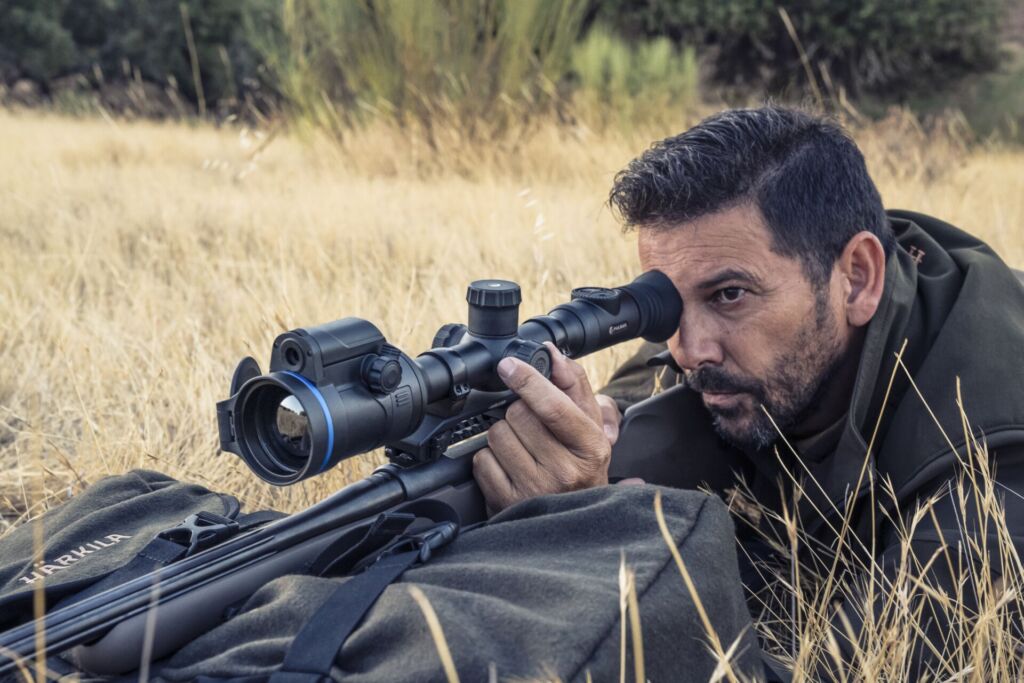
Quick answer
- Multispectral imaging combines two types of sensors – thermal and digital. Thermal collects heat that objects radiate, providing you with informative images no matter the light or weather conditions. Digital sensors (daytime, night vision, or 24/7) offer a more natural-looking and, often, more detailed images from up close when the conditions allow.
- Thermal imaging reads heat emitted by animals, people, and objects, making it the strongest option for rapid detection, long-range spotting, and operating in darkness, fog, rain, or heavy cover.
- Choose multispectral when you want natural-looking detail, color cues, or clearer separation of objects that appear similar in thermal contrast.
- Choose thermal when locating targets quickly is the priority, especially in low light or when vegetation, shadows, or bad weather obscure your view.
When you want the added benefit of visual confirmation and greater situational awareness, Pulsar multispectral systems combine thermal detection with digital imaging to support more confident decisions across changing conditions.
Choose Pulsar Symbion LRF DXT50 or DXR50 for the most complete multispectral performance, combining advanced thermal detection, high-resolution digital clarity, and integrated rangefinding for confident decisions in any light, while models like the Merger DUO NXP50 and Thermion DUO DXP50 represent earlier dual-channel solutions better suited to night-focused (Merger DUO) or more traditional (Thermion DUO) workflows.
What’s the core difference between multispectral and thermal imaging?
Multispectral imaging combines multiple sensors that can collect both the reflected light and heat signatures. The combination of those allows the hunter to be better prepared for different scenarios – poor weather, low or bright light, close or distant targets, etc.
Thermal imaging works on a completely different principle. Instead of reading reflected light, a thermal sensor measures IR radiation naturally emitted as heat, producing a map of heat signatures and thermal emission contrast. This allows you to detect animals or objects regardless of lighting, foliage shadows, or darkness.
In simple terms, multispectral imaging is designed for a more effective detection of visual detail. In contrast, thermal imaging excels at detecting temperature differences and quickly spotting living creatures, even in challenging environments.
Read more: Thermal monoculars for hunting: Everything you need to know
How multispectral imaging works
How does a multispectral device capture more information than the human eye?
A multispectral device isolates several narrow spectral channels—most often in the visible band and thermal—allowing it to reveal material differences the human eye cannot see. By measuring how objects reflect specific wavelengths or the heat they emit, the sensors expose details that would normally blend into the background.
Multispectral sensor technology explained briefly
Multispectral systems rely on multi-band imaging, in which incoming light and heat are separated into distinct spectral channels. Each channel corresponds to a defined part of the spectrum, such as:
- visible light
- NIR
- long-wave infrared (LWIR)
depending on the device.
These channels record unique reflectance curves, which describe how different surfaces reflect or absorb light or radiate heat. Once captured, the device can:
- display each channel separately, or
- combine them (in the case of Pulsar – using Picture-in-Picture mode),
providing the user with clearer structural detail, color accuracy, and scene interpretation than standard optics.
When multispectral imaging outperforms thermal
Multispectral imaging excels in scenarios where object identification and fine detail matter as much as raw detection power. The digital channels provide strong close-up performance, allowing accurate reading of:
- details
- texture
- shape
This is critical when differentiating objects with similar heat signatures that thermal sensors cannot easily separate.
For practical field insight, we spoke to Riccardo Tamburini, a highly experienced hunter who’s used it all – digital, thermal, and multispectral in various situations:
Generally speaking, I’m not a fan of the use of thermal during the day: detecting a covered animal is super easy, and I think we risk losing the meaning of the word “hunting”, which also means spending time glassing and looking for our target.
There are some situations where I agree to combine the two technologies: for example, during a foggy day or when a professional hunter is together with a client looking for a particular animal; doing that, to save time, often the PH explores the territory in front of him, looking for animals with a thermal device. The response is much faster, but then, he needs to use another device, a standard bino until today, to better understand if the animal in front of him is the right animal to cull. Now, a multispectral channel helps to get those smallest details that are impossible to see with the thermal channel, offering the same support of a standard bino – just in a sole device. Often, when you are stalking, you move in the environment being as light as possible, and having two different devices could be a complication.
When digital vision is combined with thermal for multispectral, it also offers limited foliage penetration, revealing features partially obscured by grass or light vegetation. This leads to:
- improved imaging enhancement
- more reliable material differentiation
making multispectral systems especially valuable for:
- confirming target characteristics
- analyzing terrain features
- interpreting environments with subtle visual cues.
How thermal imaging works
Thermal imaging captures infrared energy emitted as heat, converting temperature variations into a visual map.
Instead of relying on reflected light, thermal optics read heat emission in the LWIR (long-wave infrared) band. Every object above absolute zero emits infrared radiation, and a thermal device measures these emissions to create a detailed heat map of the scene.
At the core of the system is an uncooled microbolometer sensor. Each pixel reacts to tiny changes in temperature, and the device processes these signals into a high-contrast image. The quality of that image is defined by thermal sensitivity (NETD):
- the lower the NETD value,
- the better the sensor can distinguish fine temperature differences,
- especially in complex environments.
This is what makes thermal optics exceptionally reliable for low-light detection.
Read more:
- Thermal sensor guide: What really defines thermal image quality
- Thermal sensitivity NETD (noise equivalent temperature difference)
Where thermal imaging has a clear advantage
Thermal imaging dominates whenever visibility drops or the environment works against traditional optics. Because it relies on heat contrast, a thermal device can cut through:
- darkness
- fog
- rain
- smoke
delivering consistent night performance when other systems fail. It’s also one of the strongest tools for wildlife detection, since living creatures stand out clearly against cooler surroundings.
But of course, thermal isn’t absolutely perfect – that’s why we need multipsectral. As Riccardo notes:
One of the limits of thermal technology is that it doesn’t return all the details of the animal you are watching. We know that the cold antlers are not easy to detect and we must work with settings to have the chance to spot them.
On the other hand, a hunter must safely predict the sex and the age class of a game species simply by observing it and looking at it from afar. In this condition, it’s imperative to have the chance to get all the details, also the smallest, because a mistake could mean a ticket from the Ranger at checkpoint.
When you don’t need to know the precise age and sex, thermal technology is unbeatable. This is what it happens during pest control actions: from squirrels to wild boar, and all to other alien species, above all during the day, when the possibility to identify a target is more important than understanding all the smallest detail of it.
Dense vegetation is another area where thermal excels. Even when:
- grass
- bushes
- branches
interfere with a visible-light view, the device can maintain detection through foliage, allowing hunters to spot movement quickly. This advantage becomes especially important for:
- night hunting
- long-range heat spotting
where fast, temperature-based detection often makes the difference between finding a target and missing it entirely.
Read more:
Side-by-side comparison: Multispectral vs thermal
When choosing between multispectral and thermal imaging, the biggest differences lie in the spectral bands each system uses and how those bands affect detection range, image resolution, and identification vs. detection performance.
The table below provides a clear side-by-side analysis, summarizing the operational strengths of both technologies so you can quickly see where each excels and where they fall short across real field conditions.
| Category | Thermal imaging | Multispectral imaging |
| Primary function | Reads emitted heat to visualize temperature differences and highlight heat signatures. | Captures reflected light across multiple spectral bands to enhance detail and color accuracy. |
| Spectral bands | LWIR (8–14 μm) optimized for temperature-based detection. | Visible, NIR, and sometimes SWIR, depending on device design; optimized for detail and material separation. |
| Detection range | Very long-range; remains effective in complete darkness and degraded visibility. | Mid to long range; performance depends heavily on lighting conditions and sensor quality. |
| Image resolution | Resolution tied to sensor (e.g., 640×480); detail is limited by both thermal contrast and pixel count. | Typically higher perceived detail due to visible-spectrum clarity; digital sensors can reach HD or 4K levels. |
| NETD sensitivity | Crucial metric; lower NETD (e.g., <25 mK) means better performance in low-contrast scenes. | NETD does not apply; image quality depends on optical sharpness, sensor resolution, and lighting. |
| Identification vs detection | Outstanding detection; identification can be limited when animals share similar thermal signatures. | Strong identification capability thanks to color, texture, and shape visibility. |
| Environmental performance | Cuts through fog, rain, smoke, and light vegetation due to reliance on heat contrast. | Restricted by atmospheric absorption and lighting; performance drops in darkness without additional IR illumination. |
| Best use case | Night hunting, long-range spotting, search & rescue, low-visibility tracking, detection through foliage. | Target identification, observation, verifying details, differentiating objects with similar heat signatures. |
Detection range & environmental performance
Thermal and multispectral systems behave very differently as weather and terrain begin to affect visibility.
Thermal optics rely on heat contrast, so they keep working when visibility drops. They stay effective in:
- darkness
- fog, rain, and smoke
- light vegetation
Long-wave infrared radiation penetrates many environmental obstacles better than visible light, which helps thermal devices spot animals even as conditions degrade. This makes thermal imaging especially reliable for long-range detection and low-light work.
Multispectral imaging depends on reflected light, so performance is tied to illumination. When lighting weakens or moisture scatters light—such as in rain, fog, dense humidity, or strong shadowing—contrast drops and effective detection range narrows.
In stable daylight, multispectral sensors perform strongly, but they cannot match thermal reliability in harsh or unpredictable conditions.
Identification & recognition capabilities
Multispectral imaging delivers stronger identification because it preserves natural visual cues, including:
- shape
- texture
- color
High-resolution digital sensors make it easier to confirm species, judge antlers, and interpret terrain, especially when thermal signatures look similar.
Thermal imaging excels at detection, but fine identification at long distances can be limited, because heat signatures may not carry enough structural detail for confident judgments.
Here’s how it translates to hunting scenarios, according to Henrik Sproedt, an experienced hunter from Germany:
When we are talking multispectral, I think it’s very practical because you get everything in one device, and fewer devices to carry helps a lot to bring the overall package weight down.
Night vision for me is important, as the type of hunting that I do in Germany happens one hour before sunset and an hour before sunrise, so with powerful night vision, I can identify the animals well. In multispectral devices, it is helpful to have the built-in IR illuminator.
There, the high base magnification is also good, I like it because it’s very good for identifying the game.
The 4k day vision is fine, but if I am on a day hunt, I would still prefer a day optic. But otherwise, it is surprisingly good.
For many hunters, this creates a practical split:
thermal is used to find targets fast,
the visible-spectrum channel is used to confirm what the target actually is.
How modern multispectral systems bridge detection and identification
Modern multispectral systems are designed to remove the split between detection and identification by combining both workflows in a single device. Latest-generation platforms such as the Pulsar Symbion LRF DXT50 and DXR50 pair thermal precision for rapid detection with high-resolution digital imaging for confident visual confirmation, allowing hunters to move seamlessly from spotting a heat signature to understanding what it actually is.
Instead of blending both channels into a single artificial image, Symbion keeps thermal and digital views distinct through Picture-in-Picture, preserving clarity in each spectrum. This approach supports better judgment in complex scenes, where terrain, distance, and lighting change quickly — delivering clarity by day and confidence by night, exactly where thermal-only or digital-only systems reach their limits.
Combined multispectral + Thermal devices (true fusion)
Dual-channel systems merge both strengths into one platform. Devices such as the new Pulsar Symbion or older Merger DUO or Thermion DUO models provide synchronized thermal and digital channels, allowing instant switching between detection and detailed confirmation without losing alignment.
Some modes apply image fusion through overlay, while Pulsar uses Picture-in-Picture, showing thermal information alongside the digital view. This dual-spectrum setup improves situational awareness by combining heat-based detection with visible-spectrum context.
Even without blending the channels into a single spectral image, the thermal-visible pairing makes complex scenes easier to read quickly and accurately.
Which one is better for hunting?
For most hunters, thermal imaging is the stronger tool for detection and heat tracking, especially during:
- night hunts
- early-morning sits
- situations where fog, shadows, or dense vegetation make visibility difficult
Its ability to highlight animals through their heat signatures gives thermal a clear edge for fast thermal spotting, even when wildlife blends into the background or uses natural camouflage penetration to stay hidden.
Multispectral imaging, on the other hand, shines when you need target confirmation. It can provide:
- natural detail
- color cues
- sharper outlines
making it easier to:
- verify species
- judge antlers
- interpret terrain
during daylight or well-lit conditions. This makes multispectral valuable for hunters who prioritize environmental reading and accurate identification before taking a shot.
I had the chance to test both of dual channel Pulsar devices. The Thermion DUO was a blast! I was immediately sure that this is the future. A real 24/7 device, able to cover all the possible situations during hunting: this device always works not depending on day or night, on timing or on the weather conditions. Its use is incredibly wide and only some local laws can limit it.
Nothing new to say about the thermal channel: we are talking about a super proven XP sensor class. The real amazing feature is the 4K full colors CMOS sensor which returns to the human eye the same image seen through the lenses of a standard device.
The Merger DUO follows the same concept although the CMOS sensor is a Full HD B/W; after using the Thermion DUO, it could appear as a downgrade, but the incredibly wide grey scale of the sensor will give to the user the possibility to clearly see everything in the environment, also during a sunny summer day! – Riccardo Tamburini
For the most complete solution, Pulsar DUO systems combine both capabilities. With independent thermal and digital channels in the same device, a hunter can detect wildlife from long distances using thermal, then switch instantly to the digital view for multispectral target confirmation.
This dual-channel approach delivers the strongest all-around performance across changing light, terrain, and weather, making it ideal for hunters who want reliable detection and confident identification in one platform.
Price, durability, and practical considerations before you choose
When comparing multispectral and thermal devices, cost and durability quickly become part of the investment decision factors.
Thermal systems typically incur higher sensor costs, largely due to:
- microbolometer technology
- the need for high thermal sensitivity
Multispectral devices can also be expensive, especially those with:
- larger digital sensors
- advanced NIR/SWIR capability.
Durability is another key difference. Most thermal optics are built around a rugged housing designed for harsh, all-weather use, with strong environmental resistance to:
- rain
- cold
- humidity
- shock
Battery efficiency is also a practical concern: thermal imagers tend to consume less power than multispectral cameras
Multispectral systems, while robust, depend more heavily on lighting and may require external IR illumination at night, which increases power draw. Hunters evaluating both technologies should balance:
- budget
- environmental demands
- real-world usage
to determine which platform will perform reliably in their typical field conditions.
Pulsar multispectral devices comparison table
The following table highlights key specifications for two flagship multispectral models from Pulsar, demonstrating their performance in both thermal and digital modes. Use it as a quick reference to compare spectral channels, sensor resolution, daylight capability, detection range, and their core strengths in the field.
| Model | Spectral channels | Thermal sensor resolution | Daylight / Visible capability | Detection range | Key strengths |
|---|---|---|---|---|---|
| Pulsar Symbion LRF DXT50 / DXR50 | Thermal + high-resolution digital (PiP multispectral) | DXT50: 1280×1024 px / DXR50: 640×480 px (sNETD < 18–20 mK) | Full-color 4K digital for daytime & twilight; IR-supported low-light digital | Up to ~2300 m (thermal channel) | Latest-generation multispectral binoculars; combines thermal precision, digital clarity, built-in IR illuminator, and integrated laser rangefinding for confident 24/7 field decisions. |
| Pulsar Merger DUO NXP50 binoculars | Thermal + digital night channel | 640×480 px (sNETD < 25 mK) | Full-HD digital night channel (1920×1200) | Up to ~1800 m (thermal channel) | Multispectral night and thermal fusion; excellent balance of detection + recognition; premium field performance. |
| Pulsar Thermion DUO DXP50 riflescope | Thermal + digital day channel | 640×480 px (sNETD < 25 mK) | Full-color 4K digital | ~1800 m (thermal channel) | Dual-spectrum riflescope; optimized for day/night hunting |
Final recommendation based on real use cases
Choosing between multispectral and thermal imaging comes down to how and where you operate in the field.
Hunters who prioritize rapid detection in dense cover, at night, or in unpredictable weather will consistently benefit from thermal systems thanks to their reliable heat-based visibility. For surveillance teams and SAR units, thermal provides unmatched long-range spotting and the ability to locate people or animals even when smoke, shadows, or vegetation obscure them.
Multispectral devices shine when clarity and confirmation matter most. Wildlife researchers, daylight observers, and hunters who need precise identification will appreciate the natural detail and color cues provided by the digital day channel. When determining species, interpreting terrain, or assessing subtle visual differences, multispectral imaging remains the more informative tool.
Here are Riccardo’s thoughts on who should go for multispectral:
Multispectral is for those who love hunting, all types of hunting, often even love to observe Nature: the scenarios can be various and super different. A dual channel digital device offers the possibility to watch the environment 24/7 independently from the weather conditions, the season or timing. Having also the possibility to watch again and again thanks to the picture/video recording.
Thanks to the PiP window, the user will have the chance to have a wide field of view focusing his attention on the small details of the game species he’s observing, using both channels simultaneously. This device family is probably the smartest of the planet. In a sole device, you can have the advantages of the thermal technology, matched with the possibility to see the Nature as she is in her real. No standard device is able to do that. I understand the point of view of the nostalgic hunter, but sooner or later also he will bend himself to the great potentialities of digital vision.
For users who cross multiple environments—night hunts, mixed daylight scouting, search operations, or versatile wildlife monitoring—the best solution is a dual-channel optic. Multispectral-thermal platforms within the Pulsar lineup, such as the Merger DUO and Thermion DUO, combine the strengths of both modalities into a single, dependable system that adapts to any scenario.
This hybrid approach gives you the confidence of thermal detection with the visual confirmation of a high-resolution digital channel, minimizing uncertainty and maximizing field efficiency.
Looking to upgrade your field capability? Explore Pulsar’s full range of multispectral and thermal devices to find the system that fits your real-world needs.
FAQ
Is multispectral the same as thermal?
No, multispectral and thermal imaging are not the same. Multispectral devices contain sensors that are able to capture different signals, often – a visible and a thermal one. Thermal imaging, on the other hand, reads only emitted heat in the long-wave infrared (LWIR) band. Because they rely on different parts of the electromagnetic spectrum, the two technologies serve different roles in the field.
What is the difference between multispectral and thermal imaging?
The main difference is the type of energy each system measures. Thermal imaging detects temperature differences, making it ideal for spotting animals or people in darkness, fog, or heavy vegetation. Multispectral imaging adds a digital layer to this: it analyzes how objects reflect specific wavelengths of light, providing natural detail, color, and better material separation. In practice, thermal is for detection, while multispectral is for identification.
Is multispectral imaging better than thermal for hunting?
Multispectral imaging is better for target identification, especially in daylight or good lighting, where color and texture matter. However, it cannot replace thermal for night hunting, fast detection, or working through fog, rain, and dense cover. Many hunters use multispectral for confirmation and thermal for tracking, depending on the situation.
Can multispectral cameras see heat?
Yes, if one of the sensors is thermal. However, some only measure reflected light, not emitted infrared radiation. Multispectral sensors can include NIR, SWIR, and thermal channels.
What does thermal imaging do that multispectral doesn’t?
Thermal imaging exposes heat signatures, allowing you to detect wildlife, people, or vehicles in total darkness or harsh weather. It cuts through shadows, light vegetation, fog, and smoke, all conditions that limit the effectiveness of multispectral systems. Thermal also provides long-range detection and consistent visibility, regardless of lighting conditions.
Why combine visible and thermal imaging?
Combining visible and thermal imaging, as in Pulsar DUO multispectral devices, leverages the strengths of both systems. Thermal delivers immediate detection, while the digital channel offers accurate visual confirmation. This fusion reduces uncertainty, enhances situational awareness, and improves decision-making across hunting, surveillance, and SAR scenarios. It’s the most versatile solution when lighting, weather, and terrain change throughout the day.
About the experts

Riccardo Tamburini is a lifelong outdoorsman, hunter, fisherman, and professional wildlife photographer and filmmaker.
With over 35 years of experience across plains and mountains in Italy and abroad, he combines field expertise with a mechanical engineering background to explain the technology behind rifles, optics, and digital devices.

With over 30 years of hunting experience, Henrik Sproedt has honed his skills in tracking, fieldcraft, and ethical hunting practices across diverse terrains.
His expertise goes beyond personal mastery – he also runs a dedicated hunting school, where he shares his extensive knowledge with new and seasoned hunters alike.