Thermal vs night vision: which to choose?
Quick Answer
The main difference between thermal and night vision is what they detect. Thermal imaging detects infrared heat signatures from animals, people, and objects, allowing visibility in total darkness, fog, or smoke. Night vision amplifies existing light (moonlight, starlight, IR) to create a more natural, detailed image. Thermal is best for detection in all conditions, while night vision is often preferred for close-range target identification at a lower cost. Many hunters combine both for optimal results.Alternative: Multispectral imaging
As an alternative to choosing between thermal and night vision, multispectral imaging combines both technologies into a single system. By integrating thermal detection with digital or infrared-assisted optical imaging, multispectral systems allow users to detect heat signatures and observe environmental detail across daylight, twilight, and complete darkness without switching devices. Pulsar Symbion is the latest generation of Pulsar multispectral technology, designed for professionals who need reliable awareness across all light conditions. By combining digital clarity for day and twilight with precise thermal detection for night, it delivers clarity by day and confidence by night. If you’re interested in technology that combines both thermal and digital imaging, explore our in-depth Pulsar multispectral overview.
What’s the key difference between thermal and night vision?
The key difference between thermal and night vision lies in their detection method.
Thermal imaging reads infrared radiation (heat) emitted by objects and living beings, turning temperature differences into a visible image. Night vision, on the other hand, relies on light amplification — it collects and magnifies ambient light (like moonlight or starlight) through an image intensifier tube or digital sensor, displaying a clearer, more natural scene.
- Thermal imaging: Detects heat signatures and works in total darkness and harsh conditions.
- Night vision: Amplifies available light, gives more natural visuals, but requires some illumination.
How does night vision work in the field?
Night vision technology amplifies ambient light such as moonlight or starlight, making dark environments visible to the human eye. The principle is straightforward: light is collected by an objective lens, intensified through an Image Intensifier Tube (IIT) or digital CMOS sensor, and displayed as a visible image on an eyepiece or screen.
Generations of night vision
Night vision devices are often classified into generations, each representing a step forward in technology:
- Gen 1: Basic amplification, affordable, but limited resolution and short detection range.
- Gen 2 / Gen 2+: Better light sensitivity and image clarity, less reliance on IR illuminators.
- Gen 3: Advanced military-grade performance with excellent clarity, low noise, and long lifespan.
Role of IR illuminators
In total darkness, an infrared illuminator acts like a flashlight invisible to the human eye, projecting IR light that the night vision device can amplify. Digital NV models often pair with IR illuminators above 850 nm wavelength to remain invisible to animals.
Field performance & limitations
Night vision performs best when there is at least some ambient light — open fields on moonlit nights, or starlight in clear skies. However, its performance drops sharply in:
- Dense fog or smoke, where light is scattered.
- Complete darkness, requiring IR assistance.
- Heavy vegetation, where light cannot penetrate effectively.
To translate the theory into field performance, we turn to Julia Nowak, a highly experienced huntress, for advice:
During a nice, clear night, night vision, with help of some source of light, on shorter distances will give you the real-natural looking image. But if the weather gets tough, then thermal imaging becomes your hero!
How does thermal imaging work in real conditions?
Thermal imaging detects heat signatures, not light. Every object emits infrared radiation based on its temperature, and a thermal device’s sensor translates those differences into a visible image called a thermogram. Unlike night vision, thermal does not rely on ambient light.
How it works
- Detection: The sensor measures minute differences in heat (down to fractions of a degree).
- Processing: These differences are converted into a visual image using various color palettes (white hot, black hot, red hot, etc.).
- Display: The result is an image where warmer objects stand out clearly against cooler backgrounds.
To learn more about how infrared radiation and heat detection work, see the NOAA guide to infrared imaging.
Advantages in the field
Thermal scopes and monoculars excel where night vision struggles:
- Total darkness – complete independence from ambient light.
- Obstructions – heat passes through fog, smoke, and light brush, making hidden animals visible.
- Weather resistance – reliable performance in rain, snow, or early-morning cold.
From years of experience with thermal, Julia has observed one more trend:
Many hunters say that thermal imaging keeps them going during a night hunt. Why? Because it will help you see and spot even in the most demanding conditions.
Learn more in our guide to the Best thermal monoculars for hunting.
Detection range & resolution
Thermal imaging performance depends on the complete imaging system, including sensor resolution, pixel pitch, thermal sensitivity, lens configuration, magnification and field of view.
Higher-resolution sensors can provide more image information and finer thermal detail, while lower NETD values help distinguish smaller temperature differences in low-contrast conditions. However, neither specification should be evaluated in isolation.
Modern Pulsar thermal devices range from 384×288 and 640×480 sensors to HD 1024×768 and 1280×1024 sensors, allowing different devices to prioritize portability, thermal sensitivity, fine detail, field of view or long-range observation.
Limitations
Thermal devices cannot “see through” walls or thick terrain. In some conditions — for example, when an animal’s body temperature is close to the environment — thermal contrast may be reduced.

Pros and cons: night vision vs thermal imaging
Both night vision and thermal imaging bring distinct advantages and trade-offs to the field. Night vision is valued for its natural-looking image and affordability, but struggles without ambient light and in obscured conditions. Thermal imaging excels in all-weather detection and long-range spotting, yet comes with a higher cost and visuals that may lack fine detail.
Comparison Table: Night Vision vs Thermal Imaging
| Technology | Pros | Cons | Best use case |
|---|---|---|---|
| Night Vision |
|
|
|
| Thermal Imaging |
|
|
|
Read more: Thermal and night vision devices: all you need to know
Multispectral imaging — alternative approach
Thermal and night vision both work well, but each has its limits when used on its own. Thermal helps you quickly spot heat, while night vision gives more visual detail — and in real hunting conditions, you often need both at the same time.
Multispectral imaging combines thermal and optical imaging in one system, so you don’t have to choose between detection and detail. For example, when scanning a field at dusk, thermal imaging can reveal an animal hidden in tall grass, while the optical channel helps confirm what it is and what’s behind it before taking action.
Pulsar Symbion is an example of a multispectral device built around this idea. It allows hunters to detect heat signatures with thermal imaging and then immediately switch to a clear digital view for identification, helping maintain awareness from daylight through twilight and into darkness without changing equipment.
Here’s how Christian Rysgaard, a hunting expert with a solid background in digital, thermal, and multispectral technology use, describes the abilities of Symbion in short:
The thermal channel is unmatched in its ability to detect heat, disregarding a light source. The digital channel confirms species, gender, and individual marks, the focusable IR torch reveals coat detail without visible glare, and the integrated LRF gives an instant, reliable range.
Read more: Multispectral vs. thermal: Everything you need to know
Which technology works best for hunting?
The discussion over whether thermal imaging or night vision works best for hunting does not have a one-size-fits-all answer. The right choice depends on what the hunter is trying to achieve, the type of game being pursued, and the conditions where the hunt takes place. Here’s how our expert Julia sees it:
You need to decide what features you really need while hunting.
If you hunt mostly in open areas or in the forest, if you often shoot on long or short distances, how detailed must be your judgement of the observed individual, do you go out in all, even very demanding conditions or a rainy, foggy evening is when you stay at sofa at home? What are the local legal requirements? How much can you spend on your gear? It all will affect your choice.
Both night vision and thermal imaging work well for hunting, but they will perform best in different situations.
Night vision has long been the go-to solution for many hunters because it delivers a natural-looking image that resembles daylight observation. This makes it easier to identify wildlife accurately, an essential step when the hunter needs to distinguish between different species or evaluate characteristics such as antler size before taking a shot.
For this reason, deer hunters and others who prioritize ethical shot placement often lean toward night vision.
Julia’s field warning:
There is not many countries where it is allowed to hunt deer an night… or in general with digital scopes.
But I agree with the part about ethical shot placement or wildboar gender identification before the shot – here, many can choose night vision for this reason.
It also tends to be more affordable, making it an accessible starting point for newcomers or those who primarily hunt in areas with some degree of ambient light, such as moonlit fields or starlit forests. However, because it relies on light amplification, night vision struggles in complete darkness and quickly loses clarity in fog, smoke, or dense vegetation.
Thermal imaging, by contrast, changes the dynamic of hunting altogether. Instead of relying on visible light, it detects infrared heat signatures, which means that even in pitch-black environments, an animal will stand out clearly against its background. This makes thermal particularly effective for spotting wildlife that is concealed in thick brush, moving at long distances, or active during low-visibility conditions.
Hunters pursuing feral hogs across large fields, raccoons hiding high in tree canopies, or wounded animals in tall grass often find thermal imaging indispensable. The extended detection range of high-resolution thermal scopes—sometimes exceeding 1,800 meters—also provides an advantage in open landscapes where game may be far away. On the downside, thermal devices are more expensive, require practice to interpret correctly, and do not show fine details such as fur texture or antlers as naturally as night vision.
For predator-specific advice, see our full comparison of the Best thermal scopes for coyote hunting.
In practice, many hunters do not see the choice as “thermal versus night vision” but rather as a combination of the two. A common strategy is to use a thermal monocular for quick scanning and detection and then switch to a night vision scope for precise target identification and shot placement.
With the development of multispectral optics such as Pulsar’s Thermion Duo and Merger Duo, hunters now have the option of accessing both technologies in a single device, merging the strengths of each approach into one streamlined solution.
Related: Thermal monoculars for hunting: All you need to know

Hunters and outdoor professionals can follow a decision-making framework to decide between thermal and night vision based on conditions, purpose, and budget.
Choose thermal imaging if:
- Conditions: You often hunt in total darkness, fog, or bad weather, or in areas with thick brush.
- Purpose: You prioritize detection and tracking over natural image clarity.
- Wildlife behavior: You track animals that move stealthily or hide easily (feral hogs, raccoons, predators).
- Budget: You’re ready to invest in premium optics for maximum detection range and versatility.
- Professional use: Thermal scopes are also favored in search and rescue or wildlife management, where detection speed matters most.
Related: How to choose a thermal monocular for hunting
Related: How to choose thermal binoculars for hunting
Choose night vision if:
- Conditions: You hunt in open fields or environments with some ambient light (moonlight, starlight).
- Purpose: You need accurate target identification (species, gender, antler size).
- Budget: You’re seeking a cost-effective solution or are new to night hunting.
- Style: You prefer traditional scouting with visuals that resemble daylight.
- Battery efficiency: Night vision typically consumes less power than thermal scopes.
Balanced approach
If the budget allows, the combined use of both technologies delivers the best outcome:
- Thermal monocular/binocular: wide-area scanning and detection.
- Night vision riflescope: clear identification and precision shooting.
- Multispectral devices like the Pulsar Symbion, Merger Duo DXP50 or Thermion Duo DXP55 provide both channels in one device, removing the need to switch between optics.
Here’s how that looks in real-life conditions, according to Julia:
A combination of thermal binoculars/monocular for spotting plus a night vision scope for shooting is actually my personal favourite combination!
I pay a lot of attention to proper game management, to detailed individual recognition while hunting wildboars at night. That is why every small detail matters for me – to be sure that I will choose the right animal to be taken down. So a quick scanning through thermals helps me to detect the game, but seeing through a night vision scope helps me to make the final decision: shoot or not to shoot.
On the other hand, for example predators hunting, where often the target is to lower population density of some predator in general and it is allowed to hunt both males and female – a combination of thermals+thermals is perfect!
Hunters comparing scope lines can read our Pulsar Talion vs Thermion comparison.
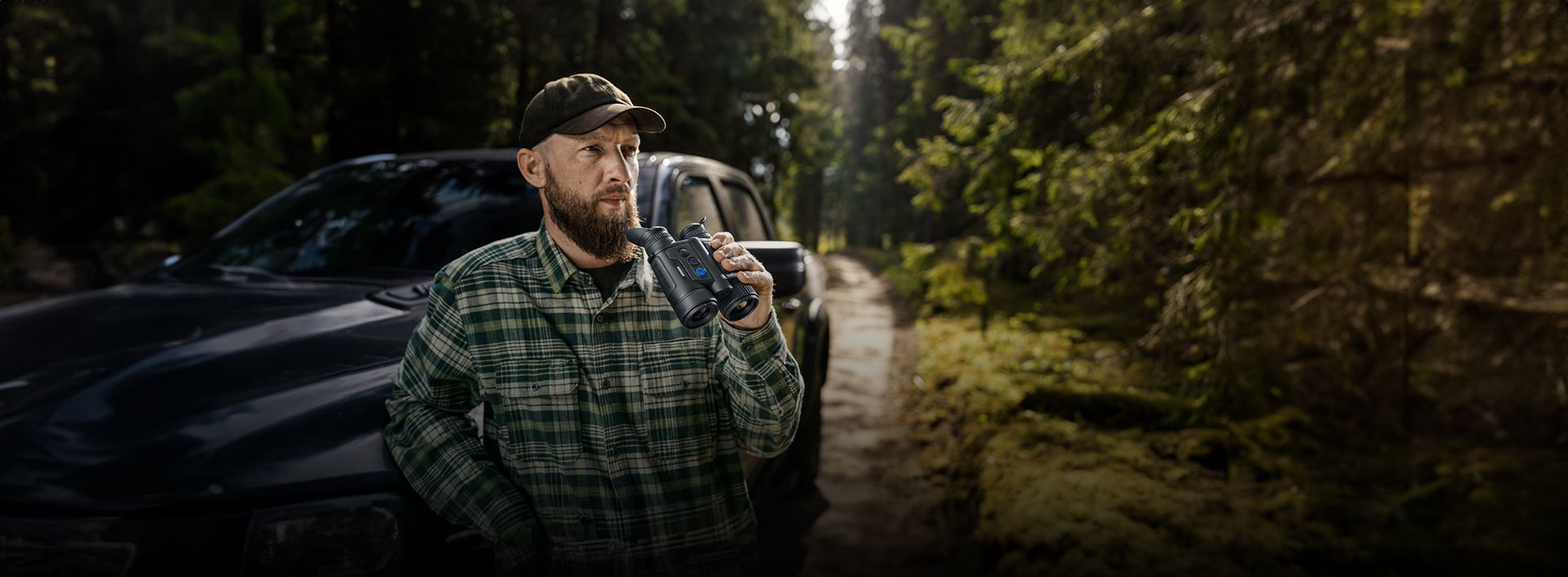
Pulsar devices to consider
While Pulsar designs primarily thermal imaging optics, there are some digital night vision options available for modern hunters. Each category offers distinct advantages, from cost-effective night vision scopes for traditional hunting to advanced thermal units capable of detecting heat signatures in complete darkness or through thick vegetation. If you’d like to know what experts choose, Julia’s happy to share her favorite combo:
During a night hunt, I myself most often use a combination of Digex C50 on my rifle and a Telos LRF XP50 in my hand.
When choosing between Pulsar devices, consider how you typically hunt, the environment you operate in, and how much you value detection range versus image realism. The table below compares Pulsar’s most relevant options for each category, highlighting the technologies, attributes, and ideal field applications.
For top-performing models, explore our list of the Best thermal riflescopes for hunting.
Comparison of Pulsar night vision and thermal imaging devices
| Category | Recommended Pulsar devices | Key highlights | Best use cases |
| Thermal (premium monocular) | TELOS LRF XT50 | Flagship Telos monocular with 1280×1024 / 12 µm HD thermal sensor, wide 17.5° FOV, 2300 m detection range and integrated 1200 m LRF. Combines high image detail, wide-area scanning and long-range observation in one premium device. | Demanding hunting and professional observation across mixed and open terrain where scanning, detailed observation and reliable ranging are required from the same device. |
| Night vision | Pulsar Digex C50 | Digital NV riflescope with full-color day mode and high-contrast black-and-white night mode; integrated IR illuminator; natural image presentation with strong price-to-performance value. | Traditional night hunting, close- to mid-range shooting, and reliable game identification in fields or forest edges under moonlight or starlight. |
| Thermal | Pulsar Axion XQ19 Compact | Ultra-lightweight thermal monocular with 384×288 sensor, <18 mK sNETD, wide 19.5° FOV, and up to 750 m detection range for fast scanning. | On-the-move detection, woodland and brush scanning, and fast target spotting during stalk or mobile hunting. |
| Thermal | Pulsar Oryx LRF XG35 | Compact monocular with integrated laser rangefinder, 640×480 sensor, 12 µm pixel pitch, and strong long-range detection with accurate distance confirmation. | Long-range spotting and tracking in open fields where distance verification and confident observation are critical. |
| Thermal (binocular) | Pulsar Merger LRF XT50 | Premium dual-eye thermal binoculars with <20 mK sensor sensitivity, integrated LRF, excellent contrast in harsh weather, and fatigue-reducing ergonomics. | Long observation sessions, wildlife monitoring, and detection of hidden animals at extended distances. |
| Thermal (riflescope) | Pulsar Thermion 2 LRF XL60 | Flagship riflescope with 1024×768 HD thermal sensor, <20 mK sNETD, integrated LRF, and class-leading image clarity in demanding environments. | Professional long-range hunting and precision shooting in all-weather and low-contrast conditions. |
| Thermal (riflescope) | Pulsar Trail 3 LRF XQ50 / XR50 | Compact rail-mounted monoblock riflescope with integrated LRF, ballistic support, excellent zero retention, and high recoil resistance. | Professional night hunting and pest control in mixed terrain where reliability, accuracy, and fast deployment are essential. |
| Multispectral (binoculars) | Pulsar Symbion DXT50 / DXR50 | Multispectral binoculars combining thermal detection with high-resolution digital imaging, offering seamless switching or combined viewing across light conditions. | All-round hunting where fast thermal detection and reliable visual identification are needed from daylight through full darkness in mixed terrain. |
| Multispectral | Pulsar Merger Duo DXP50 / Thermion Duo DXP55 | Thermal and digital night vision combined in one device with instant mode switching or fused view for maximum situational awareness. | Mixed-terrain hunting where thermal is used for detection and digital NV for confirmation and identification. |
Each Pulsar device offers a specific balance between image clarity, detection range, and operational flexibility.
The Digex C50 and Forward F455S cater to hunters who value realistic visuals and affordability. At the same time, the Axion XQ19 Compact, Oryx LRF XG35, and Thermion 2 LRF XL60 serve those who prioritize precision, range, and all-weather reliability.
For hunters looking for a premium all-around thermal monocular, the TELOS LRF XT50 combines high-resolution thermal imaging, a wide field of view, long-range observation, and integrated laser rangefinding in one device.
For users who want clarity and confidence across all light conditions, Pulsar Symbion represents Pulsar’s latest multispectral approach, combining digital clarity for day and twilight with precise thermal detection or IR-supported digital NV for night. Dual-channel solutions such as the Merger Duo DXP50 and Thermion Duo DXP55 also bring both technologies into one device, offering alternative form factors built around the same multispectral principle.
Legal and regulatory considerations
Hunters and outdoor professionals must understand the local laws and regulations that govern the use of night vision or thermal imaging devices in the field before using them. While these technologies are invaluable for improving visibility, safety, and ethical shot placement, they are not universally permitted for hunting across all regions.
In some countries and U.S. states, thermal optics may be restricted or allowed only for certain species such as feral hogs or coyotes, which are considered invasive or nuisance animals. Others may limit their use to non-hunting activities like wildlife observation, search and rescue, or security. Similarly, night vision equipment may be subject to specific licensing requirements, particularly if the device includes an infrared illuminator or can be mounted on a firearm.
European countries often apply additional rules concerning export control and civilian ownership, as these optics fall under technologies with potential dual use (civilian and military). For example, Pulsar’s parent company, Yukon Advanced Optics Worldwide, strictly complies with European Union regulations on export, sales, and end-user restrictions, ensuring that all Pulsar products are distributed responsibly and within legal frameworks.
Before purchasing or using any device, hunters should always verify the regulations in their jurisdiction, including hunting seasons, permitted species, and approved take methods. For example, for official U.S. guidance on hunting equipment and ethical practices, visit the U.S. Fish and Wildlife Service Hunting Regulations.
Following these guidelines not only ensures legal compliance but also promotes responsible, ethical, and sustainable hunting practices.
Read More: Night hunting laws: Legal and ethical use of thermal devices
Conclusion
Both thermal imaging and night vision have revolutionized how hunters and outdoor professionals experience the night. Understanding their unique technologies, field applications, and limitations empowers users to make informed decisions, choosing the right tool for their environment, purpose, and budget.
Thermal imaging provides unmatched detection across all weather conditions and in total darkness, while night vision remains the go-to choice for clear, natural identification at closer ranges. When used responsibly, each enhances safety, precision, and success in the field.
Whether you’re scanning for wildlife, tracking game, or preparing for an all-weather expedition, Pulsar offers a full spectrum of high-performance optics that help you see the unseen.
Find an authorized Pulsar Dealer near you to experience the devices in person, get expert advice, and choose the best optics for your next hunt.
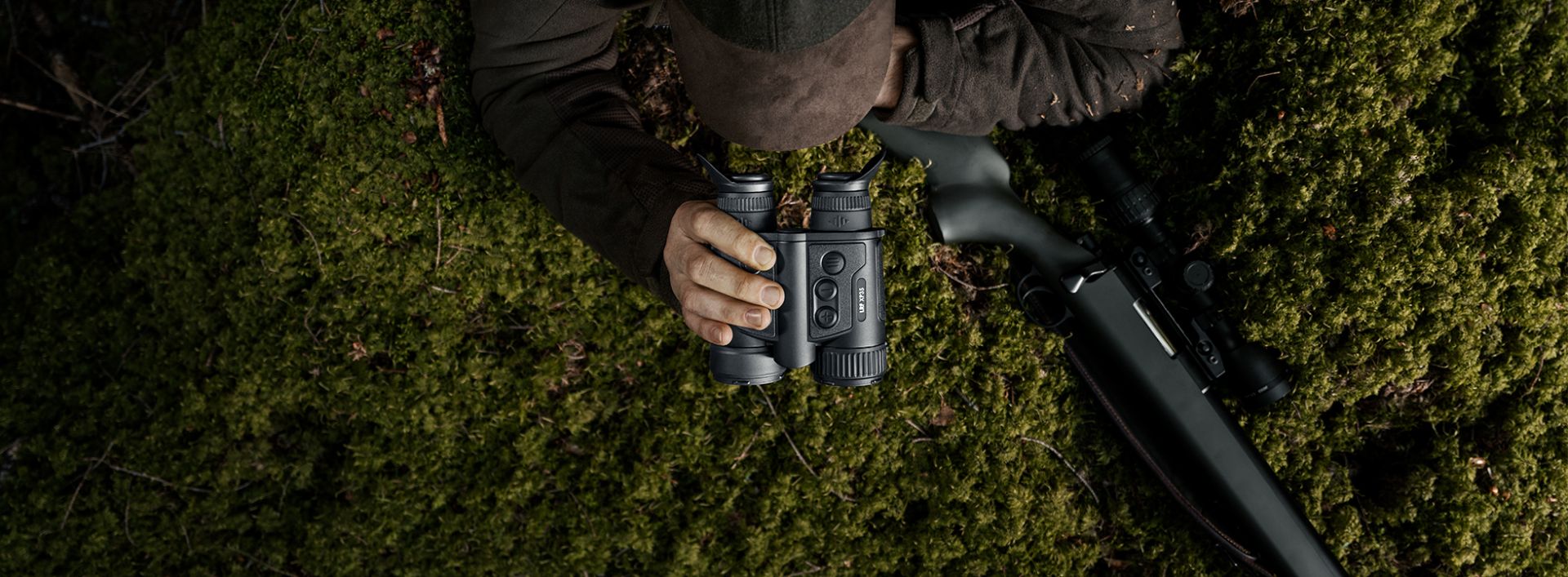
FAQ
Is thermal better than night vision for hunting?
Thermal imaging is generally better for detecting animals in total darkness, fog, or dense vegetation, as it reads heat signatures rather than visible light. However, night vision provides a clearer, more natural image, making it superior for target identification at close to mid-range distances. Many hunters use both technologies for the best results.
Day and night use: which works best 24/7?
Thermal devices work 24/7, detecting heat signatures regardless of lighting conditions, making them ideal for round-the-clock use. Night vision, while excellent at night, performs poorly during the day and can be damaged by direct sunlight. For true all-day versatility, thermal or multispectral optics like Pulsar’s Thermion Duo DXP55 are the best choice.
Can animals see night vision or thermal?
Most animals cannot see thermal imaging because it operates on infrared wavelengths outside their visible spectrum. Some can, however, detect the faint red glow of IR illuminators used in night vision devices, especially at wavelengths below 850 nm. For complete stealth, hunters often use 940 nm infrared or rely entirely on thermal optics.
Why is thermal more expensive?
Thermal optics are costlier because they use advanced infrared sensors, microbolometers, and precise calibration systems to detect minute temperature differences. These components require complex manufacturing and materials that can operate in extreme conditions. The result is an all-weather device capable of long-range detection and 24-hour performance, justifying the higher price.
Which lasts longer?
Both technologies are durable, but thermal devices tend to have longer operational lifespans due to their solid-state sensors and fewer moving parts. Night vision tubes can degrade over time, especially in bright light exposure. Modern Pulsar thermal optics, such as the Thermion 2 LRF XL60, are designed for years of heavy field use.
Further reading:
About expert

Julia Nowak was born and raised in a hunting family in Poland and now lives — and continues to hunt — in Sweden. She holds a degree in sustainable forest and game management, bringing both tradition and scientific knowledge to her pursuits.
For Julia, hunting is not just a hobby; it’s a way of life. She also runs the YouTube channel Hunting O’Clock, where she shares her experiences and insights from the field.