
Estimated read time: 6 min.
Key takeaways
- Batteries power every critical function in a thermal optic, from the laser rangefinder to the sensor, making runtime and reliability essential for hunting success.
- Real-world battery life depends on temperature, active features, and continuous scanning – not just stated capacity.
- Cold weather reduces lithium-ion effective capacity, so spare batteries and runtime planning are important during winter hunts.
- Modular battery systems improve usability in the field by allowing fast battery swaps instead of waiting for recharge.
- Proper charging, storage, and feature management help extend battery lifespan and maintain safe operation.
Introduction
A thermal optic is only as reliable as the battery powering it. During night hunts or winter predator control, batteries in thermal optics determine whether detection, tracking, and shot opportunities happen without interruption.
Unlike traditional optical scopes, thermal devices rely entirely on electronics. A thermal sensor detects infrared radiation emitted by objects, an image processor converts that data into a visual image, and a microdisplay presents the result in real time. These systems operate continuously during observation sessions that may last several hours in remote terrain.

Most modern thermal optics use rechargeable lithium-ion battery packs. However, real-world runtime varies depending on temperature, feature usage, and continuous operation. Understanding battery types, performance factors, and safety considerations helps hunters plan more effectively and avoid unexpected power loss in the field.
This guide explains how batteries used in thermal optics work, what affects runtime during hunting, and why modular battery systems improve reliability.
Why are batteries especially critical in thermal optics for hunting?
Batteries are essential in thermal optics because they power all electronic systems required for detection and image generation.
A thermal optic operates through several power-dependent systems working simultaneously:
- The thermal sensor detects infrared radiation emitted by animals and terrain.
- The image processor converts thermal data into a visible image.
- The OLED display renders the processed image for the hunter in real time.
Unlike a conventional riflescope, which uses ambient light and lenses, a thermal optic cannot function without electrical power. If the battery runs out, the image disappears entirely.
Continuous scanning increases power demand. Predator hunters often scan fields or forest edges for hours during nighttime sessions. A thermal monocular may remain active throughout the hunt, while a riflescope stays powered during target observation and tracking.
Battery reliability therefore becomes a key part of field readiness. In remote hunting areas without charging access, runtime planning and spare batteries are essential.

Cold weather further increases the importance of reliable power. Lithium-ion batteries deliver less power in freezing temperatures, which can shorten runtime even when some charge remains.
For hunters operating at night or during winter seasons, battery performance directly affects how long the device can operate reliably in the field. Antons Sidlovskis, technologist at Pulsar, explains why:
Cold weather naturally reduces battery performance. This is normal for all lithium-ion batteries and does not mean the battery is damaged.
When temperatures drop, the chemical reactions inside the battery slow down. Because of this, the battery cannot deliver energy as efficiently as it does in warmer conditions. The device may show a low battery warning or shut down earlier than expected, even though some charge is still inside the battery.
If the battery warms up again, part of that remaining charge may become available. For this reason, many hunters carry spare batteries and keep them warm in a pocket until they need them.
What is Pulsar’s battery approach for hunting applications?
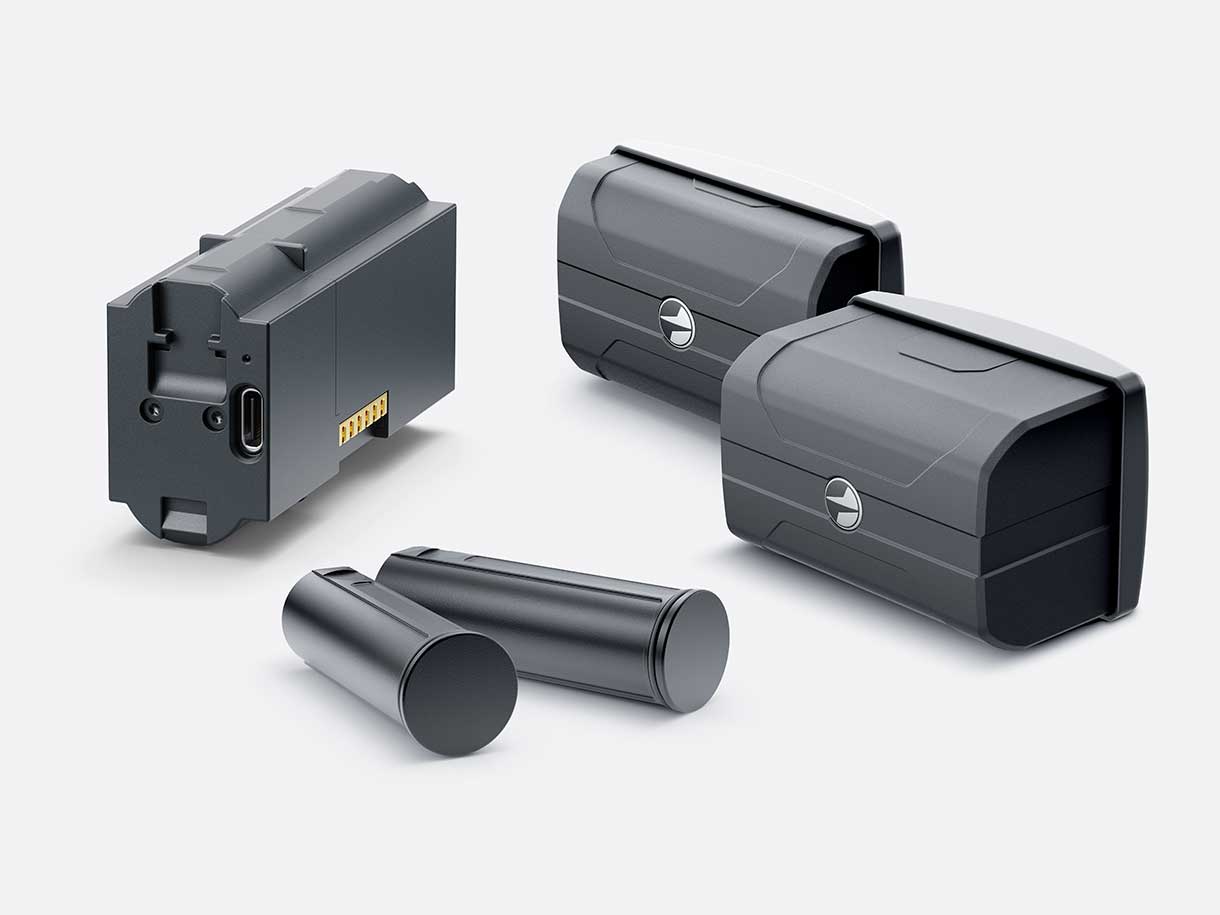
Pulsar uses modular lithium-ion battery systems designed for hunting environments and integrated into particular device families.
Three main Pulsar battery systems are used across different devices:
 APS battery system

LPS battery system
 IPS battery system
Each Pulsar ecosystem is tied to certain devices:
- APS batteries power devices such as Symbion binoculars (APS 5) and Thermion 2 LRF riflescopes including the Thermion 2 LRF XL60 (APS 3).
- LPS batteries are used in devices designed for extended runtime, such as Trail 3 and Telos.
- IPS batteries power devices such as Krypton 2.
Hunters cannot freely swap these battery systems between devices. Each device is designed for a specific battery type. The advantage of this design is modularity: batteries can be removed, replaced, and charged independently.
Pulsar battery packs include several protective and reliability features designed for field use:
- Protection against overheating, punctures, and recoil shock
- Built-in battery protection circuits that allow safe charging directly in the device
- Precise remaining charge indicators that show the exact battery level
- Reduced electromagnetic interference with device electronics
- Battery cells and assemblies quality-controlled in Pulsar factories
These engineering safeguards help ensure stable performance in demanding hunting conditions.
Modular battery systems also simplify long-term ownership. When battery capacity eventually declines after many charge cycles, the battery pack can be replaced without replacing the thermal optic itself.
Anton explains why battery packs differ across Pulsar devices:
Pulsar uses different battery systems because different devices have different sizes and power needs. Smaller handheld devices use compact batteries to keep the device lightweight, while larger optics can use bigger batteries for longer operating time.
Each battery is also designed to fit a specific device securely. This helps the battery stay firmly in place during recoil and allows hunters to quickly remove and replace it in the field when needed.
What types of batteries are used in hunting thermal optics?
Thermal optics typically use rechargeable lithium-ion batteries, although designs vary between manufacturers.
Several battery approaches exist in the industry:
- Built-in rechargeable batteries
- Replaceable, proprietary modular battery packs
- Standard disposable batteries such as AA
Each approach affects runtime flexibility and field usability.
Built-in rechargeable batteries
Some thermal devices use sealed internal batteries that cannot be replaced during a hunt.
Internal systems simplify device design and reduce external openings. Charging usually occurs through USB-C or a dedicated charging port.
However, internal batteries limit runtime flexibility. Once depleted, the device must be recharged before it can be used again.
This approach can be sufficient for short evening hunts or occasional use. For extended sessions or cold-weather hunts, the inability to swap batteries can become a limitation.
Replaceable or modular battery packs
Modular battery packs allow hunters to replace batteries quickly in the field.
Systems such as Pulsar’s APS, LPS, and IPS packs enable hunters to carry spare batteries and restore power within seconds when the battery runs low.
This design supports long observation sessions, predator hunting, and winter conditions where runtime may decrease.
Battery rotation is particularly useful in freezing temperatures. A spare battery kept in a pocket stays warm, helping maintain performance and runtime when installed.
Dock charging before a hunt also allows multiple batteries to be prepared simultaneously.
External power banks
Some thermal optics support external power through USB-C connections. A power bank can extend operating time during stationary observation, for example, when hunting from a blind or using a tripod setup.
However, external cables can interfere with mobility during stalking. For active hunting scenarios, internal or modular battery systems remain the most practical solution.
Combined systems
Pulsar devices use several battery approaches to improve reliability and runtime in the field. Depending on the model, batteries in thermal optics may include removable lithium-ion battery packs (APS, LPS, or IPS), or dual battery systems that combine a removable battery with an internal rechargeable one.
In dual-battery designs, the removable battery usually serves as the primary power source, while the internal battery can power the device independently for a for a limited period of time and allows uninterrupted operation when swapping the external battery.
Many Pulsar thermal devices also support direct power input through USB Type-C, enabling hunters to connect an external power bank for extended observation sessions or stationary use. This flexible power architecture provides multiple ways to maintain operation during long hunts or challenging weather conditions.
What factors most affect battery performance during hunting?
Battery performance in thermal optics depends primarily on temperature and how the device is used (device usage).
Manufacturer runtime figures are typically measured under moderate temperatures with limited feature usage. Real hunting conditions can significantly alter these results.
Battery capacity and real runtime
Battery capacity is commonly measured in milliamp-hours (mAh) or watt-hours (Wh).
However, capacity alone does not determine runtime. Actual battery life depends on power consumption during use.
Factors affecting consumption include:
- Continuous scanning versus intermittent use
- Display brightness levels
- Video recording
- Wireless streaming to smartphones
- Processing load from advanced features
Because of these variables, real hunting runtime often differs from maximum advertised runtime.
Managing device settings can help extend operating time during long hunts.
Anton shares a simple way to estimate the actual runtime:
For example, if a device is rated for 8 hours of runtime, the actual time during a cold night hunt with active features may be closer to 5–6 hours. Because of this, many hunters plan their battery use with some safety margin and carry a spare battery during longer hunts.
Another simple approach is to observe how quickly the battery percentage drops during the first hour of use. This gives a rough idea of how long the device may continue operating under the same conditions.
Cold weather effects on battery performance
Cold weather significantly affects lithium-ion batteries.
Low temperatures increase internal resistance in battery cells, which causes voltage to drop under load and reduces usable capacity.
Common effects during winter hunting include:
- Shorter runtime
- Faster drops in displayed battery level
- Early shutdown when voltage falls below operating thresholds
Battery rotation can help mitigate these effects. Keeping spare batteries warm inside clothing allows hunters to restore runtime quickly when cold batteries deliver less power.
Although modern battery packs are engineered to perform in low temperatures, cold environments still reduce overall efficiency.

How device features affect battery life
Modern thermal optics include features that increase processing demand and energy consumption.
These may include:
- Video recording
- Recoil-activated recording
- Wi-Fi streaming
- Adjustable refresh rates
- Laser rangefinder
- High display brightness
Each additional feature increases power draw.
To extend runtime during long hunts, hunters can disable features that are not actively needed and reduce brightness to the lowest comfortable level.
What safety issues should hunters consider when using thermal optics batteries?
Lithium-ion batteries are reliable when used correctly, but safe charging and handling practices are important.
Batteries used in thermal optics are often exposed to challenging conditions including cold temperatures, moisture, vehicle transport, and repeated charging cycles. Modern battery packs include protective electronics designed to prevent unsafe conditions. Pulsar battery systems include protection against overheating and electrical overloads, as well as shielding that minimizes electromagnetic interference with device electronics.
However, safe handling practices remain important.
Preventing overheating
Thermal optics manage dissipate heat through internal electronics design and the device housing-based heat dissipation.
In extremely warm conditions, leaving devices in direct sunlight or inside vehicles can expose batteries to excessive heat.
Avoid storing thermal optics or batteries in sealed vehicles during hot weather.
Safe charging practices
Safe charging practices extend battery lifespan and reduce risk.
Recommended practices include:
- Using manufacturer-approved chargers or cables
- Charging batteries on dry, stable surfaces
- Allowing batteries to reach room temperature before charging after cold hunts
- Avoiding damaged charging cables
Modern lithium-ion batteries include overcharge protection, allowing safe charging when proper equipment is used.
Storing and transporting batteries
Proper storage preserves battery capacity.
Recommended storage practices include:
- Storing batteries at moderate temperatures
- Avoiding direct sunlight or extreme heat
- Maintaining partial charge (around 40 – 60%) during long off-season storage
- Carrying spare batteries in protective cases
Loose batteries stored with metal objects can short-circuit and should be avoided.
Final tip from Antons:
Before heading out for a hunt, it is a good habit to check that the battery is fully seated and locked in place. A poorly inserted battery may briefly lose contact when the device experiences recoil or movement.
It is also recommended to occasionally inspect the battery contacts for dirt or moisture. Clean contacts help ensure stable power delivery and prevent unexpected shutdowns in the field.
How long do thermal optics batteries last for active hunters?
Lithium-ion batteries gradually lose capacity over time due to repeated charging cycles.
A charge cycle roughly corresponds to using and recharging the equivalent of a full battery capacity. Modern lithium-ion batteries typically support hundreds of cycles before capacity loss become noticeable in daily use.
Capacity decline is gradual rather than sudden. Over time, a battery that originally powered a device for several hours may provide slightly shorter runtime.
Seasonal hunting patterns often extend the lifespan of batteries because devices are not used daily throughout the year.
Modular battery systems allow hunters to replace batteries independently of the device. This helps extend the practical lifespan of thermal optics equipment.
Best practices for maximizing battery life during a hunt
Effective battery management improves reliability during long hunting sessions.
Key practices include:
Prepare before the hunt
- Fully charge all batteries
- Carry at least one spare battery
- Check battery charge levels
Manage device settings
- Turn off Wi-Fi when not needed
- Reduce display brightness
- Activate recording only when necessary
Handle batteries properly in cold weather
- Keep spare batteries warm in a pocket
- Rotate batteries when the battery level drops
- Expect reduced runtime in freezing conditions
Planning battery use as carefully as other equipment helps prevent unexpected power loss during critical moments.
Conclusion
Batteries play a central role in the performance and reliability of thermal optics for hunting.
Because thermal devices rely entirely on electronic systems, battery stability directly affects detection, tracking, and observation. Real-world runtime depends on temperature, feature usage, and continuous scanning patterns.
Cold weather can reduce efficiency, making spare batteries and proper preparation important for winter hunts. Modular battery systems, such as Pulsar’s APS, LPS, and IPS batteries, improve field reliability by allowing fast battery swaps and independent replacement when capacity declines.
Understanding how batteries work and how to manage them in real hunting conditions helps ensure thermal optics remain dependable tools during long nights in the field.
Frequently asked questions (FAQ)
How long do thermal optics batteries last during night hunting?
Runtime depends on temperature, device usage, and enabled features. In moderate conditions with limited wireless features, many devices operate for several hours. In freezing conditions with recording enabled, runtime may decrease significantly.
Do thermal scopes lose power faster in winter?
Yes. Cold temperatures increase internal resistance in lithium-ion batteries, causing voltage drop and reduced effective runtime. Sub-zero conditions can shorten runtime by 20–40% or more depending on exposure and usage patterns.
Can I use a power bank with a thermal optic?
Many modern thermal optics support power input through USB-C, allowing operation from a an external power bank. This setup works best for stationary observation from a blind or tripod rather than mobile stalking.
Is it safe to charge thermal optic batteries overnight?
Yes, when using certified charging equipment with built-in overcharge protection. Modern lithium-ion systems stop charging automatically when full. Always charge on a stable, dry surface and avoid damaged cables.
How many spare batteries should I carry?
For extended night hunts or winter sessions, carrying at least one spare per device is recommended. In sub-zero conditions or multi-hour predator hunts, two fully charged batteries provide greater reliability.
How long do lithium-ion batteries last overall?
Most lithium-ion batteries last several hundred charge cycles before noticeable capacity reduction occurs. With proper care and storage, batteries can provide reliable performance for multiple hunting seasons.
About the expert

Co-Author:
Antons Šidlovskis
Antons Šidlovskis is a manufacturing technologist specializing in optical devices and their subassemblies. He develops manufacturing processes, prepares assembly procedures and technical documentation, and supports production teams during device assembly. His work also includes battery pack production processes, assembly kits preparation, and resolving manufacturing issues.
Before purchasing any night or thermal vision device, please make sure you adhere to the local legislation and only use it when it is allowed. Our ambassadors come from various countries and travel a lot, which allows them to test different devices. We do not encourage or support the illegal use of our devices in any events. If you wish to learn more about export and sales restriction policy, please visit the following link: Export and Sales Restriction Policy.