
Expert Contributor:
Christian Ernst Rysgaard, Riccardo Tamburini
Estimated read time: 7 min.
Modern technology plays a crucial role in the evolution of hunting. Among the most transformative innovations is the thermal imaging riflescope – a tool that doesn’t just assist the hunter but continuously evolves through firmware updates.
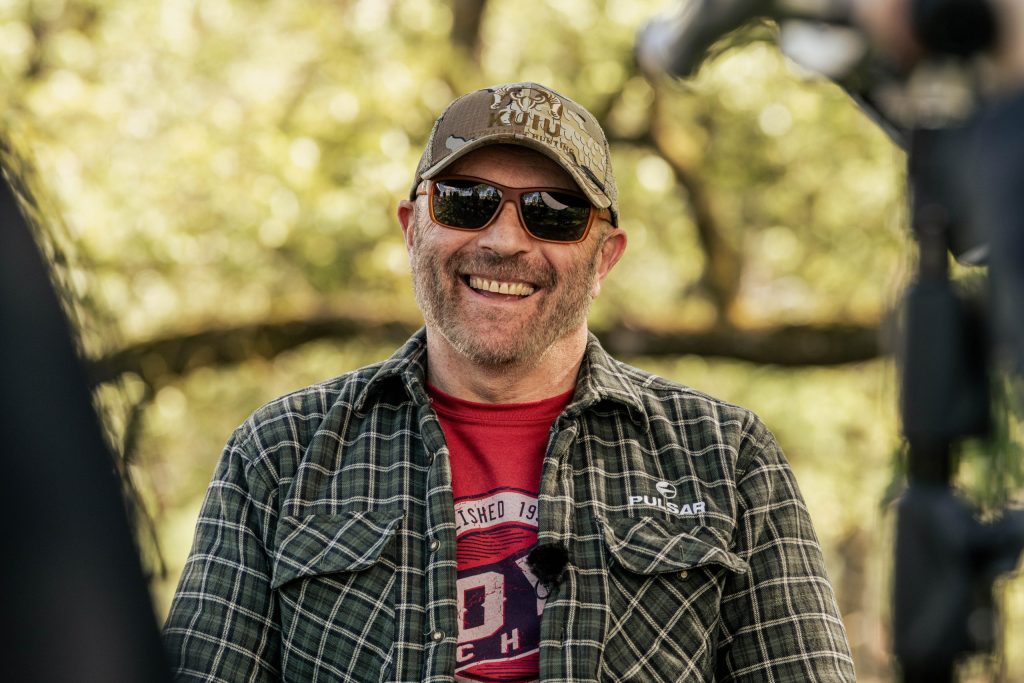
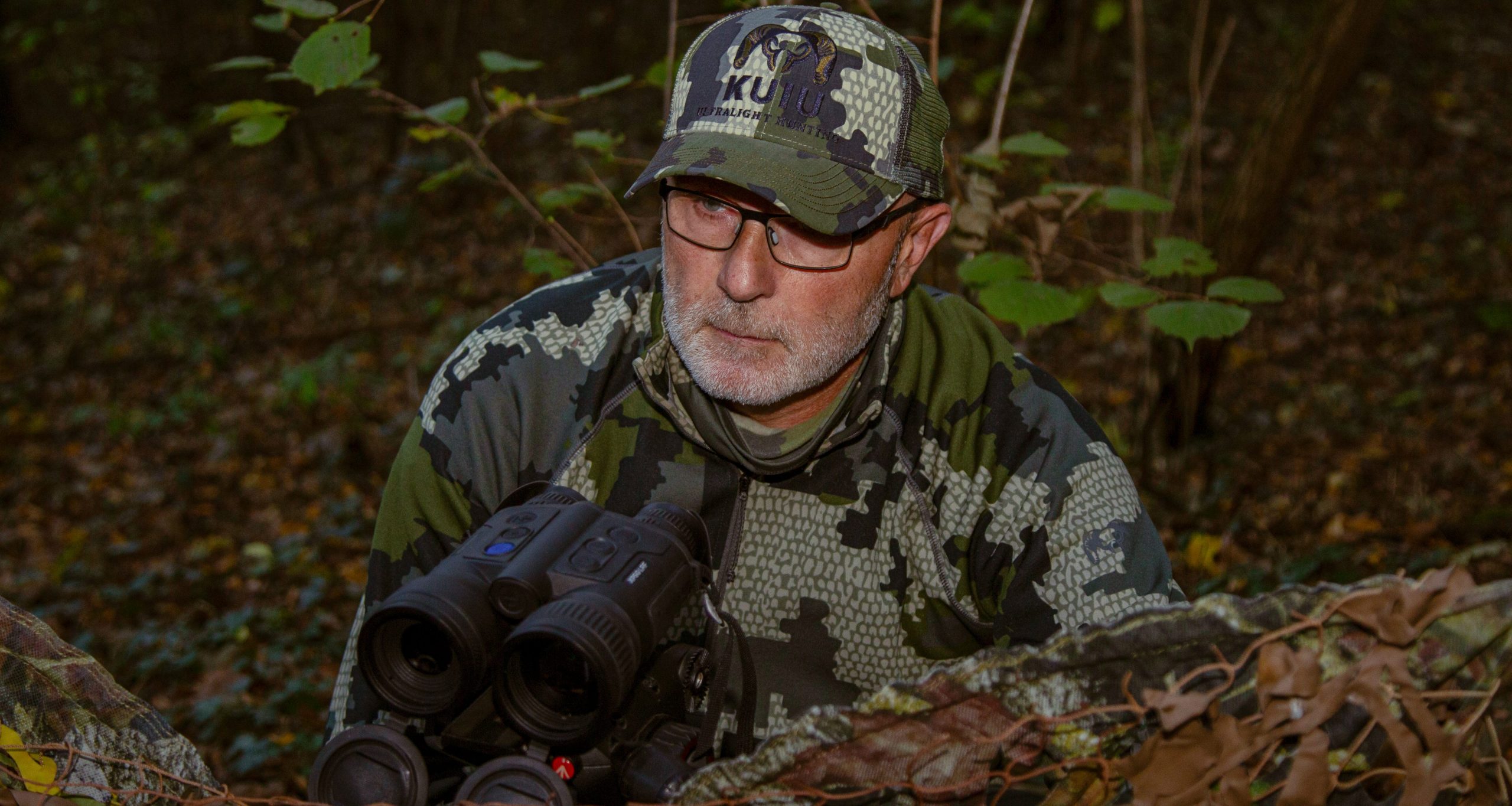
To understand the role of firmware updates in shaping the real hunter’s experience, we asked our trusted Pulsar Ambassadors – Christian Ernst Rysgaard from Denmark and Riccardo Tamburini from Italy – to share their insights and examples from their broad experience in the field.
-

- Christian Ernst Rysgaard

-
- Riccardo Tamburini
A living investment, not a static tool
But how vital is this continuous evolution? A powerful thermal scope fresh out of the box is undoubtedly a fantastic tool, but without the promise of future updates, it is, ultimately, a static investment. It is bound by the limits of its initial coding. In contrast, the option for firmware updates ensures that it will become an even better version in the next few months, optimizing performance and delivering new capabilities.
According to Christian, the continuation for improvement is essential. “Most firmware updates bring valuable bug fixes or useful new features that make the device perform better than before,“ Christian says. Then adds, “While a firmware update rarely turns a failed hunt into a success on its own, it’s often the small improvements across all your gear that collectively make the difference. Firmware is simply one piece of that bigger picture of preparedness and reliability.”
While a firmware update rarely turns a failed hunt into a success on its own, it’s often the small improvements across all your gear that collectively make the difference. Firmware is simply one piece of that bigger picture of preparedness and reliability.
Christian Ernst Rysgaard

‘More but easier’: designing for the hunter
Riccardo explains that all firmware updates at Pulsar are “born after a technical speech between the Ambassadors Team and R&D managers,” to make sure the software actually reflects the hunters’ needs in the field. Riccardo also suggests that the main concern in the development process is not to overwhelm the newcomer or expert hunters with many functionalities that make the operation of the tool complex and interfere with the hunting process.
Being a hunting veteran, Riccardo understands the fundamentals of “made for the hunter” and when testing new improvements, he tends to do it in the sense of every hunter, thinking how the update could add to his skills, not challenge them: “As an ambassador, I have to consider that the average skill level of the hunters differs from mine, so the suggestions I give to update the firmware have to follow the leading idea: ‘more but easier’.”
“New features don’t need to complicate the use of the device: the menu access must be easy, like before introducing them, and/or there has to be easy access through the quick menu. Having easy access also helps the device ergonomics: we are hunting during the night, a difficult situation for human beings used to working and living during the day. Cold, rain, snow, fog can add stress or can complicate the use of a complex thermal device, so… ‘more but easier’!”
As an ambassador, I have to consider that the average skill level of the hunters differs from mine, so the suggestions I give to update the firmware have to follow the leading idea: ‘more but easier’.
Riccardo Tamburini
Adapting to an ever-changing field
Hunting is truly never linear. As Riccardo depicts it, “hunting today could be very different from yesterday.” Both experienced and new hunters face various challenges each time they step onto the field. A familiar environment can look like a new space, as the components that determine the chances of luck are constantly changing – animal behavior and mood, impacted by the temperature, weather, and its favor for the hunter.
Improved features expand the possibilities of what hunting could look like today – adjusted to regulations, making it more selective, humane, and efficient through greater precision and situational awareness. More than that, the firmware updates allow hunters to better adapt to the varying real-life scenarios.
Christian recalls how the ballistics calculation support update on his Digex C50, a discontinued Pulsar night vision riflescope, turned his hunting trip to Sweden into a success. “This had a major positive impact on my night hunting in Sweden, especially when paired with my Merger LRF XP35. I was seriously considering switching to another brand to get that functionality, but the update meant I could stay with the Digex C50, keep its excellent IR sensitivity and sleek design, and still gain the ballistic capability I needed,” he depicts.
Triumphs of the latest firmware 4.0.0
The latest firmware update 4.0.0 on the Thermion riflescopes targeted both the precision of every shot and the improved confidence in the unfavorable conditions with an intuitive and customizable design.
As someone who puts his hands first on all the new Pulsar releases, Riccardo picks his favorite duo of the recent update: the new green palette and the simplified button control.
“I consider the introduction of the green palette as a great achievement: green is probably the best compromise between eye fatigue and the capacity to get the smallest detail. Another important thing is the easy access to different features: with the new 4.0 firmware, we doubled the ease of use of the buttons, giving us the possibility to manage different features. The problem is to remember all settings, but after a few days, everything will become automatic.”

The future of field precision and teamwork
When asked if he could have only one area improved from such features as rangefinder accuracy, battery life/efficiency, or image processing quality, Christian picks the latter one as his top choice. “Image quality is always crucial for identifying and tracking targets quickly. There’s always a ceiling on what raw processing can achieve, but even small refinements in clarity or contrast can make a real difference in low-light situations.”
As for the feature releases, if Christian could pick one, non-essential but highly desired quality-of-life feature, he suggests it would be a feature that marks or highlights a target in one thermal spotter and has it appear on another connected spotter or scopes, while automatically tracking the animal as it moves. “When hunting with a partner, we often have to coordinate by counting wild boars from left to right to decide who takes which target, which gets tricky when they’re constantly moving. A synced, visual target marker across devices would be a huge step forward in teamwork and precision,” he describes.
There’s always a ceiling on what raw processing can achieve, but even small refinements in clarity or contrast can make a real difference in low-light situations.
Christian Ernst Rysgaard

Experience: the ultimate measure of success
The consensus from both ambassadors is clear: the role of firmware updates is not merely to enhance a piece of equipment, but to enhance the hunter’s overall experience, boosting their confidence and capability. This continuous evolution of the tool directly translates to improved outcomes in the field, not just in terms of successful harvest, but in making the process more ethical and reliable. As Christian summarizes the value of this approach:
“Success in hunting comes from optimizing both your gear and your own skills. Every small improvement, every bit of familiarity with your equipment, adds up to better awareness and faster reactions in the field.”