
Estimated read time: 5 min.
Is thermal imaging really real-time? It feels instant, but even high-end devices introduce a small delay that can affect how you track moving targets. In hunting scenarios, that split-second latency can mean the difference between precise timing and missed opportunities.
Modern thermal optics reduce this lag to just 20–60 milliseconds, but it never fully disappears. As speed, distance, and magnification increase, that delay becomes more noticeable.
In this article, you’ll learn what causes thermal imaging latency, how it impacts motion tracking, and how to choose devices that minimize lag in real hunting conditions.
Quick answer
Thermal imaging is not fully real-time — it always includes a small delay caused by heat detection, image processing, and display rendering. In modern devices, this latency is typically around 20–60 milliseconds, making the image feel nearly instant in most situations. However, when tracking fast-moving targets, even this minimal delay can affect accuracy, which is why refresh rate, processing speed, and sensor performance matter when choosing a device.
- Typical latency in modern devices: ~20–60 ms
- Higher refresh rates (≥50 Hz) improve motion clarity
- Lag impacts moving targets more than stationary observation
- Faster processors and sensors reduce perceived delay
- Optimized image pipelines improve overall responsiveness
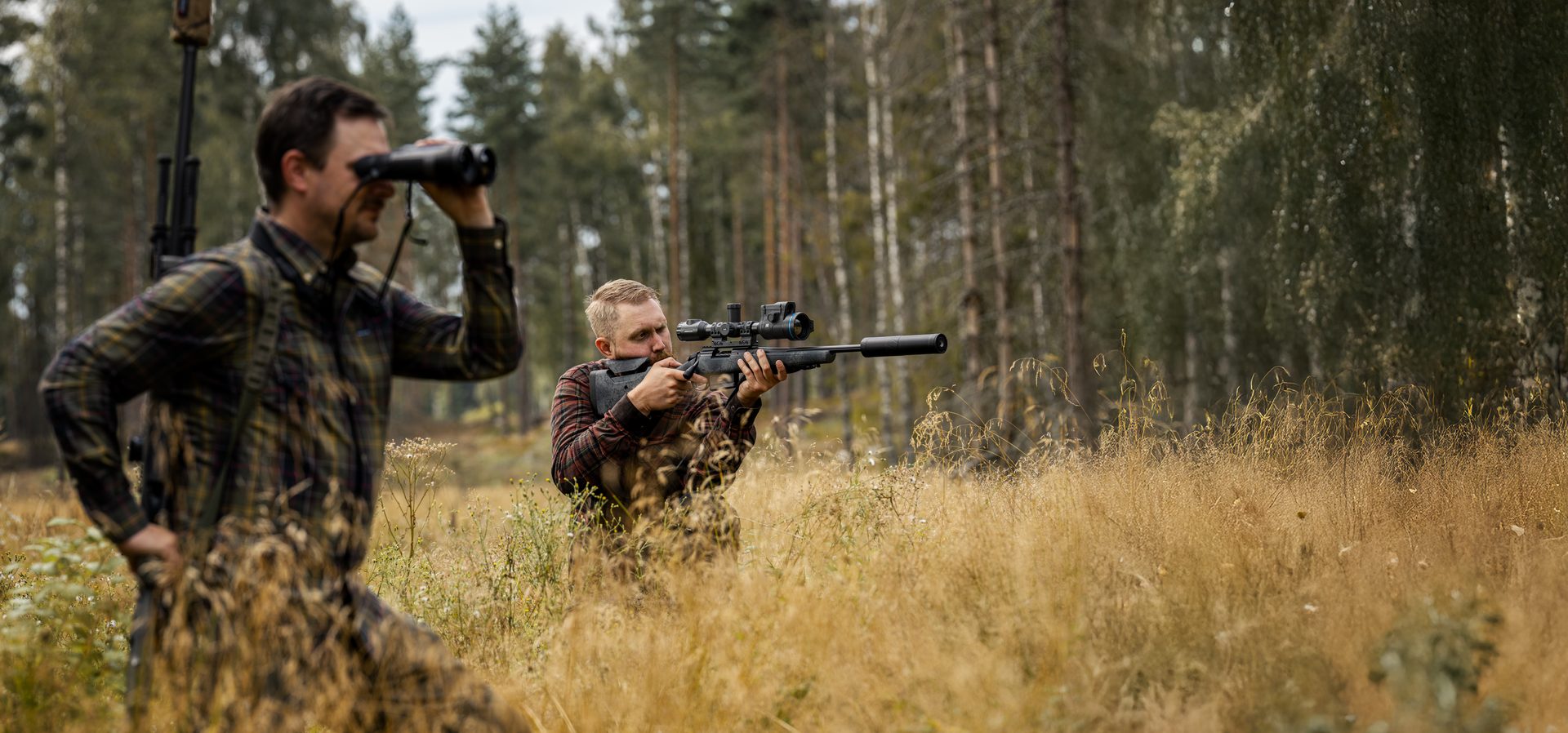
Is thermal imaging truly real-time, or is there always a delay?
Thermal imaging is near real-time, but it always includes minimal latency due to sensor capture, processing, and display rendering.
A thermal imaging device operates through a structured pipeline: infrared detection → signal conversion → image processing → display output. Each stage requires time, even if measured in milliseconds. This processing delay is unavoidable because the system must interpret heat data before presenting a usable image.
In modern thermal optics, this delay is so small that it feels instantaneous. However, it still exists. The difference between devices lies in how efficiently they process and display the image.
This matters because perceived responsiveness directly impacts situational awareness. When scanning static terrain, latency won’t be nearly as relevant as it is when tracking movement.
Read more: Thermal vs night vision: Which to choose?
What causes latency in thermal imaging devices?
Latency in thermal imaging devices is caused by sensor read time, image processing, and display refresh speed.
Each component contributes a small portion of delay. Combined, they define how responsive the device feels in real-world use.
How does the thermal sensor capture and convert heat into an image?
A thermal sensor detects infrared radiation and converts it into an electrical signal, which is then translated into a visual image.
A microbolometer sensor array measures heat differences across a scene. Each pixel represents a temperature value. The device processor converts these values into grayscale or color-mapped visuals.
This process is not instantaneous. The sensor must complete a full read cycle before sending data forward. Faster sensors reduce this delay and improve responsiveness.
In hunting scenarios, this matters because heat contrast changes quickly, especially when animals move between cover and open terrain.
Related: Thermal sensor guide
What role does image processing play in thermal delay?
Image processing adds latency because the device must clean, enhance, and interpret raw thermal data.
A digital signal processor (DSP) performs several tasks:
- Noise reduction
- Contrast enhancement
- Edge sharpening
- Dynamic range adjustment
These steps improve image clarity but require computation time. More advanced processing produces better images, but it can increase delay if the processor is not powerful enough.
Modern devices balance this trade-off by using optimized algorithms and high-performance processors.
Field warning: Excessive image smoothing can make movement appear delayed or less precise, especially when tracking small or fast targets.
How does display refresh rate affect perceived lag?
Display refresh rate determines how often the screen updates the image, directly affecting perceived smoothness.
A 30–50 Hz display updates 30 to 50 times per second. A 60–120 Hz display updates more frequently, reducing visible motion blur and lag.
Even if internal processing is fast, a low refresh rate can make the image feel delayed or choppy.
This matters most when:
- Panning quickly across terrain
- Tracking running animals
- Using higher magnification levels
Decision shortcut: If you prioritize motion tracking, choose a device with at least a 50 Hz refresh rate.
How much latency do thermal imaging devices actually have?
Thermal imaging latency typically ranges from under 50 ms in high-end devices to 150–300 ms in entry-level models.
Latency is measured in milliseconds (ms), representing the time between heat detection and image display.
- High-performance devices: ~20–60 ms
- Mid-range devices: ~60–120 ms
- Entry-level devices: ~150–300 ms
At lower latency levels, the delay is nearly imperceptible. At higher levels, movement appears slightly behind real-time.
This difference becomes critical in dynamic environments. A 200 ms delay may not matter when scanning a field, but it becomes noticeable when tracking fast-moving wildlife.
Does thermal imaging lag affect moving targets in hunting?
Yes, thermal imaging lag directly impacts tracking accuracy, especially for fast-moving animals.
Even a small delay means the displayed position of the animal is slightly behind its actual position. This effect increases with speed, distance, and magnification.
How does latency affect tracking accuracy?
Latency introduces a small positional error between the real-world target and the displayed image.
When an animal moves quickly:
- The sensor captures its previous position
- The processor renders that position
- The display shows it slightly late
This creates a need for prediction. Hunters must anticipate movement rather than react purely to what they see.
This matters because precise timing is critical for ethical and effective shooting.
When does lag become noticeable in real hunting scenarios?
Lag becomes noticeable when movement speed, zoom level, and environmental conditions amplify delay.
Common scenarios include:
- Fast-moving wild boar in open terrain
- Predator tracking at night
- High magnification scanning
- Cold environments with high thermal contrast
In these conditions, even small latency differences become more visible.
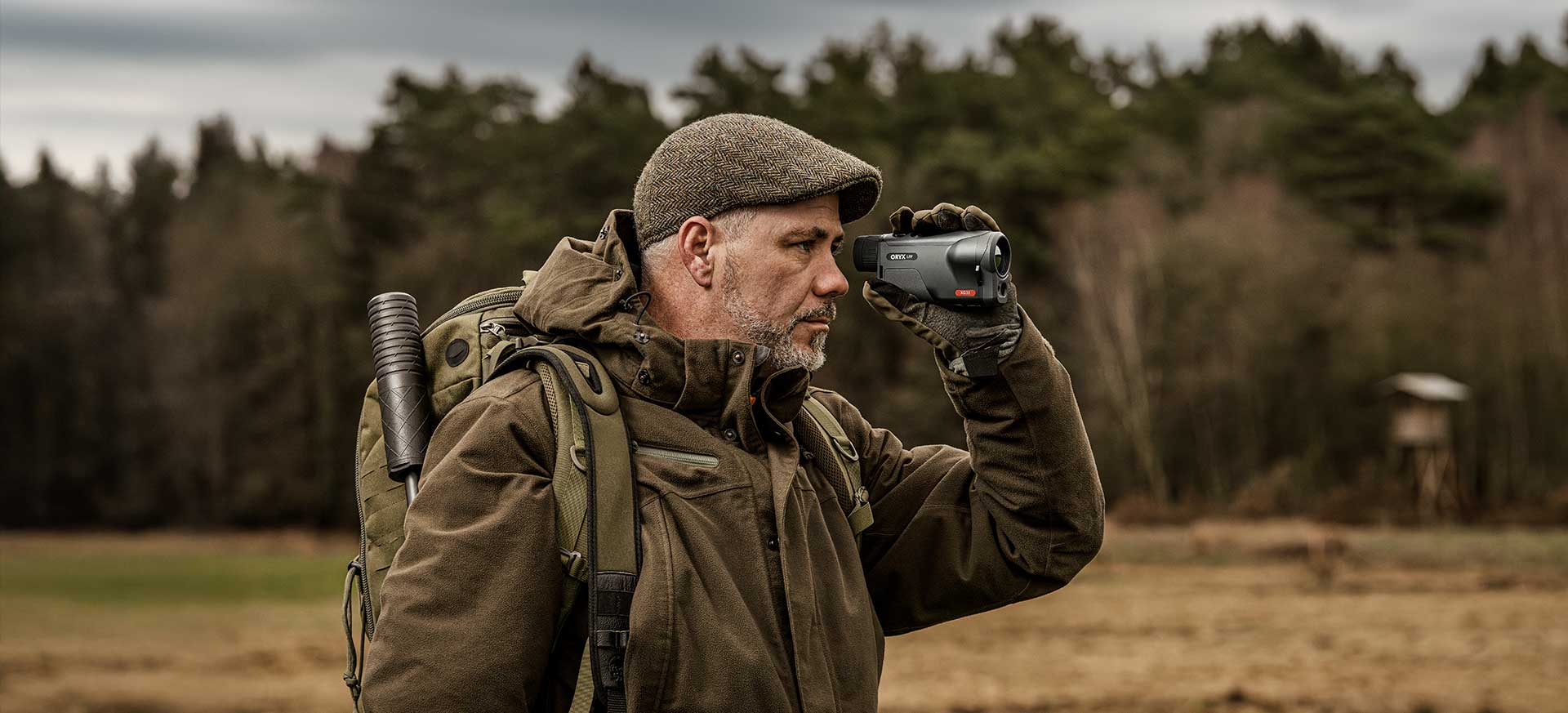
What is the difference between latency, frame rate, and refresh rate?
Latency is the delay between heat detection and display, frame rate is how many images the sensor produces per second, and refresh rate is how often the screen updates.
These three terms are often confused but represent different parts of the system:
- Latency → total system delay
- Frame rate → sensor output speed
- Refresh rate → display update speed
A device can have a high frame rate but still feel slow if latency is high. Similarly, a fast processor can be limited by a low refresh display.
Understanding this distinction helps you evaluate real-world performance rather than relying on a single specification.
How do high-end thermal devices minimize lag?
High-end thermal devices minimize lag through fast sensors, powerful processors, optimized algorithms, and high-refresh displays.
Modern thermal optics use an integrated approach:
- High-sensitivity sensors reduce capture time
- Advanced processors accelerate image rendering
- Optimized firmware reduces processing overhead
- Stable frame output ensures smooth motion
This combination reduces total latency and improves perceived responsiveness.
Why do advanced thermal optics feel closer to real-time in the field?
Advanced thermal optics feel closer to real-time because they deliver consistent, stable, and fast image updates.
A smooth image depends on:
- Low latency
- Stable frame delivery
- Efficient noise reduction
- High refresh displays
When these elements work together, motion appears natural and continuous.
This matters because human perception is highly sensitive to motion irregularities. Even small improvements in consistency can make a device feel significantly faster.
Which features directly improve motion tracking and reduce lag?
Key features that improve motion tracking include fast image processing, 50–60 Hz frame rates, OLED or AMOLED displays, and high-sensitivity sensors.
Each feature contributes to responsiveness:
- Fast processing reduces delay
- High frame rate improves motion continuity
- Advanced displays reduce visual lag
- Sensitive sensors capture detail faster
These features are especially important for hunters tracking moving targets in low-light or high-contrast environments.
How to choose a thermal device with minimal latency?
Choose a thermal device with a high refresh rate, powerful processor, and optimized image pipeline.
Key specifications to prioritize:
- 50–60 Hz refresh rate
- OLED or AMOLED display
- High-performance processor
- High-sensitivity thermal sensor
- Non-intrusive calibration system
These features ensure a smoother and more responsive viewing experience.
Decision shortcut: If your primary use is tracking moving animals, prioritize responsiveness over maximum zoom.

FAQ
Does thermal imaging have lag?
Yes, all thermal imaging devices have a small amount of lag due to sensor processing and display rendering. In modern devices, this delay is minimal and often unnoticeable.
How fast is thermal imaging in milliseconds?
Most modern thermal devices operate between 20 and 60 milliseconds of latency, while entry-level models may reach up to 300 milliseconds.
What is a good refresh rate for thermal scopes?
A refresh rate of 50–60 Hz is considered optimal for smooth motion and minimal perceived lag in hunting scenarios.
Can thermal cameras track fast-moving animals?
Yes, but tracking accuracy depends on latency, refresh rate, and user experience. Lower latency improves tracking precision.
Why does my thermal scope feel delayed?
A thermal scope may feel delayed due to low refresh rate, slow processing, or heavy image enhancement features.
Is 50 Hz enough for hunting?
Yes, 50 Hz is sufficient for most hunting applications and provides smooth motion tracking in typical field conditions.
What affects thermal imaging speed the most?
The main factors are sensor speed, image processing power, and display refresh rate. All three must be optimized for low latency.
About the author

Michael Gates
Michael Gates has progressed through multiple roles in production since joining Pulsar in 2021, building hands-on expertise in calibration, optical assembly, and inventory control. His experience spans the full manufacturing process, from component-level precision work to overseeing stock and workflow efficiency.
Before purchasing any night or thermal vision device, please make sure you adhere to the local legislation and only use it when it is allowed. Our ambassadors come from various countries and travel a lot, which allows them to test different devices. We do not encourage or support the illegal use of our devices in any events. If you wish to learn more about export and sales restriction policy, please visit the following link: Export and Sales Restriction Policy.