
Expert Contributor:
Riccardo Tamburini, Julia Nowak
Estimated read time: 7 min.
When darkness falls, wild boars come alive. They leave the woods to feed along field edges and crop lines, challenging hunters to read movement, wind, and light like never before.
If you want to learn how to hunt wild boars at night safely and effectively, this guide covers everything — from understanding nocturnal habits to using thermal imaging devices for clear detection and identification.
You’ll also discover expert insights, field-proven tactics, and key legal differences across Europe to help you plan every hunt with confidence.
Quick answer
Across Europe, wild boars are most active after dark, feeding along forest edges, crop fields, and acorn-covered clearings. To hunt them effectively, use thermal imaging devices—like Pulsar handheld monoculars or LRF binoculars—for clear detection and safe identification in total darkness.
Always check your local regulations, as night hunting laws differ: Germany allows certain clip-on thermals, France requires prefectural permissions, and Spain sets rules by region.
With the right gear, awareness of terrain, and respect for local law, both new and experienced hunters can plan safe and successful night hunts.
Recommended Pulsar devices for wild boar hunting:
- Premium thermal monocular: TELOS LRF XT50 — Pulsar’s newest flagship thermal monocular for detailed observation, wide-area scanning, and ranging across open fields, forest edges, and mixed terrain.
- Multispectral binoculars: Symbion DXT50 / DXR50 — combined digital and thermal channels for reliable detection and identification in mixed light from dusk through night.
- Thermal binoculars: Merger LRF XP35 — stable two-hand scanning and range finding on hedgerows and irregular terrain.
- Thermal monocular: Axion XQ19 Compact — pocketable, fast scanning while moving quietly.
- Thermal riflescopes (where legal):
- Thermion 2 LRF XG50 / XL50 — precision thermal riflescopes with Picture-in-Picture and laser rangefinding for longer shots.
- Trail 3 LRF XQ50 / XR50 — the latest Pulsar thermal riflescope, built around a compact, rail-mounted monoblock design for fast handling in dynamic wild boar hunts.
- Handheld thermal: Oryx LRF XG35 — tracking wounded animals in cover.
- Night vision devices: (where permitted) – support close-range observation with light amplification.

Why night hunting works for European boar
Boars are intelligent, social, and cold-nosed. They exit thick cover to raid crops, beet piles, and mast trails wherever and whenever human pressure drops. Thermal optics let you detect first, then identify correctly—particularly important where shooting a leading sow or dependent young is heavily penalized. Compared to daylight, night compresses decisions into predictable feeding windows and adds thermal contrast that turns faint movement into clear, actionable targets.
Actionable takeaways
- Expect boar to follow edge highways—tractor ruts, hedgerows, and rides. Put your body where the sign funnels, not just where the sign is loudest.
- In mixed woodland, many sounders stage just inside cover before stepping into maize; scan the first 10–20 meters of the treeline repeatedly.
- Contrast peaks during frosty pre-dawn. If you have to choose one hour, choose that one.
When planning an approach, don’t forget to take food into account. Our expert, a highly skilled hunter from Italy, Riccardo Tamburini, explains why:
In Italy, we have the possibility to attract wild boars to a feeding point. Food is the Achilles’ heel of this species, and the hunter knows that. This chance offers a lot of advantages: first of all, wild boar will come where you want, at the right distance, and in a place managed beforehand to have a comfortable observation and a clear line of fire.
Generally speaking, we are talking about a quiet place prepared inside a forest where the animals can also come during the day, although we know that wild boar has nocturnal habits.
Attracting a herd close to the hunter, around 50-80 mt, will give them the possibility to get all the info needed to cull the right animal – even with a mid-price thermal device it will be possible to clearly see if a female is lactating or not due to the longer nipples, how many young male or female there are, or if there is also a big tusker inside. With a high-end unit, it will also be possible to see the ticks on the body!
Best conditions for night boar
Moon phase plays a role in planning your hunts. On dark nights, boar commit to open ground; use spot-and-stalk or sit farther off the field to keep your scent off. Under bright moons or frost, you get superb ID at the cost of tighter movement along edges—plan ambush angles that present broadside shots.
Here’s an additional tip from a highly experienced huntress, Julia Nowak:
Wild boars often get used to moonlight and bright nights, and after a few bright nights, they can be found in the open areas, too.
Wind and terrain are other aspects to consider for every hunt. Valleys pool scent; ridges push it sideways. Walk the spine of hedgerows and step on bare soil in tractor tracks. If the breeze quartering across your seat starts to swirl, drop to a secondary seat downwind rather than “riding it out.”
Seasonal changes can affect your hunt, either adversely or beneficially. Post-harvest months concentrate boar on remaining feed—maize spillage, beet heaps, acorn flats. During winter, high-seat ambush over travel corridors produces steadier shot windows than active stalks on crunchy frost.
To figure out what conditions will be best for you, you’ll need to spend a lot of time observing the species. Riccardo explains why:
Wild boar is a routine species, so it is used to attending the same places, often at the same time. It’s easy to wait for it in a spot we know it will come sooner or later. This involves a good knowledge of the territory and of the animal habits. And the hunter has to read the woods, know the boar’s path, bath, or where the herd sleeps.
For deeper, experience-based insights into wild boar behavior, feeding habits, and ethical hunting, explore our Pulsar hunters’ interview — Everything you need to know about wild boar hunting — where Riccardo Tamburini and Jón Rúnar Guðjónsson share their real-life stories from the field.
Essential gear for night success
Handheld thermals keep rifles steady and allow you to scan a wide area without “fishing” with the muzzle. Where weapon-mounted thermal or night vision is legally permitted, a thermal riflescope enables precise, ethical shots. In stricter regions, pair a handheld thermal with a conventional day scope and pre-ranged lanes from a high-seat.

Optics for boar comparison table
| Category / Use case | Thermal riflescope | Thermal monocular | Thermal binoculars | Night vision devices | Multispectral optics |
|---|---|---|---|---|---|
| Primary function | Precision aiming on a rifle (where legal) | Fast handheld scanning | Wide FOV for long observation | Light amplification where allowed | Detection and identification in any conditions |
| Detection range | Up to ~2,000 m | ~1,200–1,800 m | Up to ~2,000+ m (often with LRF) | Limited; depends on moon or IR | Up to ~2,000 m (thermal) + visual confirmation |
| Total darkness | Excellent | Excellent | Excellent | Limited without IR or bright moon | Excellent (thermal + IR-assisted visual) |
| Identification | High for shot placement | Good for movement detection | Excellent for small but critical details | Lower at distance | High-confidence ID by combining heat + visual detail |
| Mobility / Weight | Medium | Very light | Heavier; best from seats or static use | Light but IR-dependent | Medium; optimized for observation |
| Best use case | Ethical shooting when legal | Mobile edge and brush scanning | Long observation and ranging | Close-range legal scenarios | Situational awareness across changing light conditions |
Explore more:
Rifles and loads: In driven or static night scenarios, many hunters favor .308 caliber cartridges with controlled-expansion bullets. In Europe, certain countries mandate calibers of at least 7mm (.264) for hunting wild boar. Where suppressors are permitted, use them—they protect hearing and reduce disturbance for follow-ups. Zero at your typical seat distance (often 80–120m) and verify holds at 2× and 4× digital zoom on your thermal. And what do our experts use? Let’s ask Riccardo:
I use 9,3×62 because I need to leave the animal on the “anschuss”. This way, I avoid having to look for the carcass in the woods during the night. This is why we use a powerful calibre with a good power reserve.
Non-optics essentials.
- High-seat strap kit and silent cushion to reduce creaks.
- Tripod or tall sticks for hedge-line stalks.
- LRF binoculars for accurate ranging across irregular hedges.
- Soft-soled boots that grip wet ladder rungs.
- Compact headlamp featuring low and red light modes for post-shoot work.
Related: Thermal vs night vision: which to choose?

Techniques: high-seats, edges, quiet stalks, and recoveries
Night wild boar hunting demands a flexible approach — no single tactic fits every situation. The following techniques show how to adapt, whether you’re waiting from a high seat, stalking along edges, working in pairs, or recovering game after the shot.
High-seat ambush with pre-ranged lanes
- Seat selection: Choose a seat with downwind lanes toward known trails or crop spills. Clear small branches, but avoid opening a “window” that skylines you.
- Pre-range: With LRF binoculars, ping obvious features—bale stacks, verge posts, lone trees—and note holds: “Bales 110m, oak 145m, verge 80m.”
- Scan rhythm: Alternate between wide scans (binoculars) and fine checks (riflescope) to avoid tunnel vision. Re-scan the first few meters inside the treeline.
- Shot discipline: Take a broadside or slightly quartering-away shot. If dependent young appear after the shot, hold; do not double unless you’re certain.
Hedge-line spot-and-stalk (quiet country)
- Start downwind: Walk inside the hedge shadow, not the open track. Every 40 to 60m, stop and scan across the field and along the next edge.
- Use cover objects: Round bales, beet heaps, and irrigation pipes are perfect resting places. Drift between them when the group’s heads drop.
- Final approach: At 120 to 80m, switch to tripod or sticks and let the group settle. Use PiP so you can track movers without over-zooming.
Two-person relay (seat + stalker)
- Seated Spotter: Call positions and ranges from the high-seat using thermal binoculars.
- Stalker: Advance along a hedgerow with sticks. The spotter keeps the stalker off cattle and property lines and calls the send when a clean backstop opens.
If you choose this approach, make sure you trust your companion, but always double-check yourself. As Julia puts it:
I think the hunter should always rely on their own observations and make decisions 100% on what they see, not purely relying the shot on an observer.
Night recovery without chaos
- Mark the fall: Range and record a landmark as soon as you break the shot.
- Thermal search: Scan for warm blood on stubble, hoof heat on grass, and residual body heat. In forestry blocks, heat can reflect off wet bark—verify with eye-level scans.
Keep in mind that blood cools down really quickly – don’t rely on its heat signature for finding the animal. Our expert Julia, for example, never scans for blood:Thermal has helped me to find the actual animal, lying somewhere, but I was never able to see those heat reflections or blood.
- Grid with wind: Work into the wind so scent and thermal mirage don’t mask the sign. If you lose it, return to the last certain spot and grid in 10m lanes.
Don’t expect to master just one technique, though – wild boar hunting requires agility. Here’s how Riccardo approaches the process:
Hunting wild boar during the night involves good flexibility because scenarios could be various and different from each other. Stalking during the night is very difficult: this is why I prefer to set up a feeding point, waiting for the animals.
Sometimes, when you are looking for wild boars in an open territory, I cover great areas with the car, exploring the fields on the right or on the left, using some tackle to remotely control the thermal device placed outside the car. Only after spotting an animal can I try to get close to it, placing a precise shot from the stick. If the herd is alarmed, I can also shoot from a big distance, counting on the precision and safety of my thermal riflescope.
Hunting ethics: Many regions strictly regulate night shooting to prevent mistakes on family groups. If you cannot confirm a safe, adult, non-leading target with a clean backstop, pass the shot and try again tomorrow.

Safety and legal considerations with country examples
Laws regarding night hunting and thermal/night-vision devices vary widely and are subject to frequent changes. Always consult your national law, as well as any regional (E.g., land, department, autonomous community) rules and current control orders, before hunting.
- Germany: Since February 2020, the federal Weapons Act (§40(3) WaffG) has permitted hunters to possess and use certain night-vision clip-ons/attachments; however, the use of these devices for hunting is regulated by each Land (state). Many Länder authorize these devices specifically for boar control, while stand-alone weapon-integrated thermal scopes may remain restricted. Always check your Land’s Jagdrecht and any current decrees.
- Poland: Regulatory changes beginning in 2019 enabled the legal use of night vision and thermal devices during night boar hunts, partly to support the control of African swine fever. Clubs (Koła Łowieckie) and districts may implement practical conditions; confirm where you intend to hunt.
- France: Night shooting for boar is commonly required to obtain a prefectural order (arrêté) that specifies locations, dates, and device allowances—including thermal devices. Many departments (e.g., Cher, Moselle, Bas-Rhin) have issued such orders for crop-damage control; details vary by department and year. Read the current order before any hunt.
- Spain: Rules differ by autonomous community. Several communities permit night boar control and certain thermal/NV uses under specific conditions (e.g., handheld detection versus weapon-mounted aiming). Verify 2024–2025 guidance for the community you hunt.
Riccardo explains the situation in Italy:
It depends on the region but, generally speaking, we can hunt the wild boars during nighttime using thermal or digital devices or thermal riflescopes. As I already wrote, we can also set up a feeding point to increase the possibility of culling the right animals.
Legal disclaimer: Night shooting and the use of thermal/NV devices vary by country, regional authority, season, species, land tenure, and current control orders. Confirm the latest national law and local decree before hunting and obtain all required permissions.
Read More: Night Hunting Laws
Advanced tips European hunters can add tonight
- Seat noise audit: In daylight, climb your seat, shift weight, and mark every squeak. Tape or pad contact points. A quiet seat yields longer exposure at under 120m.
- Edge geometry: When wind is marginal, sit on the downwind inside corner of the field; boars enter diagonally, providing broader backstops and longer shot windows.
- Reticle choice: Simple illuminated center with PIP beats busy grids at night. You want instant acquisition and uncluttered edges to track movers.
- LRF cadence: Range before you shoulder the rifle. The more you range, the less you guess—and guessing causes fatigue, misses, or unsafe holds.
- Group management: If the first pig runs, resist swinging wildly. Let the group pause or re-angle, then take a second clean shot on a clear adult with a known backstop.
Note from Julia:
We should actually be most careful with the adult boars. And they are not the only ones we should hunt.
- Cold-weather breath: Exhale down through your collar at the shot to keep breath plumes out of your sight picture.
- Shared permissions: In mosaic farms, coordinate with neighbors; a polite phone call prevents disputes when tracking across boundaries at 2 a.m.
Recommended Pulsar devices for European wild boar
Different hunting situations call for different gear. Here’s a quick guide to Pulsar devices that work best for wild boar hunting across Europe.
| Hunting situation / need | Device type | Why it helps in Europe | Pulsar device example |
| Detailed observation across fields, forest edges and mixed terrain | Premium thermal monocular with LRF | Wide FOV supports efficient scanning, while HD thermal detail and integrated ranging help evaluate individual animals within a group before deciding how to proceed | TELOS LRF XT50 |
| Long scanning from high seats | Thermal binoculars | Stable two-hand hold; LRF ranges hedgerows and irregular fields | Merger LRF XP35 |
| Mobile field edges / hedgerows | Thermal monocular | Pocketable, fast scan while moving quietly | Axion XQ19 Compact |
| Legal rifle-mounted thermal* | Thermal riflescope | Precision, PIP, and ranging where permitted | Thermion 2 LRF XG50 / XL50 |
| Professional boar control with compact rifle-mounted thermal | Thermal riflescope with LRF | Compact rail-mounted design with integrated laser rangefinder and ballistic support, ideal for professional night hunting, forestry, and pest control in challenging real-world conditions | Trail 3 LRF XQ50 / XR50 |
| Recovery after a shot | Handheld thermal | Trace the wounded boar in cover | Axion XQ19 Compact |
| All-day observation in mixed light conditions | Multispectral binoculars | Combines thermal detection with digital daytime identification, helping assess animals and terrain from daylight through twilight | Symbion DXT50 / DXR50 |
*Where national/regional law allows weapon-mounted devices for boar.
For experienced wild boar hunters who spend more time observing before deciding how to approach, the TELOS LRF XT50 offers a premium handheld option. Its 1280×1024 HD thermal sensor provides high image detail for evaluating animals within a group, while the wide 17.5° field of view helps keep more of the sounder and surrounding terrain visible during scanning. An integrated 1200 m laser rangefinder adds fast distance assessment without switching devices.
Read more: Pulsar TELOS LRF XT50 thermal monocular in-depth review
Explore more:
- Best thermal riflescopes for hunting from Pulsar
- Top thermal monoculars for hunting from Pulsar
- Top Pulsar thermal bincoulars for Hunting
- Best Pulsar clip-on scope for hunting
FAQ
What’s the best time of night to hunt boar?
The first two hours after dark and the frosty pre-dawn window. Those periods combine movement, contrast, and lower pressure.
Is thermal better than night vision for boar?
For detection and fast sorting, yes. Thermal requires no light and excels in mixed cover. Night vision can support aiming in jurisdictions where thermal aiming devices are restricted, provided IR use is legal.
Can I legally use a thermal riflescope?
In some countries/regions. Germany’s federal allowance covers certain clip-ons and attachments, while Länder control hunting use. Poland broadly permits thermal/NV in night boar hunts. Many French departments require a prefectural order, and Spain varies by community. Always read the latest regulations for your area.
What are the safest techniques at night?
High-seats with known backstops, strict target ID, clear communication with partners, and patience when wind or backdrop is marginal.
Further Reading:
- Hunting Coyotes at Night with Thermal
- How to Hunt Nocturnal Deer and Bucks at Night
- Thermal monocular hunting guide
About the experts

Co-Author:
Joshua Skovlund
Joshua Skovlund has covered stories for Task & Purpose, Outdoor Life, and Coffee or Die Magazine. He has photographed and filmed multinational military exercises and hunting trips in austere environments around the world, with his first archery kill in Kona, Hawaii.
Joshua grew up in South Dakota, learning how to scout and hunt deer, turkey, pheasant, and waterfowl. He currently scouts and hunts black bears, turkeys, and deer, while taking every opportunity to go to the range and further hone his pistol and rifle shooting skills.

Expert Contributor:
Julia Nowak
Julia Nowak was born and raised in a hunting family in Poland and now lives — and continues to hunt — in Sweden. She holds a degree in sustainable forest and game management, bringing both tradition and scientific knowledge to her pursuits.
For Julia, hunting is not just a hobby; it’s a way of life. She also runs the YouTube channel Hunting O’Clock, where she shares her experiences and insights from the field.
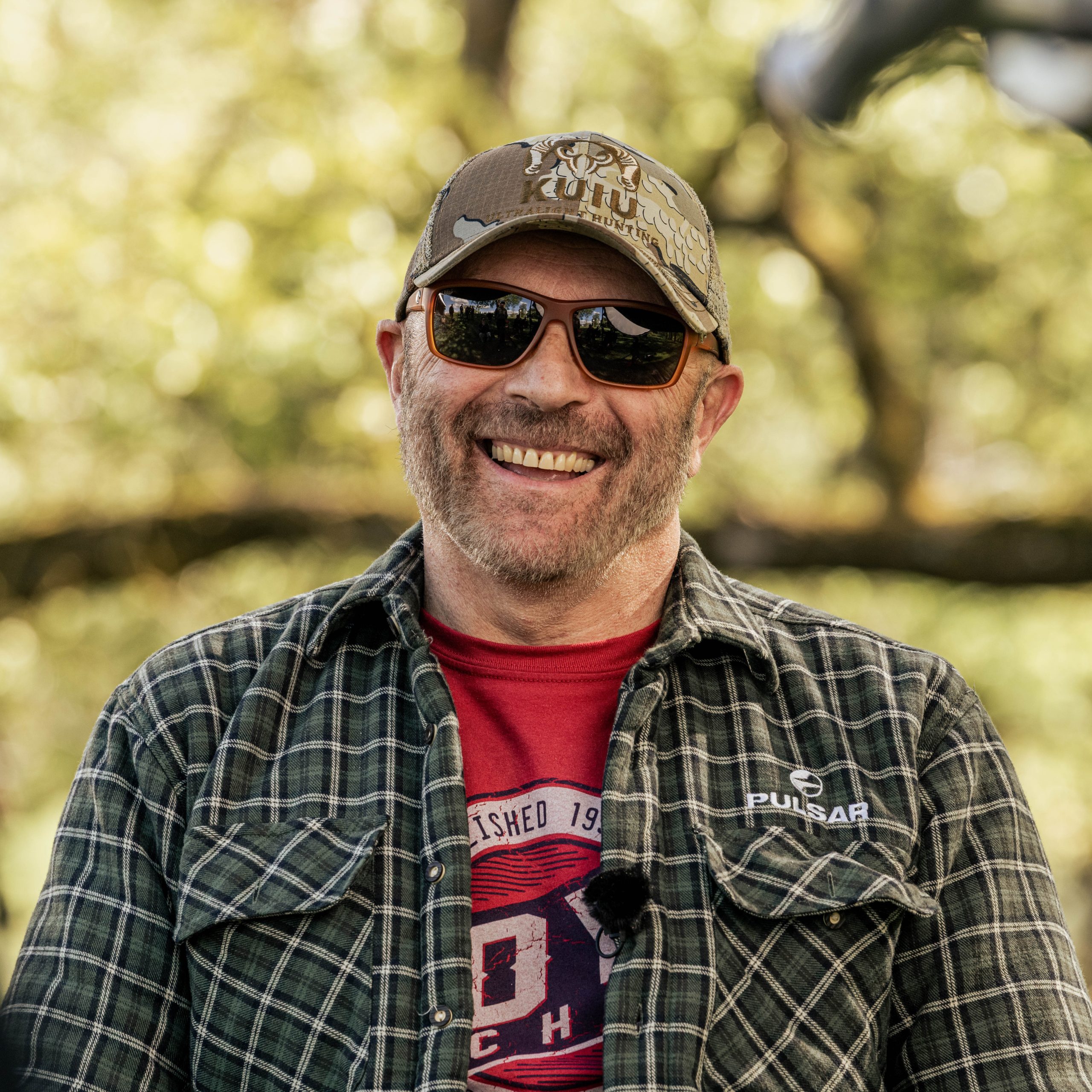
Expert Contributor:
Riccardo Tamburini
Riccardo Tamburini is a lifelong outdoorsman, hunter, fisherman, and professional wildlife photographer and filmmaker.
With over 35 years of experience across plains and mountains in Italy and abroad, he combines field expertise with a mechanical engineering background to explain the technology behind rifles, optics, and digital devices.
Before purchasing any night or thermal vision device, please make sure you adhere to the local legislation and only use it when it is allowed. Our ambassadors come from various countries and travel a lot, which allows them to test different devices. We do not encourage or support the illegal use of our devices in any events. If you wish to learn more about export and sales restriction policy, please visit the following link: Export and Sales Restriction Policy.