
Expert Contributor:
Vito Cortese, Graeme Donald
Estimated read time: 7 min.
The evolution of hunting, beginning with ancient traditions and maintaining its relevance in this modern technological time, is both captivating and controversial. Since the very start, humans have constantly sought an edge in the wilderness. Yet the goals of hunting shifted significantly – from a necessity for survival to a regulated activity with a focus on conservation.
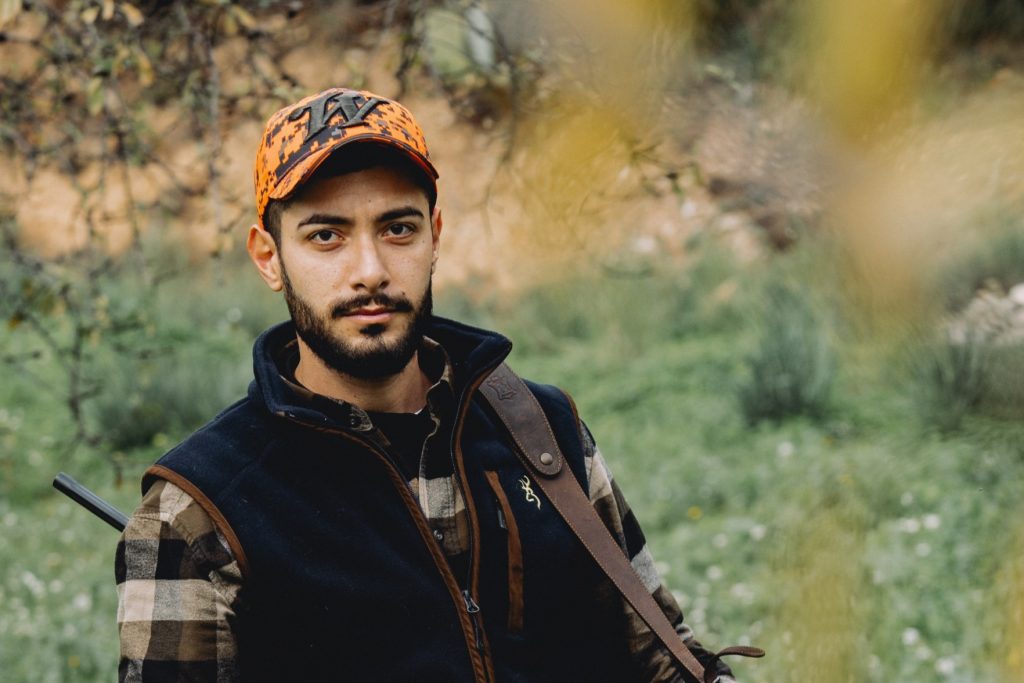
In this article, our longtime ambassadors – Vito Cortese from Sicily and Graeme Donald from South Africa – will share their own personal encounters with both hunting and thermal advantage. Having years of experience in the field, they both witnessed a drastic transformation in their ongoing hunting careers that is worth a separate story itself.
-

- Vito Cortese
-
- Graeme Donald

Torchlight to thermal
For both Vito and Graeme, the passion for hunting ignited in their early childhood. Yet the introduction of thermal imaging devices occurred far later. As Graeme recalls, “From the age of 16, night hunting has been a top priority for me. I was fascinated by the fact that you can outsmart a nocturnal predator using certain calling methods.” Up to his early twenties, his night outgoings‘ sack consisted of “a high-powered torch fitted with a dimmer and a good glass scope.”
For Vito, the shift from traditional hunting methods to thermal optics happened no earlier, since, as Vito puts it, „Sicily has always been synonymous with ancient traditions, rejection, and fear of using new technologies”.
After the first night vision optics were released, the interest in their abilities was shaded by controversy and the perception of being “unfair.” Yet the interest was motivating enough for younger Graeme and Vito to test the new devices themselves. Graeme remembers that in his early twenties, he was probably the first person in his circle to try a newly released night vision scope, since his determination encouraged him to follow the pre-release for quite a while and sign up for the waiting list. Then, when he got his first thermal unit at the age of 27, it felt like hitting the jackpot. „My success rate for hunting vermin went from the 60% ratio right up to the 95% mark. Wow, what a game-changer!” Graeme says.
For Vito, the first hunt with thermal gear felt like one of his “video games, where in certain situations the use of thermal was crucial to winning battles.” As he defines, “without thermal imaging, you can only rely on your senses to manage the various challenges you face on the field.” While with thermal imaging, “it’s as if you have a sixth sense – you too become a nocturnal animal with night vision.”
It’s as if you have a sixth sense – you too become a nocturnal animal with night vision.
Vito Cortese

The new normal: extending ethical hunting hours
Before thermal was even released and was merely seen as a tool for military use exclusively, the end of the day would mean the end of the hunt for many. Graeme says that in South Africa, dusk brought fear even for experienced hunters. With local species starting their move and feed after 4 p.m., he says they would have two to three hours of prime time, and the shot would go off 30 minutes before dark. “We call this ‘the wounding hour,’ and honestly, it happens so fast. Even if the animal is hit properly, the chances of losing it in thick bush or low light are great.”
The thermal advantage eliminates fear, replacing it with certainty and confidence. As Graeme depicts it, “Just the fact that you can see where the animal has run after the shot goes off gives us, professional hunters, confidence to hunt in low-light situations.” Since the introduction of Pulsar thermal, “the time of the day to hunt is not even a consideration anymore. Vermin hunting in the pitch dark is a reality, and hunting our nocturnal bush pigs in South Africa has become the new normal.”
Just the fact that you can see where the animal has run after the shot goes off gives us, professional hunters, confidence to hunt in low-light situations.
Graeme Donald
For Vito, the thermal gear elevated his study of wild boars, which greatly increased his chances of successfully bringing them home. “Eliminating a large boar on my own allows me to hunt more calmly with my dogs, thus avoiding the possibility of accidents for my four-legged assistants during the hunt.”

From foreign tool to “second nature”
Both experts agree that getting used to operating thermal devices to their full potential requires both time and patience. The more you practice navigating through features and using them for your advantage, the better outcome you can expect in the field. “It’s like with anything new, the more you use it, the better it becomes, and eventually it’s like riding a bike,” suggests Graeme.
Pulsar thermal optics were created in close partnership with real hunters, making them not only sturdy but also intuitive and easy to use. “You can calibrate a device in an hour and be able to use it independently from your second outing in the field,” Vito shares his insight. Graeme agrees, adding, “Once you have spent a few hours playing around with the device, it becomes second nature. As they say, practice makes perfect.”

Technology as conservation: dispelling the ‘unfair’ myth
With such rooted traditions, acceptance and involvement of modern tools can be difficult and feel almost unnatural. It’s no wonder that thermal devices are covered with misconceptions to this day. As Vito defines, “Thermal imaging does not necessarily mean ‘killing’ but also monitoring and studying wildlife. Thermal imaging helps to better identify game, reducing the risk of shooting errors and improving selection. This preserves the balance of wildlife and protects the dignity of the animal.”
Although keeping a fair balance between authentic hunting traditions and innovative tools may seem impossible, the answer lies in the key hunting goals. As the historical shift of hunting turns more toward animal control in humanistic methods, thermal becomes a necessity, not a fraud. Graeme suggests that “the ethics of hunting and the fair chase game should prevail when it comes to hunting and that the additional tools we are given as hunters should be used to make sure that the is no unwanted suffering when it comes to the animal being hunted.”

Vito agrees that ethics and responsibility should play a crucial role in hunting. “I believe that modern technologies, such as thermal imaging, are useful tools when used responsibly. They do not replace field experience, knowledge of the territory, and respect for the rules that underpin traditional hunting, but they can be integrated to make it safer and more ethical,” he says. Then he adds, “For me, the heart of hunting remains the same: the connection with nature, tradition, and community. Modern technologies are a support, not a shortcut.”
For me, the heart of hunting remains the same: the connection with nature, tradition, and community. Modern technologies are a support, not a shortcut.
Vito Cortese
Thermal vision hasn’t just changed when hunters go out; it has fundamentally improved how they hunt. By integrating modern technology with an unwavering commitment to ethics and conservation, today’s hunters ensure their ancient pursuit remains relevant, responsible, and continually evolving.