
Expert Contributor:
Riccardo Tamburini
Estimated read time: 6 min.
Thinking about upgrading from your Pulsar Thermion 2 to Thermion 3? The new series brings two models — the XR60 and the XT60 — with a 1,200 m laser rangefinder (LRF), two different sensors, boosted battery life, 128 GB of memory, and an improved control layout. But do those changes make a meaningful difference in the field?
Here, we compare Thermion 3 with Thermion 2 side by side, show where the differences are real and where the two generations are the same, and help you decide whether upgrading makes sense for your hunting style, distances, and shooting priorities.
Quick answer
If you already own a Thermion 2, Thermion 3 makes the most sense when you want a 1,200 m integrated laser rangefinder, an upgraded sensor (the XR60 with higher magnification or the XT60 with a wider, higher-resolution view), and the redesigned controls and interface. Whether one of those is an urgent reason to switch depends solely on your hunting and whether you feel like Thermion 2 is doing enough.
Upgrade to Thermion 3 if you:
- want the newest generation of the Thermion platform,
- need a faster and longer-reaching integrated laser rangefinder, up to 1,200 m,
- need more magnification than your current model offers (the XR60 goes up to 40×, although the image quality won’t be top-notch at this level),
- want more image detail than your current sensor gives you (the XT60’s 1,280 × 1,024 is the highest-resolution sensor in the whole Pulsar lineup),
- want longer runtime (the XR60 runs 14 hours, against 7 to 11 hours across the Thermion 2 models),
- want the redesigned interface, updated controls, 128 GB of memory, and longer battery life.
Keep Thermion 2 if you:
- are still satisfied with your current image quality and shooting workflow,
- don’t need the longer ranging distance or the newer controls and interface,
- aren’t regularly reaching the limits of your current setup.
Bottom line: Thermion 3 is the stronger choice if you want the latest full-range Thermion experience. Thermion 2 still makes sense if it already covers your normal hunting distances and situations.
What doesn’t change: ballistic and app support, 30 mm rings, 6,000 J recoil resistance, and, on the 60 mm Thermion 2 models, 65 mm of eye relief.

Which should you choose?
| Choose Thermion 3 if… | Keep Thermion 2 if… |
| You want the newest Thermion generation, its improved image, controls, and interface. | Your current Thermion 2 already performs well at the distances and in the conditions you normally hunt. |
| A 1,200 m integrated laser rangefinder with faster readings is valuable for your hunting or land-management use. | An 800 m laser rangefinder already covers the distances at which you range targets, and you find the speed at which it gives readings sufficient.n |
| You need more magnification than your current scope offers (XR60), or more image detail and a wider view (XT60). | Your Thermion 2 already has the magnification and sensor you need. |
| 128 GB of storage and longer battery life are useful additions for you. | The newer battery, memory, and ergonomic updates aren’t important enough to justify changing scopes. |
Thermion 3 vs Thermion 2: side-by-side comparison
Thermion 2 LRF includes several configurations, so specifications vary by model. This table is useful if you know your way around your numbers, but read further for a practical overview.
| Feature | Thermion 3 LRF XR60 | Thermion 3 LRF XT60 | Thermion 2 LRF XL60 | Thermion 2 LRF XP60 | Thermion 2 LRF XG60 | Thermion 2 LRF XL50 | Thermion 2 LRF XP50 Pro | Thermion 2 LRF XQ50 Pro |
| Sensor | 640 × 480, 12 µm | 1,280 × 1,024, 12 µm | 1,024 × 768, 12 µm | 640 × 480, 17 µm | 640 × 480, 12 µm | 1,024 × 768, 12 µm | 640 × 480, 17 µm | 384 × 288, 17 µm |
| System NETD | <18 mK | <20 mK | <20 mK | <18 mK | <20 mK | <20 mK | <18 mK | <18 mK |
| Objective | 60 mm | 60 mm | 60 mm | 60 mm | 60 mm | 50 mm | 50 mm | 50 mm |
| Magnification | 4–40× | 2–24× | 2.5–20× | 3–24× | 4–32× | 1.75–14× | 2–16× | 3–12× |
| Horizontal FOV, degrees | 7.3 | 14.6 | 11.7 | 10.4 | 7.3 | 14 | 12.4 | 7.5 |
| Detection range | 2,950 m | 2,950 m | 2,800 m | 2,000 m | 2,800 m | 2,300 m | 1,800 m | 1,800 m |
| LRF range | 1,200 m | 1,200 m | 800 m | 800 m | 800 m | 800 m | 800 m | 800 m |
| Display | 2,560 × 2,560 AMOLED | 2,560 × 2,560 AMOLED | 2,560 × 2,560 Micro-OLED | 2,560 × 2,560 Micro-OLED | 2,560 × 2,560 Micro-OLED | 1,024 × 768 AMOLED | 1,024 × 768 AMOLED | 1,024 × 768 AMOLED |
| Battery life | 14 h | 8.5 h | 8 h | 11 h | 11 h | 7 h | 8.5 h | 10 h |
| Memory | 128 GB | 128 GB | 64 GB | 64 GB | 64 GB | 64 GB | 16 GB (64 in later models) | 16 GB |
| Eye relief | 65 mm | 65 mm | 65 mm | 65 mm | 65 mm | 50 mm | 50 mm | 50 mm |
| Mounting | 30 mm rings | 30 mm rings | 30 mm rings | 30 mm rings | 30 mm rings | 30 mm rings | 30 mm rings | 30 mm rings |
| Recoil resistance | 6,000 J | 6,000 J | 6,000 J | 6,000 J | 6,000 J | 6,000 J | 6,000 J | 6,000 J |

What stays the same
As you can see, several specifications don’t change between generations, and these mostly include structural, tried-and-tested solutions. For example, all models use 30 mm rings and are rated for 6,000 J of recoil. Eye relief increased to 65 mm with the Thermion 2 60 line, and stayed the same in Thermion 3. This came from an upgraded eyepiece, which also allows for higher-resolution displays on newer models. The battery setup is the same on every model: one internal battery and one external battery.
What are the key differences between Thermion 3 and Thermion 2?
Image performance: two sensors to choose from
Thermion 3 series offers two models with different thermal sensors. The XR60 comes with a 640 × 480, 12 µm sensor, a system NETD below 18 mK, and 4–40× magnification. The XT60 uses a 1,280 × 1,024, 12 µm sensor with a system NETD below 20 mK and 2–24× magnification. In the field, the XR60 is the one for reaching out with more magnification, and the XT60 is the one for a wider view with more image detail. The XT60’s sensor is the highest-resolution one in the entire Pulsar lineup, so the image quality truly is unmatched.
On paper,the XR60 seems very close to the Thermion 2 LRF XG60: sensor resolution and pixel pitch (640 × 480, 12 µm) are the same, base magnification starts at 4×, and you get the same 12.8 m horizontal field of view at 100 m (7.3 degrees). As the newer generation, though, in practice the XR60 gives a slightly better image than the XG60, and its system NETD is a little lower (below 18 mK vs below 20 mK).
Thermion 2 LRF already covers several sensor classes, including high-sensitivity 640 × 480 configurations and HD 1,024 × 768 models. How much Thermion 3 will improve your image will depend on the exact Thermion 2 model you own, but at least an incremental step-up is definitely there.

Rangefinding: 1,200 m vs 800 m
One of the clearest platform-level differences is laser rangefinder. Thermion 3 LRF measures out to 1,200 m and supports both single-shot and scanning modes. Thermion 2 LRF reaches a maximum measurement range of 800 m.
What might matter even more than the distance is the speed at which you get the readings on screen. The new LRF locks on a target quicker, naturally returning a faster reading. Plus, the LRF is now on the side of the lens, inside its housing, making the overall look much smoother and sleeker.
Here’s how Riccardo Tamburini, a hunter and professional wildlife filmmaker with over 35 years of field experience and a mechanical engineering background, sees the new rangefinder:
It’s a big step ahead, of course, although I would have preferred the LRF inside the objective lens. I know the current placement is what makes the Thermion 3 stronger than any similar device from competitors, because using the whole surface of the big 60 mm lens means more thermal radiation reaches the sensor. But hunters don’t think about that and focus on what’s easier to see. The LRF is precise and fast, and it also works in light fog and humidity at night.
Ballistics: a familiar feature, carried forward
Ballistic support isn’t new to Thermion 3. Thermion 2 already works with the Stream Vision Ballistics app and can display a recommended aiming point when the ballistic calculator is active. Thermion 3 continues that: an on-screen suggested point of aim (SPOA) mark appears based on the measured distance and your personalized ballistic profile.

Ergonomics and focusing: a more shooter-focused control layout
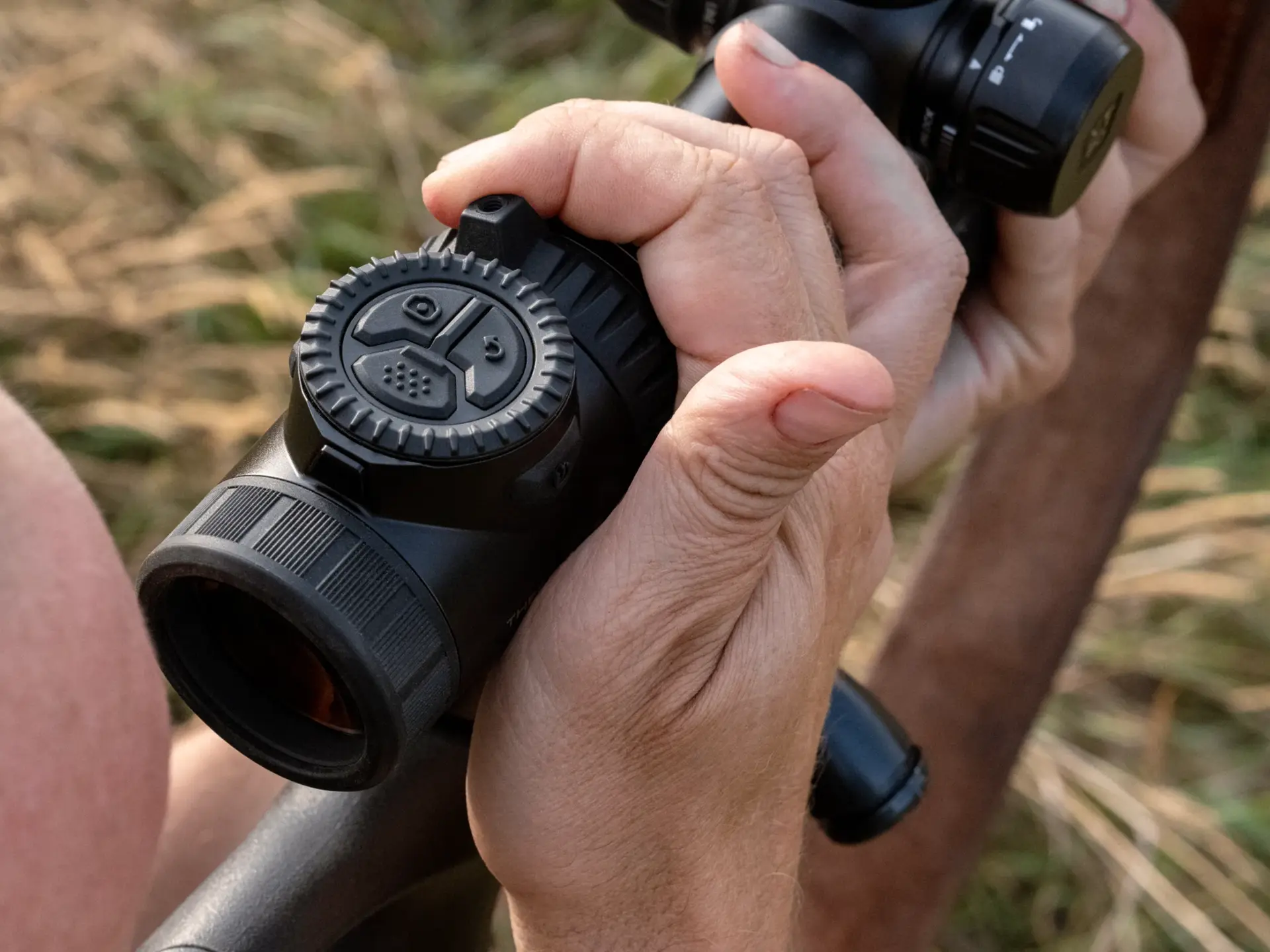
Thermion 3 places functional buttons closer to the shooter on the eyepiece and adds an ergonomic circular encoder for navigation. Focusing is handled by a top-turret wheel that can be reached with either hand and adjusted from close range to infinity. Zooming is now done with the ring on the eyepiece, completely replicating the experience of your classic daytime scope.
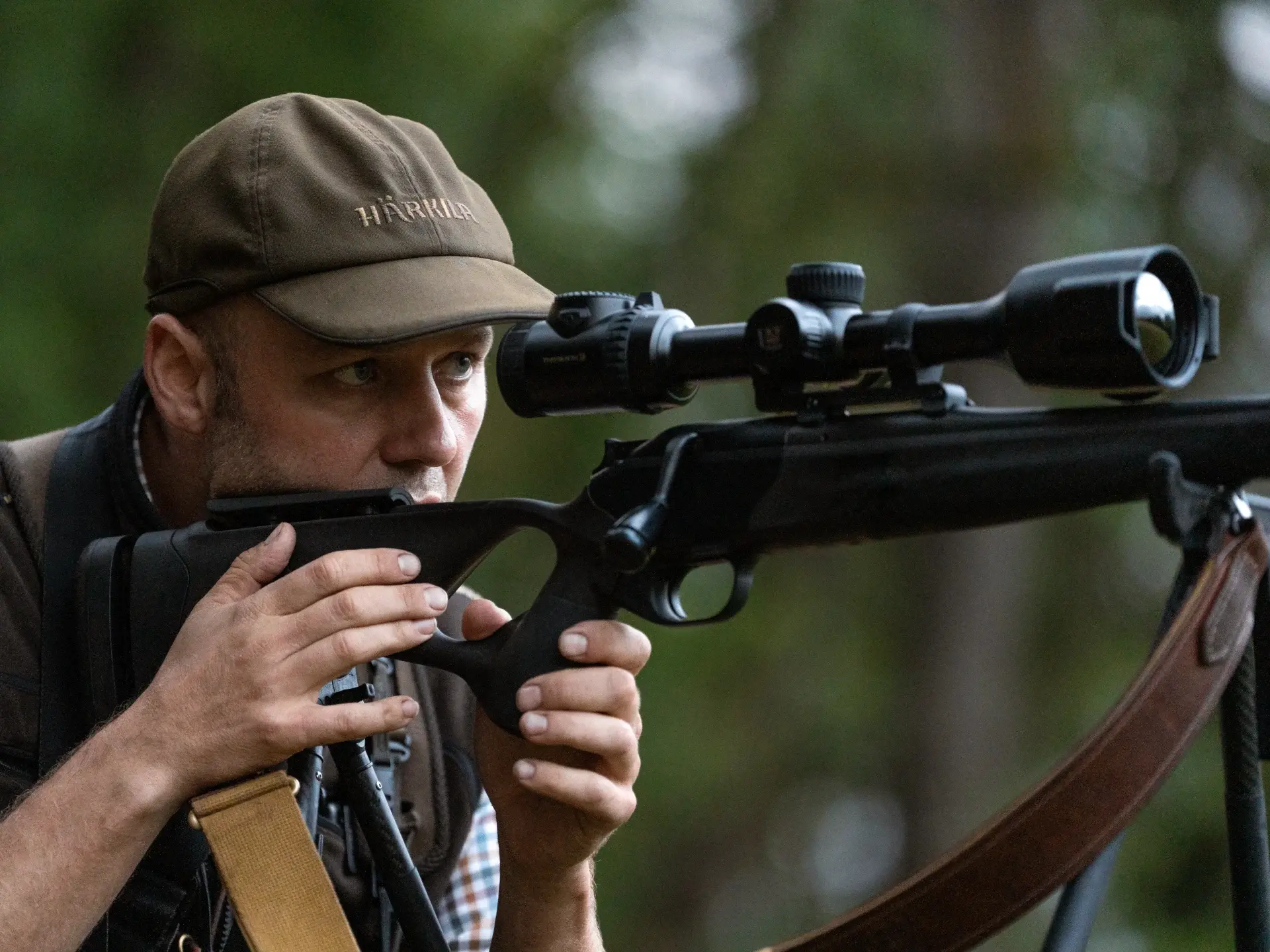
The basic Thermion identity stays familiar. Both generations use standard 30 mm rings and keep the look and mounting logic of a conventional riflescope, and eye relief is unchanged at 65 mm on the 60 mm models.
Here’s what Riccardo says about the ergonomics:
Ergonomics, of course. The Thermion 3 is designed like a standard riflescope, with all the controls where I’m used to putting my hands. The zoom ring is easy to use, and I can change magnification more accurately while staying still and steady, with limited arm movement. The focus turret is also much better than the previous system: you adjust focus with a small, super-precise ring that’s easy to use even with gloves. And the big encoder, also found on the Trail 3, lets me navigate all the features without wasting time and go straight where I want.
Display, memory, and recording
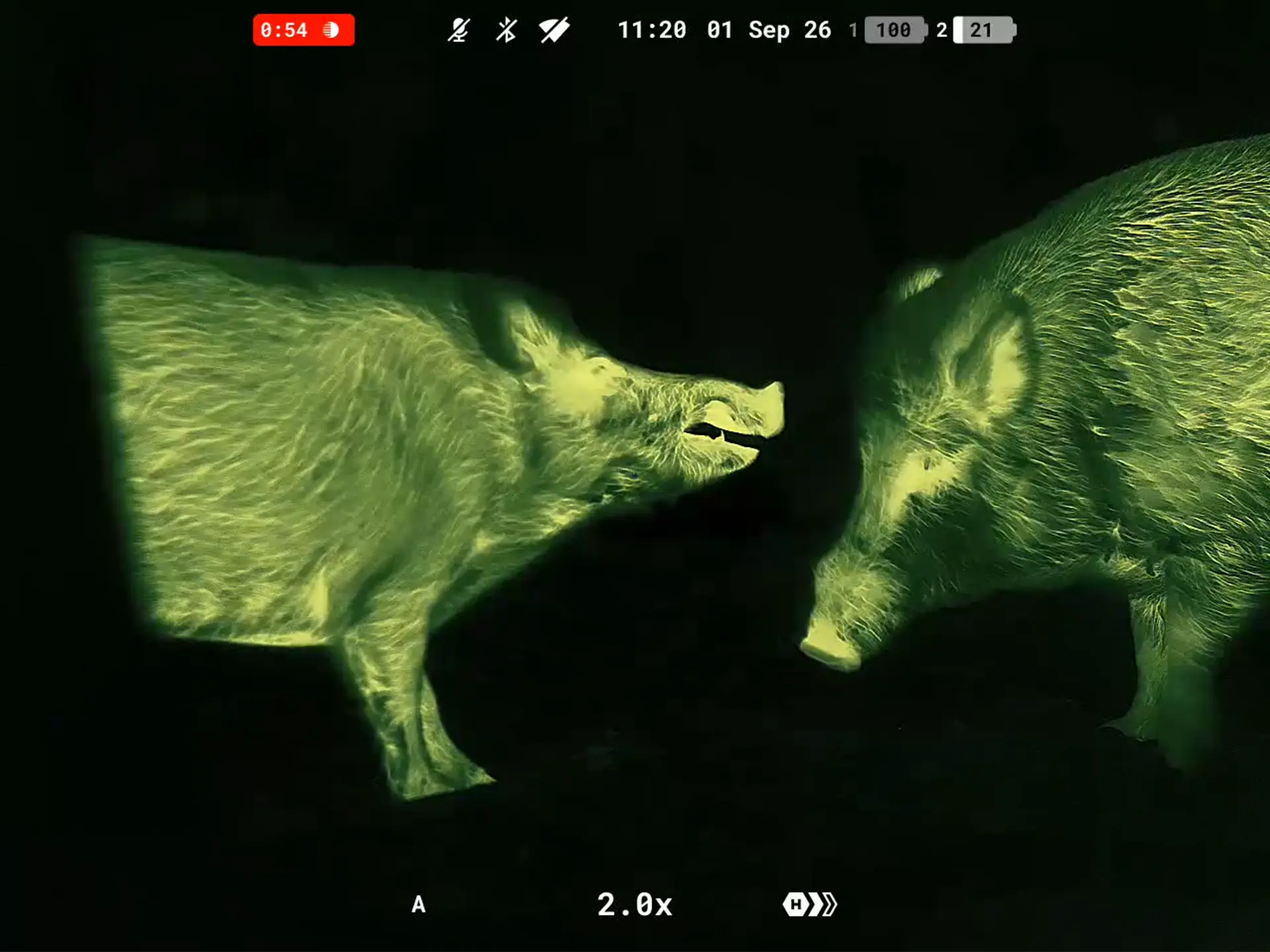
Both Thermion 3 models use a 2,560 × 2,560 AMOLED microdisplay and a redesigned graphical interface. That resolution matches the 60 mm Thermion 2 LRF models, which use a Micro-OLED panel, so the change is in panel type and interface rather than pixel count.
Internal storage increases to 128 GB, compared with up to 64 GB on Thermion 2 LRF models, and recoil-activated video recording can be set to one of three recoil-sensitivity levels. Some Thermion 2 LRF models already have high-resolution displays and 64 GB of memory, and recoil rec is available via firmware updates. Alone, none of the features might seem to be worth the upgrade. However, when you combine the refinements with tried-and-tested functionality, Thermion 3 truly feels more powerful and much nicer to use.
On the new interface and button logic, Riccardo says:
The settings for all the features are more user-friendly than in the past. The new software lets us set all the controls quickly and easily, and being able to adjust different commands with a light or hard push of the buttons simplifies the hunter’s life.
Battery life: same setup, different runtime
Both generations use the same power setup: one internal battery and one external battery, so you can carry a charged spare and swap it in the field. What differs is runtime, and it differs by model.
The XR60 runs for 14 hours, the longest in the Thermion line; the Thermion 2 models run from 7 to 11 hours. The XT60 runs for 8.5 hours, which puts it in the middle of the range. The difference is mostly due to sensor resolution — the higher it is, the more energy it requires to run and process an image. If runtime is your priority, the XR60 is the clear step up, although if battery life alone is your concern, stocking up on spares might make more sense.
Thermion 3 vs Thermion 2 in real hunting conditions
The practical difference depends on where and how you hunt. Thermion 3 is the new flagship, but Thermion 2 remains highly capable, so the strongest reasons to switch are the ones you can tie to a real limitation in the field.
| Scenario | Thermion 3 advantage | Thermion 2 perspective |
| Mixed terrain | The XT60 offers 2× base magnification and a 25.7 m field of view at 100 m for a broad view, and the updated focusing and controls support quick adjustments. | Several Thermion 2 models already offer useful wide-field configurations, so compare against the exact model you own. |
| Open terrain | A 1,200 m rangefinder and 60 mm optics on both models with 2,950 m detection range; the XR60 adds magnification up to 40×. | Higher-end Thermion 2 models remain strong in open terrain, and some reach a 2,800 m detection range, close to both Thermion 3 models. |
| Distance-oriented | The XR60 prioritizes higher 4–40× magnification and pairs it with the longer-reaching rangefinder. | Performance varies significantly by model, so judge an upgrade against your existing magnification and sensor setup. |
| Recording hunts | 128 GB of memory plus recoil-activated recording and shot detection in the footage (via Stream Vision 2 app). | Higher-end models offer recording and up to 64 GB of storage. |
| Long nights and multi-day trips | The XR60 runs 14 hours, the longest in the comparison. The XT60 runs 8.5 hours. Both use one internal and one external battery. | The XG60 and XP60 run 11 hours, longer than the XT60. The battery setup is the same, so a spare works the same way. |
| Familiar rifle setup | The classic 30 mm mounting remains, while the controls, zoom, and focusing are redesigned. | Thermion 2 already uses the familiar 30 mm format, so there’s no new mounting concept to learn. |

Riccardo, who mostly hunts wild boar from fixed positions, explains what mattered most to him in the field:
I use a thermal riflescope mostly when waiting for wild boar near a feeding point in the woods. I rarely have to stalk at night looking for the right animal, and sometimes I have to follow a wounded animal after the shot. I often shoot from a tripod, so I really appreciate being able to limit my movements and stay focused on the target. The wide FOV is vital for me because it lets me monitor my surroundings without making any movement. I think all hunters, in all situations, appreciate being able to change settings quickly, without losing concentration.
Who should upgrade from Thermion 2 to Thermion 3?
Thermion 3 makes the strongest case for hunters who are already reaching the practical limits of their current Thermion 2 configuration. Because Thermion 2 includes several different models, the value of upgrading won’t be the same for every owner.
- Upgrade if you need the faster and longer 1,200 m laser rangefinder for open terrain.
- Upgrade if you need more magnification than your current model offers: the XR60 goes up to 40×, but be careful with the top number — the image might get too pixelated.
- Upgrade if you want more image detail and a wider view than your current sensor gives you: the XT60 has a 1,280 × 1,024 sensor and a 25.7 m field of view at 100 m (14.6 degrees).
- Upgrade if the new control layout, top-turret focusing and ring zoom, 128 GB of memory, or longer battery life solve practical hunting needs.
- Keep Thermion 2 if your current model already provides the image quality, detection, ranging, and ballistic functionality you need.
- Do the math if runtime is your main priority: the XR60 is the winner here with 14 hours. However, upgrading for battery life alone might not make much sense, as buying spares is much cheaper.
Conclusion: is upgrading to Thermion 3 worth it?
Thermion 3 LRF is a meaningful evolution of the Thermion concept, not a departure from it. It keeps the classic 30 mm riflescope format, 6,000 J recoil resistance, and the ballistic workflow, and adds a faster 1,200 m rangefinder, two sensor options, a reworked control layout, 128 GB of storage, and a longer battery life.
For someone who’s got experience with thermal, wants to go premium, and hasn’t owned a Thermion, Thermion 3 is the natural place to start. For an existing Thermion 2 owner, the decision is more personal: switch when the longer ranging distance, more magnification, more image detail, or the updated handling solves a real need. If your Thermion 2 already performs confidently within your normal hunting distances, there may be no urgent reason to replace it.
FAQs
What is the main difference between Thermion 3 and Thermion 2?
Thermion 3 offers a two-model XR60 and XT60 lineup, 1,200 m laser rangefinding, updated controls and focusing, 128 GB of memory, improved image quality, and a redesigned interface. Thermion 2 has a broader range of models and an integrated rangefinder that measures up to 800 m.
Is Thermion 3 better than Thermion 2?
Thermion 3 is the newer generation, but the practical difference depends on which Thermion 2 model you compare it with. Some high-end Thermion 2 configurations already offer strong sensors, long detection ranges, and ballistic support.
Do Thermion 3 and Thermion 2 use standard scope rings?
Yes. Both generations use the familiar Thermion 30 mm tube format and standard 30 mm rings.
Does Thermion 3 have more eye relief than Thermion 2?
Depends on the model. Eye relief is 65 mm on both Thermion 3 models and Thermion 2 LRF 60 models. The Thermion 2 50 models have 50 mm.
How long does the Thermion 3 battery last?
The XR60 runs for 14 hours and the XT60 for 8.5 hours. For comparison, Thermion 2 LRF models run from 7 to 11 hours. Both generations use one internal battery and one external battery.
Should I upgrade from Thermion 2 to Thermion 3?
Upgrade if the 1,200 m rangefinder, more magnification, a higher-resolution sensor, the updated ergonomics, the larger memory, or longer battery life provide a practical benefit for your hunting. If your current Thermion 2 already covers your normal distances and conditions, an immediate upgrade may not be necessary.
About the Experts

Co-Author:
Vilius Ūksas
Vilius Ūksas is an experienced precision shooter with a professional background in long-range marksmanship and ballistic application. Active in IPSC, IDPA, and the demanding Brutality match series, he combines practical, pressure-tested shooting skills with a deep understanding of ballistics and real-world rifle performance.

Expert Contributor:
Riccardo Tamburini
Riccardo Tamburini is a lifelong outdoorsman, hunter, fisherman, and professional wildlife photographer and filmmaker.
With over 35 years of experience across plains and mountains in Italy and abroad, he combines field expertise with a mechanical engineering background to explain the technology behind rifles, optics, and digital devices.
Before purchasing any night or thermal vision device, please make sure you adhere to the local legislation and only use it when it is allowed. Our ambassadors come from various countries and travel a lot, which allows them to test different devices. We do not encourage or support the illegal use of our devices in any events. If you wish to learn more about export and sales restriction policy, please visit the following link: Export and Sales Restriction Policy.