
Expert Contributor:
Riccardo Tamburini
There is a lot of confusion over using thermal scopes during the day versus night. The truth is, they are clear, reliable and can perform in daylight, but you need to check your rules and regulations to ensure it’s legal.
Unlike daytime glass, thermal scopes can see through thick brush. They don’t rely on light, they read heat contrast. Day conditions can change how that contrast behaves due to the heat of the sun. That’s exactly why understanding daytime performance matters.
Knowing what actually happens to heat signatures during the day is how you optimise your device to gain a real advantage in the field.
Quick answer:
- Thermal scopes detect infrared heat signatures, not visible light, meaning they can work during the day.
- The sun heats the terrain (soil, rocks, vegetation), which reduces the contrast between animals and the background.
- Image quality can decrease in midday heat, but remains strong where surfaces cool faster or are sheltered from direct sunlight.
- Devices with low NETD sensors (<40 mK) deliver noticeably better daytime detection, clarity, and detail retention.
- Best daytime use: tracking wounded game, scanning dense brush, detecting animals under canopy cover, and locating heat signatures in mixed terrain.
Pulsar thermal devices for daytime use:
- Monoculars: Axion, Telos, Oryx series — ideal for fast daytime scanning in the forest and the edges of terrain.
- Binoculars: Pulsar Merger LRF series — excellent daytime spotting with high clarity and comfort.
- Riflescope: Pulsar Thermion 2 LRF series — reliable daytime performance when heat contrast is low.
- Clip-on: Pulsar Krypton 2 series — converts a daytime scope into a thermal system for legal flexibility.
- Multispectral: Pulsar Thermion Duo DXP50 — combines thermal + daytime digital imaging for all-day use.
Check out each device at Pulsar Vision’s product page.

Can you use a thermal scope during the day?
Yes. Thermal scopes work during the day because they detect heat rather than visible light.
Thermal imaging operates in the infrared spectrum, detecting mid-wave and long-wave infrared bands and transferring that into a thermal image. Heat signatures remain detectable in daylight because the scope reads temperature differences, not optical light.
Contrast is the key factor, and performance depends on the quality of the devices you’re using and on the environmental conditions where you’re hunting. Game animals still give off clear thermal signatures against cooler backdrops.
But if the animal’s body temperature is similar to the surrounding area, its thermal image can be washed out. It’s important to plan your hunts accordingly to the weather, cloud cover, and terrain.
Read more: Thermal vs night vision: Which to choose?
While you certainly can use thermal devices during the day, it’s worth considering if it’s really something you should do. Riccardo Tamburini, a highly experienced hunter, shares his take:
I’m not a fan of using thermal devices during the day because I think the word hunting also means spending time glassing and looking for the right animals we must cull.
But we know that hunting is an outdoor activity and sometimes, if you don’t have a thermal device, you can run the risk of coming back home without having the possibility to practise it; I’m referring to the fog or low clouds in the mountains or in the plains, which reduce the visibility to a few meters. This happens quite often during autumn or winter, maybe even after many hours spent driving the car to reach the hunting spot. It would be a shame to come back home without having the possibility to spend a good day in the wild!
When I go hunting in the mountains, for example, I always have with me a thermal monocular able to see through the dense fog, just in case. I don’t need to have a super image quality because once detecting a chamois herd, I can only wait for the sky to become clear to glass the herd with a spotting scope or top-quality bino, looking for the right animal.
How daylight affects thermal scope performance
The microbolometer in your scope converts heat into an electrical signal, which is then processed to produce a visible thermal image. How well your device can do that depends on its Noise Equivalent Temperature Difference (NETD) rating, which is measured in millikelvins (mK).
Anything below 40 mK — the smaller the number, the better — performs noticeably better in these conditions because they can detect smaller temperature differences even when sunlight reduces contrast.
Here are the daylight thermal device factors to know ahead of your hunt:
- Sunlight heats soil, rocks, tree trunks, and vegetation, raising the overall background temperature.
- Warmer terrain reduces thermal contrast, making the environment appear “hotter” through the lens.
- The sensor must work harder to separate the animal’s heat signature from sun-heated surfaces.
- Heat saturation introduces additional thermal noise, which can obscure fine details.
- Dense, cool fog, mist, or heavy rain can also reduce contrast by flattening temperature differences.
What hunters should expect from daytime thermal performance
You may be wondering, ‘What does daytime performance really look like in the field?’
Here’s what to expect.
- Long-range heat signatures remain detectable, but clarity may drop on sun-exposed ground.
- Shade cools quickly, improving heat gradients and making animals stand out clearly.
- Sunlit terrain can reduce fine detail, especially on rocks, dirt, and dry grass.
- Ideal times are early morning and shaded woodland edges where heat contrast is higher.
Thermal scopes excel in shaded or cool environments during the day, but open fields under direct sun will naturally compress temperature differences. Heat signature definition always changes based on terrain and surface temperature.
An important note from Riccardo:
One of the most typical scenarios is going out late in the afternoon, exploring a wide area and looking for the right game species to take. This probably is the worse condition to detect a living target with a thermal unit: everything seems nice in the display because all the lifeless things in the environment are clearly displayed on the monitor.
But rocks, stumps, trees, leaves, and the ground could hide a covered animal simply because they have had all day to absorb the heat of the sunrays. My suggestion is decreasing Contrast, around 2-3/20, and using a mid-brightness (8/20): only Pulsar devices have such a wide setting scale of these two important values. Doing this, the lifeless things will appear “flatter”, and it will be easier to spot an animal if it’s covered.

How thermal scopes work in daylight
Thermal scopes convert infrared radiation into digital images using a microbolometer sensor. None of this depends on ambient light.
Key attributes include:
- NETD sensitivity: Lower values = better in heat.
- Refresh rate: Ideal refresh rates are from 50-60 Hz.
- Thermal palette selection: can be adjusted to hunter preference; key for differentiating between different temperatures.
Simply put, thermal sensors function exactly the same in daylight as they do at night.
Related: How thermal scopes work: Pulsar expert explains
Best scenarios for using thermal scopes during the day
Daytime thermal excels in several real-world hunting situations:
- Tracking wounded game using residual heat signatures created by blood trails.
- Locating animals in deep brush where visible-light optics struggle.
- Spotting targets under canopy cover where the ground is cooler and the contrast is better.
- Monitoring movement in early morning sunlight before the terrain heats up for the day.
Dense vegetation becomes nearly transparent to thermal imaging, and heat contrast in shaded or mixed terrain makes animals easier to detect. This can open up windows to many great adventures and prevent you from missing opportunities. Here’s one shared Riccardo still remembers:
It’s a story about losing a chance; I started to use a night vision device many years ago, before the introduction of thermal technology. My old Pulsar Forward DFA75 already gave me a feeling of confidence to cull a careful, shy, and suspicious old wild boar male, whom I met only during the moonless nights.
But for all the hunting season, he was so clever or lucky to never give me the chance to pull the trigger. He was so careful that when I switched on the illuminator, he went away in a fraction of a second. I remember that during a rainy day, late in the afternoon, I was on the hunting stand waiting for the night to come. The big boar appeared suddenly, still during the daytime, but I was ready to shoot in less than one second. Just before pulling the trigger, a low cloud came, not allowing me to shoot. After a few seconds, the cloud has gone away, bringing with it the big boar.
Every time I’m out in the same conditions, even today, with a thermal scope on my rifle, I remember that incredible hunting season and that wonderful boar missed for a few seconds of fog. Today, it would never happen.

Day vs. night thermal performance
| Performance attribute | Daytime detection | Night performance |
|---|---|---|
| Heat contrast | Reduced because ambient surfaces absorb heat and narrow the temperature difference between the target and background. | Stronger because cooler temperatures create a clear heat-signature difference between animals and their surroundings. |
| Image quality | Thermal noise rises, fine target detail can degrade, and subtle signatures may blur into the background. | Cooler backgrounds and higher contrast help define shapes; heat contours stand out more distinctly. |
| Detection range / Clarity | Detection is still possible, but the range may be limited in high heat or on sun-exposed surfaces. Sensors must work harder to differentiate targets from the background. | Optimal for long-range detection: stronger contrast, less interference, better differentiation of heat sources against cold backgrounds. |
| Environmental influences | Solar heating, glare, and background heat saturation all reduce performance. Requires adjusting settings for best results. | Less affected by heat-retaining terrain and objects; thermal sensors still see heat differences. |
| Practical use case for hunter | Ideal when the target is cooler than the surroundings (shade, early morning) or when scanning concealed areas. Expect challenges in midday sunlit fields. | Ideal for dawn, dusk, night, or shaded cover. Excellent for spotting animals when ambient cooling increases contrast. |
Pulsar thermal devices for daytime use
| Device category | Recommended Pulsar device | Why it’s ideal for daytime use |
|---|---|---|
| Thermal monocular | Axion XQ19 Compact | Lightweight, pocket-size thermal monocular good for quick daytime scanning in wooded/edge terrain. |
| Thermal binoculars | Pulsar Merger LRF XP50 | Dual-eyepiece thermal binocular with high performance, ideal for spotting from blinds or ridgelines in daylight conditions. |
| Thermal riflescope | Pulsar Thermion 2 LRF XQ50 | High-end thermal riflescope with built-in range-finder, good for precision daytime hunts when heat contrast is lower. |
| Thermal clip-on scope (attachment) | Pulsar Krypton 2 FXG50 | Clip-on thermal imaging unit converts an existing daytime scope — useful when daylight legalities favour attachments. |
| Multispectral device | Pulsar Thermion Duo DXP50 | Combines thermal sensor + full-colour daytime digital sensor — best all-round for day + night hunting. |
Riccardo’s choice for daytime use:
Talking about monoculars, my favorite is the Axion XQ19 or XG35 Compact. I can make an exception to the daytime use of a thermal unit when I go hunting in the mountains, where even an extra gram counts. Because I must also use a top-class standard bino, I wear a harness, but I can easily store such a light and pocket-sized thermal device in a small extra bag, having the Axion always ready to use.
Concerning thermal riflescopes, I love Thermions: the multispectral DXP50, with two different channels, a powerful 4k full colour CMOS sensor and a high-end XP class thermal sensor with low NETD, is probably the best device to use during the day because I can quickly spot an animal with the thermal channel, having the possibility to better judge the smallest detail with the 4k full colour camera later.
Explore more:
When daytime heat becomes a limitation
Daytime heat creates several environmental challenges hunters should plan for:
- Heat-saturated terrain reduces contrast because the backdrop and the animal have similar heat readings, making it difficult to ID.
- Mirage-like distortion appears over hot ground and can distort your view through the thermal scope, adversely impacting accuracy.
- Reflections from sunlight on metal, rocks, or water can wash out fine detail.
- Sensor noise increases when the background temperature spikes, another factor that can adversely affect your sight picture.
The key takeaway is that high ground temperatures reduce the differentiation between objects, and extreme heat always introduces more thermal noise.

Device settings to improve daytime thermal clarity
You know what can complicate a daytime hunt using a thermal scope, but there are settings you can tweak to give you the best sight picture for an ethical shot placement on the animal you are hunting.
Optimizing your scope can dramatically improve daytime image quality:
- Lowering brightness & increasing contrast helps reduce background noise.
- Use high-contrast palettes such as Black Hot or White Hot.
- Enable high-sensitivity mode on devices that support it. Its software algorithms are designed to optimize image quality for a variety of weather conditions.
- Perform manual sensor calibration frequently to avoid or remove visual artefacts like vertical bars, “ghost” images, or graininess that can develop in hot conditions.
- Choose a low NETD device for better performance in hot environments.
Riccardo’s tip on choosing the right settings:
I prefer not to use a thermal device in the plains during daytime hunting, but when I’m out as a guide or with a client, the time can become very important to get a quick positive result. In Italy, it’s possible to use a thermal riflescope only for wild boar, but due to its nighttime habits, it’s very difficult to spot them in the open field during the day. This is why I use a thermal spotter (it’s legal) to give a quick view of the open areas in front of me.
Roedeer is a daytime species, and it’s quite easy to see it out also some hours after sunrise. It could be spotted with a standard bino, but when you are looking for a precise male, it’s not always possible to get it quickly. Often, I must explore a wide area, having only a few minutes available. During the morning, I set my device with a 5-6/20 contrast and 8/20 brightness. I prefer using the White Hot palette, I always deactivate the Smoothing filter, using the algorithm in N (Normal) position. The best conditions are after sunrise or during a cloudy day, because of fewer false targets, but during summer or before sunset, when false targets can be a lot, the best option is decreasing contrast: the thermal sensitivity will be reduced, and the environment will be displayed in a “flatter way”, reducing the false targets.
Safety & legal considerations when using thermal optics in daylight
Thermal laws vary widely across the U.S. and Europe. Some regions restrict thermal use for certain species or during specific times of day. Where the use of thermal devices are legal, it’s typically for animals defined as predators or nuisances — hogs, coyotes, and many others.
Always check local regulations regarding daytime thermal use, especially during big-game seasons. Ethics still apply — heat-based detection should always support responsible, legal hunting. Although Riccardo admits the term might be very vague:
I think that the word “ethic” is probably the most abused in the hunting world. I think there’s no ethics when an animal dies. The only golden rule to follow is to reduce its pain by working hard at the shooting range to cull it with a sudden death. If the use of a thermal device is legal during the day, everyone can use it. Going hunting must be a pleasure, and all of us can have different opinions about how to do it. Certainly, a skilled hunter prefers to glass the hunting area like in the past, with a standard bino: it could be exciting to see what the others aren’t able to. But for a beginner, the thermal device can be a wonderful platform to grow as a hunter.
Common mistakes hunters make when using thermal during the day
Incorrect palette selection obscures small details, and heat saturation naturally blurs fine details.
Start out with experienced input:
- Assuming performance will match nighttime clarity.
- Using an incorrect palette selection for bright environments.
- Ignoring calibration when heat builds up.
- Overestimating detection range on heat-soaked terrain.
Conclusion
Thermal scopes work flawlessly during the day, but you need to use them correctly. Once you understand how sunlight affects contrast, you can adjust your palette, calibration, and expectations to match real-world field conditions.
From tracking wounded game to spotting animals in dense vegetation, daytime thermal offers hunters powerful advantages.
Check out Pulsar thermal optics for safe, effective daytime hunting.

FAQ
Can thermal scopes see better at night than during the day?
Yes. Thermal scopes generally perform better at night because ambient temperatures drop, increasing heat contrast between animals and their surroundings. Cooler backgrounds make heat signatures stand out more clearly, improving detail, clarity, and detection range.
Does sunlight affect thermal imaging?
Yes. Sunlight heats up the terrain, reducing the temperature difference between the target and the environment. This lowers thermal contrast and can introduce additional noise or glare, especially on surfaces that absorb more heat.
Is thermal imaging effective in hot weather?
Thermal imaging still works in hot weather, but performance decreases as background temperatures rise. Animals remain detectable, but fine details, edges, and long-range clarity may drop. Low-NETD sensors perform better in high-heat conditions.
What color palette works best during the day?
High-contrast palettes such as Black Hot or White Hot work best during the day because they help separate heat signatures from warm backgrounds.
Does a thermal scope need visible light?
No. Thermal scopes detect infrared radiation and operate independently of visible light. They function the same in daylight, full darkness, fog, or low-visibility environments.
What is the difference between daytime thermal and daytime digital night vision?
Thermal imaging detects heat signatures, while daytime digital night vision amplifies visible light or captures full-color digital images. Thermal works in total darkness and through vegetation, whereas digital NV requires visible light and behaves more like a traditional camera.
Further reading:
About the experts

Co-Author:
Joshua Skovlund
Joshua Skovlund has covered stories for Task & Purpose, Outdoor Life, and Coffee or Die Magazine. He has photographed and filmed multinational military exercises and hunting trips in austere environments around the world, with his first archery kill in Kona, Hawaii.
Joshua grew up in South Dakota, learning how to scout and hunt deer, turkey, pheasant, and waterfowl. He currently scouts and hunts black bears, turkeys, and deer, while taking every opportunity to go to the range and further hone his pistol and rifle shooting skills.
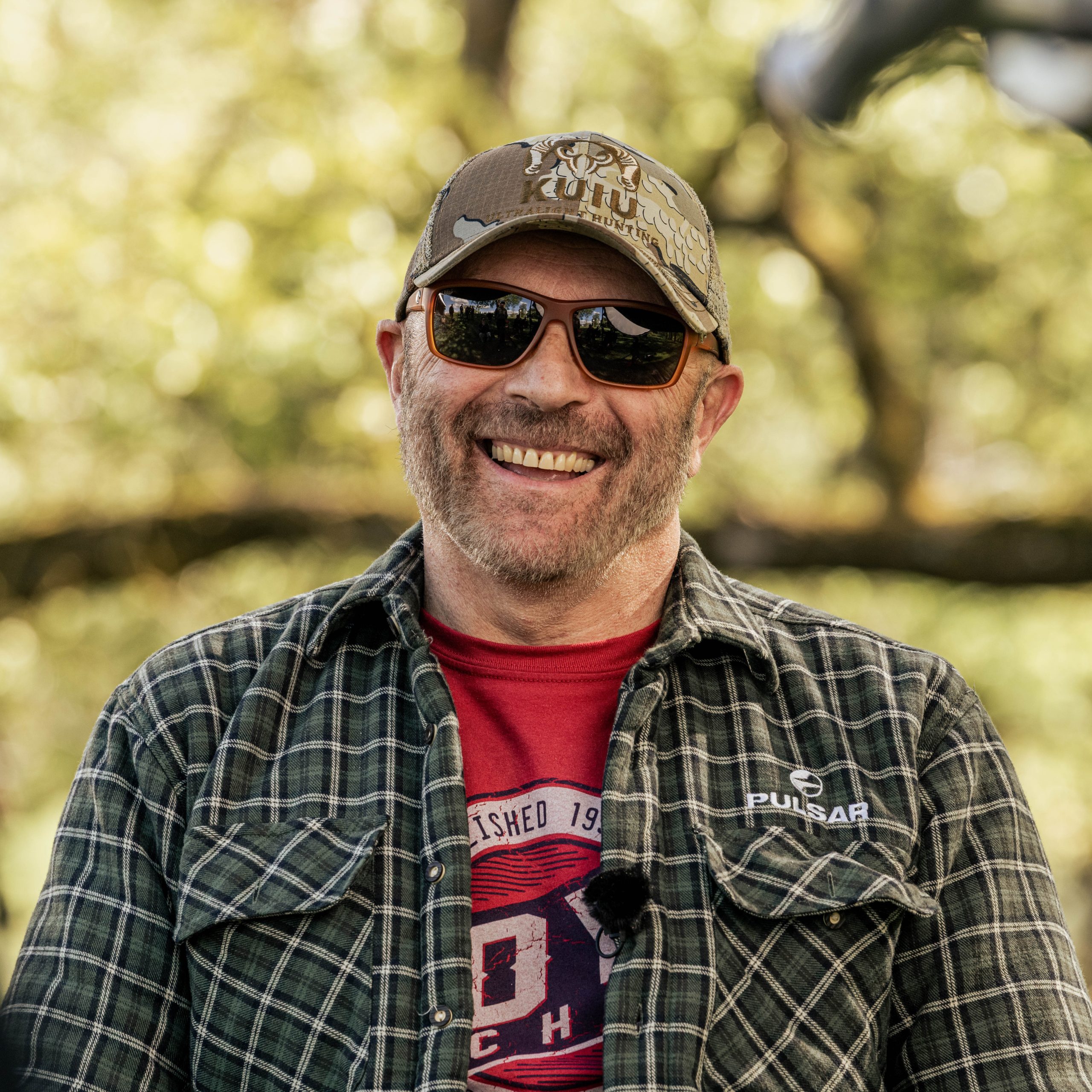
Expert Contributor:
Riccardo Tamburini
Riccardo Tamburini is a lifelong outdoorsman, hunter, fisherman, and professional wildlife photographer and filmmaker.
With over 35 years of experience across plains and mountains in Italy and abroad, he combines field expertise with a mechanical engineering background to explain the technology behind rifles, optics, and digital devices.
Before purchasing any night or thermal vision device, please make sure you adhere to the local legislation and only use it when it is allowed. Our ambassadors come from various countries and travel a lot, which allows them to test different devices. We do not encourage or support the illegal use of our devices in any events. If you wish to learn more about export and sales restriction policy, please visit the following link: Export and Sales Restriction Policy.