
Expert Contributor:
Riccardo Tamburini, Nathan Stuart
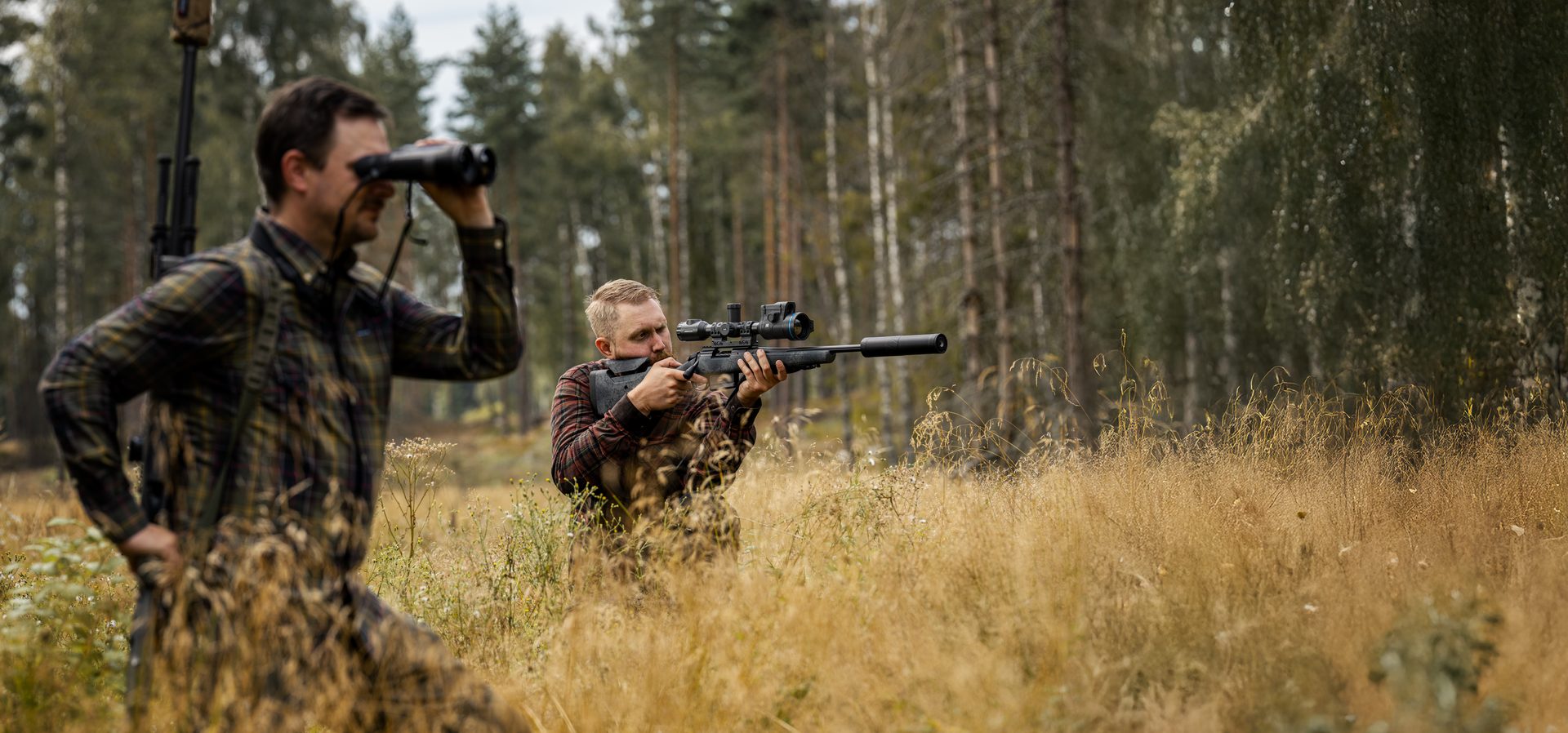
Professional hunters (PH) are skilled in the field, but trusted, licensed, and paid for their judgment. It’s an incredible career, but how do you get into it? Professional hunting careers have multiple pathways, from guiding clients to contracted wildlife control, and the leap is bigger than most hunters expect.
Pulsar experts who live this life describe it as equal parts fieldcraft, legal discipline, and responsibility for people and ecosystems. In this guide, you’ll learn the exact steps, skills, permits, and ethics to turn passion into a profession.
Quick answer
To become a PH, you must turn proven hunting skills into a licensed, safety-first, client- or contract-based service:
- Build repeatable field skills, such as tracking, stalking, knowledge of species behavior, and safe shot execution.
- Learn professional responsibilities, including client safety, structured briefings, and decision-making under pressure.
- Complete required training (hunter safety, first aid, guide or PH courses where mandated).
- Secure region-specific licenses and permits to legally guide hunts or perform wildlife control.
- Start under an outfitter, lodge, or wildlife-control program to gain real-world experience.
- Build a reputation based on ethics, legality, and reliability—this is what earns trust and clients.
- Grow into paid roles such as guiding, contracted wildlife management, or outfitting/media careers.
Ready to level up like the pros? Explore Pulsar thermal products built for real field work and safer, smarter hunting.

What does “professional hunter” mean today?
The term ‘professional hunter’ no longer refers to a single job description. Depending on the region, it can mean a licensed hunting guide, a contracted wildlife-control shooter, a gamekeeper, or a professional working across hunting, media, and conservation.
“Being a professional hunter in Italy means being skilled in a lot of other things: you need to be a good photographer, a filmmaker, and a copywriter,” says Riccardo Tamburini, a professional hunter with years of experience.
What unites these roles is accountability: professionals are paid for judgment, safety decisions, and legal compliance—not just shooting skill.
In Australia, Nathan Stuart—another trusted PH, also known as Edge of the Outback,—shares that to him, the profession often means contracted vertebrate pest control, targeting invasive species to protect native ecosystems and reduce agricultural damage.
Stuart’s role as a PH entails a fundamental understanding of the laws governing pest control, fieldcraft, and the ethical decisions that underpin it all.
Professional hunter vs hunting guide vs outfitter
A PH or guide leads hunts in the field, manages safety, reads conditions, and controls shot decisions. Outfitters own or manage the business via securing land access, organizing logistics, booking clients, and employing guides.
A media PH monetizes expertise through content creation, education, and partnerships. Tamburini’s career illustrates how these roles can overlap, combining guidance, storytelling, and professional branding.
I spend a lot of hours on my social media, promoting the stuff made for companies and magazines I cooperate with. Pictures and videos need to be edited before publishing, and this takes a good part of my morning. Three days a week, after lunch, I go to the forest to check my feeding points and keep them ready to use. Late in the afternoon, I prepare to go hunting – you will find me in the forest from 7 pm to 11 pm. I come back home around midnight, but if I get a wild boar, I also have to go to an official slaughterhouse where the wild boar will be checked by a registered veterinarian. When I don’t go hunting, I’m out to film or take pictures.
Though some will stick to one career path, nothing says you cannot do it all. It boils down to your schedule and your experience. Start small and build up to a career that is sustainable for you.

Is becoming a professional hunter realistic for you?
Professional hunting demands physical endurance, legal literacy, time management, and strong people skills. Long days outdoors, seasonal income, paperwork, and responsibility for others are part of the job. For many, the career begins gradually rather than as a full-time leap.
Stuart explains that in Australia, professional pest-control hunting is often contract-based and part-time. He balances paid night shooting with a full-time engineering job—showing how many professionals build careers incrementally, but the two jobs have similarities.
Everything with professional shooting is a similar workflow and duties as a regular workplace would be. There are risk assessments, compliance with other safety aspects, etc.,” Stuart said. “Depending on the environment, we liaise with land stakeholders and, sometimes, the local police. Once everything is compliant and safe, we then get to the night shooting.
Personality & lifestyle fit checklist
PHs need resilience, situational awareness, leadership, and emotional discipline. Turning passion into work changes the experience. Paperwork and formal compliance are unavoidable parts of the job, and usually the least fun aspects.
Tamburini notes that when passion becomes work, some of the mystique disappears—making mental resilience essential.
“Although it’s always much better to spend a day in the wild than working in a factory. If you don’t get or meet an animal, with no chance to pull the trigger of your rifle or to click the camera button, you will think it’s a waste of your time; but I think that a day spent in nature is always a day spent in the best way,” said the Italian hunter.
Related: A day in the life of a professional hunter
Step-by-step: The path from hunter to professional
1) Build deep field competence first
Before you can charge for your skills, you must demonstrate consistent results across terrain, species, and conditions.
Stuart’s entry into professional work came only after landholders repeatedly trusted him with paid responsibilities—proof that competence precedes monetization.
2) Learn guiding & stakeholder management
Professional hunting involves structured safety systems, client briefings, and coordination with landowners and authorities.
Stuart describes professional shooting as a regulated workflow: risk assessments, compliance procedures, landholder coordination, and sometimes advance notification to authorities before night operations.
3) Get formal training where required
Training requirements vary by region but often include hunter-safety certification, first aid or wilderness medicine, and professional guide or PH courses.
Both experts stress that training must include legal literacy—especially when thermal or night-hunting rules differ by hunt type.
4) Secure licenses & permits
Licensing separates hobby hunters from professionals. Guide licenses, PH permits, wildlife-control authorizations, and tool-specific permits are issued by official wildlife or conservation authorities.
In the U.S. and Canada, guide licensing and professional hunting activities are regulated by state or provincial wildlife agencies and enforced by conservation officers under natural resource and wildlife legislation. Hunters must apply through the relevant authority in their jurisdiction and comply with renewal and reporting requirements.
Expert examples:
- Stuart may use suppressors only under strict, permit-based conditions tied to contract work.
- Tamburini explains that thermal and night-vision legality varies by region in Italy, and pest-control hunts may allow tools prohibited in recreational hunting.
5) Work under an outfitter before going solo
Working under an established outfitter provides access to systems, mentors, land, and clients while helping new professionals build references and reputation.
Tamburini’s path reflects this model—building credibility through collaborations before operating independently.
Related: Night hunting guide for beginners
Regional pathways (location-sensitive)
United States & Canada pathway
In North America, professional hunting commonly requires:
- State or provincial guide licensing
- Hunter-education certification
- Liability insurance
- Registration with wildlife agencies
Wildlife laws and guide regulations are administered by government wildlife authorities, and compliance is enforced by conservation officers. Regulations vary by state or province, so professionals must consult their local agency directly.
Europe pathway
European professional hunting is highly regulated and varies by country. Common elements include:
- National hunting exams (theory and practical)
- Membership in certified hunting associations
- Strict land-access and game-management rules
Equipment permissions, including night-vision and thermal optics, are set by national or regional authorities and may differ between recreational hunting and pest control. It’s the PH’s job to know all of that.
Southern Africa professional hunter pathway
Southern Africa has the most formalized PH system globally. Requirements commonly include:
- A Further Education and Training (FET) Certificate in Professional Hunting
- Registration with professional bodies such as PHASA
- Exams, field assessments, and conservation-authority permits
This framework is legally required for guiding international clients.
Australia’s invasive-species professional pathway
In Australia, PHs typically focus on invasive-species control for conservation and agriculture. Requirements vary by state but may include occupational shooter accreditation, firearm licensing, landholder permissions, and night-hunting authorizations.
Stuart’s work fits this model: year-round pest control conducted under strict legal oversight.

Skills you must master to be employable
Advanced hunting & fieldcraft
Tracking, stalking, wind reading, thermal reads, safe shot selection, and multi-terrain adaptability.
Wildlife knowledge & conservation literacy
Understanding population dynamics, invasive-species management, quotas, and ecological impact.
Safety, first aid, and legal compliance
Client safety, firearm protocols, emergency planning, and full adherence to hunting laws and permit conditions.
Guiding, leadership, and customer service
Clear communication, coaching, conflict resolution, and situational awareness.
Gear and tools professional hunters rely on
Professional hunters depend on reliable optics, navigation tools, communications, gear, and safety equipment. Though it’s not a physical tool or piece of gear, knowledge and experience are a must for PHs.
- Optics (binoculars/monoculars/scopes)
- Rangefinder,
- GPS
- Radio and/or satellite phone
- Boots
- Packs
- First aid kit
Both experts note that professional work often occurs at night using thermal optics, while recreational hunts may remain daylight and fair-chase. Having the right gear and tools can make or break a hunt.
Always verify local law before using thermal/NV, because legality changes by country and even region.
How professional hunters make money (and what to expect)
Income models vary:
- Contract-based wildlife control
- Guided hunts
- Outfitting
- Media, education, and brand partnerships
Stuart earns service-based income from pest-control contracts. Tamburini uses a mixed model combining content, collaborations, and fieldwork.
Ethics and reputation: the real currency of the profession
Professional hunters operate under intense scrutiny. Ethical behavior, legal compliance, and client education determine long-term success.
Stuart distinguishes between utilitarian pest control and recreational fair-chase guiding—each requiring different ethical frameworks within legal boundaries.
Read more: Night hunting laws: Thermal device regulations
Getting your first clients/job
Stuart was drawn into professional work through visible results and trust from landholders. Tamburini built a public portfolio that translated into paid opportunities.
Where to find opportunities
- Outfitters and lodges
- Conservation or land-management programs
- Professional associations
- Industry networking and referrals
Conclusion
Becoming a professional hunter means combining fieldcraft with legal discipline, client safety, conservation knowledge, and ethical responsibility. Whether your path leads to guiding, wildlife control, or media, success depends on competence, compliance, and reputation. With preparation and patience, it is possible to turn passion into a respected profession.
Ready to take the next step? Explore Pulsar’s field-proven thermal optics built for real professional workloads.
FAQs
How long does it take to become a professional hunter?
Typically, several years of field experience, certifications, and licensing are required.
Do you need a license to be a hunting guide?
Yes. Most regions require guide licenses issued by wildlife authorities.
Can professional hunting be part-time at first?
Yes, many hunters start part-time while building experience.
Do pros hunt year-round or seasonally?
Guides follow hunting seasons; pest-control professionals may work year-round.
How much do professional hunters make?
Income varies by country, species, professionalism, and reputation.
What training is required for a professional hunter in South Africa?
South Africa requires a FET Professional Hunting Certificate, SAQA-recognized PH status, and conservation-authority permits.
Can you be a professional hunter without owning land?
Yes. Most pros work through outfitters, concessions, or contractor relationships.
What’s the difference between a PH and an outfitter?
A PH guides in the field; an outfitter owns the business and hires guides.
Is professional hunting legal in Europe and the US?
Yes, but heavily regulated. Some EU countries require permits for thermal and night vision devices, while some US state ban them.
What skills matter most for guiding clients safely?
Client communication, safe-shot coaching, hazard detection, and emergency planning.
Does professional hunting reduce the joy of hunting?
Some hunters say it changes the experience; responsibility shifts the focus, but personal hunts often remain deeply rewarding.
About the experts

Co-Author:
Joshua Skovlund
Joshua Skovlund has covered stories for Task & Purpose, Outdoor Life, and Coffee or Die Magazine. He has photographed and filmed multinational military exercises and hunting trips in austere environments around the world, with his first archery kill in Kona, Hawaii.
Joshua grew up in South Dakota, learning how to scout and hunt deer, turkey, pheasant, and waterfowl. He currently scouts and hunts black bears, turkeys, and deer, while taking every opportunity to go to the range and further hone his pistol and rifle shooting skills.

Expert Contributor:
Nathan Stuart
Nathan Stuart is a passionate Aussie hunter and contract shooter. He lives in an area with an abundance of feral animals, which he targets as a professional vertebrate pest controller. His regular weekly adventures vary between thermal, night vision, ATV hunting, and stalking on foot. He hunts everything from rabbits, foxes, feral cats, wild dogs, goats, pigs, and all Australian deer species.
Expert Contributor:
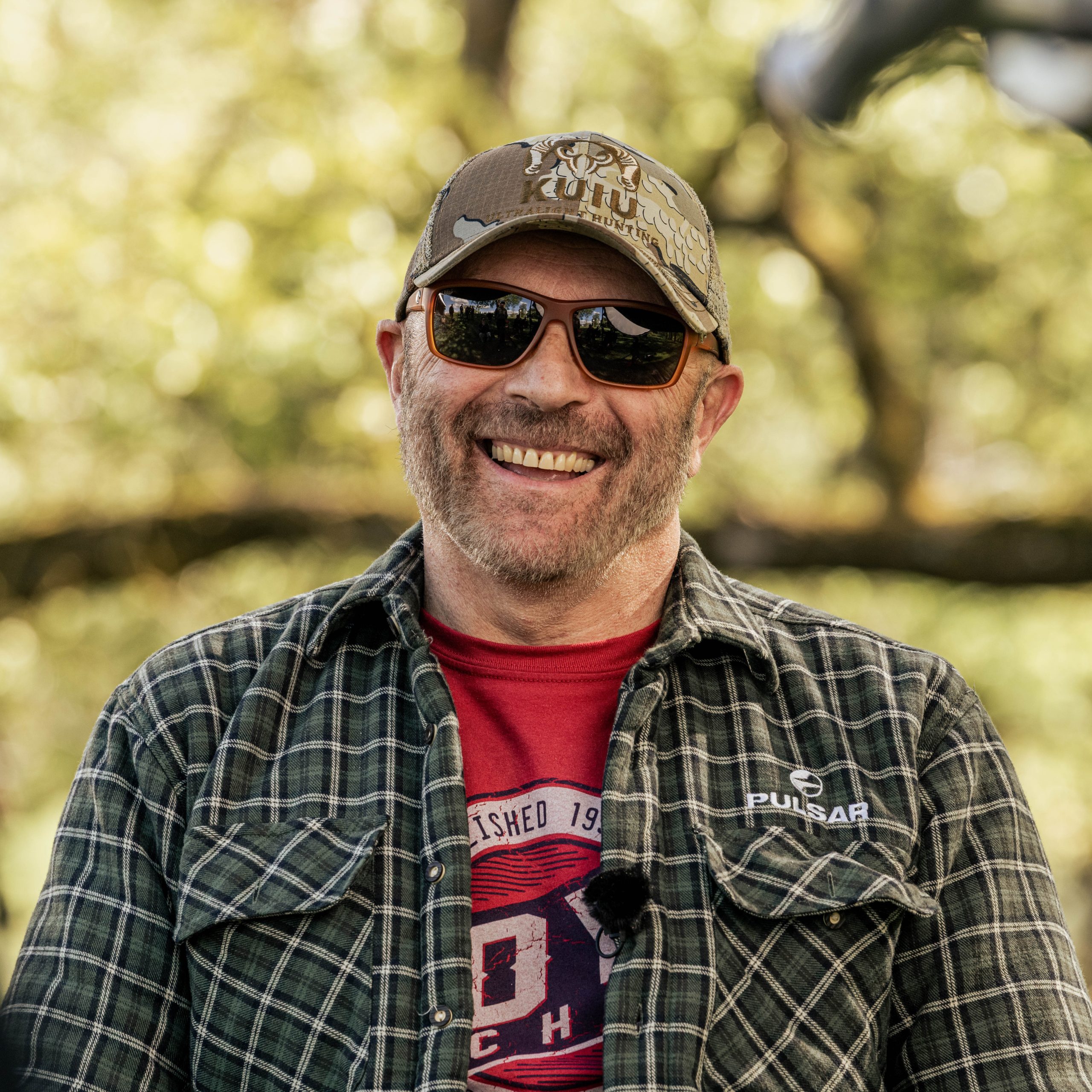
Riccardo Tamburini
Riccardo Tamburini is a lifelong outdoorsman, hunter, fisherman, and professional wildlife photographer and filmmaker.
With over 35 years of experience across plains and mountains in Italy and abroad, he combines field expertise with a mechanical engineering background to explain the technology behind rifles, optics, and digital devices.
Before purchasing any night or thermal vision device, please make sure you adhere to the local legislation and only use it when it is allowed. Our ambassadors come from various countries and travel a lot, which allows them to test different devices. We do not encourage or support the illegal use of our devices in any events. If you wish to learn more about export and sales restriction policy, please visit the following link: Export and Sales Restriction Policy.