
Expert Contributor:
Julia Nowak
Estimated read time: 10 min.
Quick Answer
- Night hunting laws differ widely across the U.S. states and European countries.
- Some states like Texas allow thermal devices for invasive species, while others like California ban them.
- European countries often permit hand-held thermal monoculars but restrict weapon-mounted scopes.
- There is no single EU law, so each country sets its own rules.
- Hunters must always check local regulations and hunt ethically.
Night hunting fascinates hunters because it lets them manage predators and invasive species after dark. Thermal devices let them see heat signatures and make clean shots. However, the laws that govern night hunting are as varied as the landscapes we hunt in.
The examples are aplenty, but here’s one our expert huntress Julia Nowak, currently residing in Sweden, shared:
- In Poland, both hand-held and scopes are allowed for hunting at night, but only for a few certain species, but it is not allowed to hunt with a digital scope during the day.
- In Sweden (except for some special permits), it is only allowed to hunt wild boars with thermal/NV scopes.
This article uncovers the rules and ethics of night hunting across the United States and Europe. You will learn where thermal scopes are allowed and where they are restricted, and why these policies exist. We’ll explore the opportunities and limits these devices provide and give practical tips for planning your next hunt, so you can make informed choices.
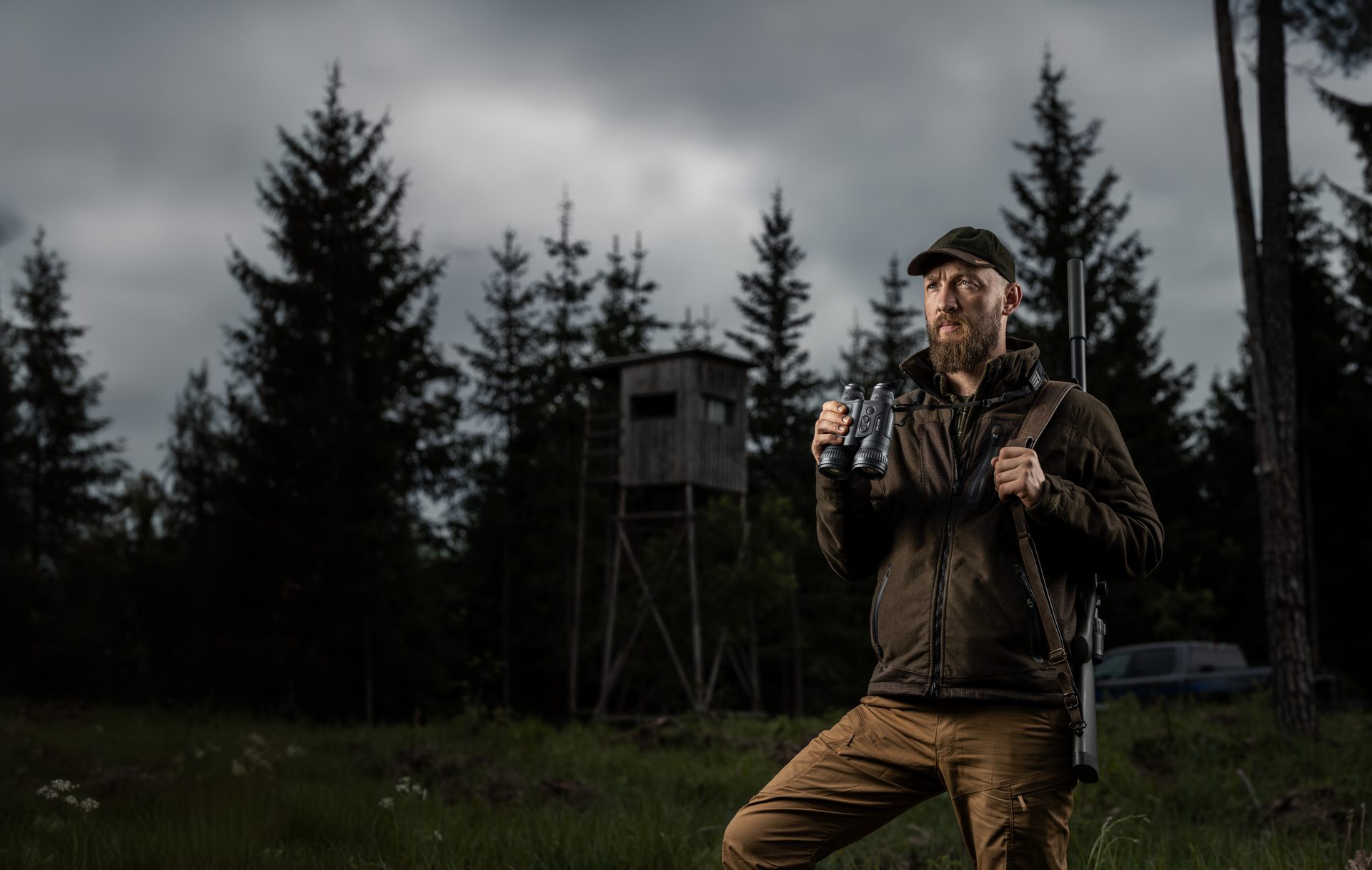
Why night hunting laws differ across countries
Countries write their hunting regulations based on local wildlife populations and traditions. In areas where invasive hogs or coyotes damage crops, night hunting is a practical tool to control numbers. Deep cultural beliefs about fair chase lead lawmakers to restrict or ban thermal devices entirely.
Wildlife protection is another driver of policy. European nations use strict conservation rules to safeguard endangered species and keep hunters from disturbing nocturnal animals. By contrast, some U.S. states let hunters use thermal scopes to protect livestock from predators and to manage pests, but they still prohibit shooting deer, elk, or other game animals at night.
Firearm control laws also shape night‑hunting rules. Countries with tight gun regulations worry that high‑tech scopes could be misused, so they only permit hand‑held thermal monoculars or limit use to licensed wildlife controllers. In the U.S., states balance safety with individual rights by requiring permits or restricting device types. These differences mean hunters must study local laws before heading out.
Legal status of thermal devices in the European Union
The European Union has no law governing thermal‑imaging scopes for hunting. Each of the 27 EU member states sets its own rules based on local wildlife management needs, firearm control laws, and cultural attitudes toward hunting. This patchwork means that regulations can vary widely from one country to the next.
The European Federation for Hunting and Conservation (FACE) works with EU institutions to advocate for sustainable hunting. It encourages member states to balance wildlife protection with hunter access to modern tools and to harmonise standards where possible. Hunters should therefore consult national laws and FACE guidance when planning night hunts across the EU.
Countries allowing thermal devices for night hunting
Spain is one of the most permissive EU member states. Hunters can use thermal riflescopes for invasive species control, such as wild boar, and there are few restrictions when a valid hunting licence is held.
Poland has adopted a more liberal approach in recent years. Hunters may use hand‑held thermal monoculars and weapon‑mounted scopes for wild boar and predator control under specific authorisations. The government emphasises compliance with firearm safety rules and certain species can only be hunted during the day.
On the other hand, Lithuania allows thermal devices to control wild boar, selected invasive species and nuisance predators. Hunters must obtain a permit from the local environmental agency, and the equipment must meet national firearm control standards.
Countries restricting or banning night vision & thermal optics
Germany is among the strictest EU member states: rifle‑mounted thermal devices are generally banned. Exceptions exist for professional wildlife managers who use them to control wild boar populations and other invasive species.
France distinguishes between ownership and use. Hunters may own thermal scopes, but using them is regulated. Since 2020, hunters can mount thermal optics for wild boar management under a prefectural order, but they must keep the scope separate from the rifle during transport and maintain logs of use.
Other EU countries enforce similar restrictions. Many member states allow only hand‑held thermal monoculars for observation, banning rifle‑mounted scopes to protect nocturnal wildlife. Iceland, for example, permits ownership but prohibits using thermal devices for hunting. These policies prioritise wildlife protection and public safety.
Hunting permits and exceptions (wild boar, invasive species)
Despite general bans, most EU member states recognise the need to control invasive species and protect agriculture. Authorities may issue special night-hunting permits for wild boar, raccoon dogs, or other pests that cause significant damage.
For instance, France issues ‘tir de nuit’ authorisations that let hunters shoot wild boar at night with thermal scopes within a defined territory and timeframe. Permits usually require hunters to notify local authorities, comply with safety rules, and submit reports on the number of animals culled.
Spain and Poland provide similar exemptions for the culling of invasive species. Licensed hunters can request permits to use thermal scopes for wild boar and predator control, but they must hunt in designated areas and abide by firearm control laws.
Lithuania also allows thermal optics for controlling invasive species under specific permits issued by the State Forest Service, which detail when and where night hunting is allowed and require hunters to carry identification and report their results.
Even with permits, night hunting remains controversial. Conservationists warn that improper use of thermal devices can harm non‑target species or disrupt ecosystems. Ethical hunters should ensure shots are safe and humane, minimise disturbance, and respect private property. Consulting FACE resources and national wildlife agencies can help hunters stay compliant and responsible.

US night hunting laws and thermal device regulations
Night‑hunting regulations in the United States are set by individual states, typically through their Departments of Natural Resources (DNRs). No single federal law governs thermal scopes, so rules vary widely.
Many states view thermal imaging as a tool to control invasive species such as coyotes and feral hogs, while others restrict or prohibit it over fair‑chase concerns. In all states, deer and other big‑game animals cannot be hunted at night with thermal optics.
States permitting thermal devices for predator control
Wildlife agencies take a pragmatic approach to invasive predators in the American South and parts of the Midwest. States like Texas, Georgia and Florida empower landowners and licensed hunters through their Departments of Natural Resources to remove feral hogs and coyotes at night using thermal optics.
These programs help control exploding hog populations that destroy crops and reduce coyote predation on livestock. Texas Parks and Wildlife Department permits night hunting of hogs and coyotes year‑round on private land without bag limits, while Georgia’s DNR offers free permits that allow hunters to take hogs year‑round and coyotes from March through October. Florida’s Fish and Wildlife Conservation Commission similarly allows thermal scopes for night hunting of coyotes, hogs, and other nuisance species on private land with the landowner’s consent.
Even in these permissive jurisdictions, night hunting laws remain species‑specific: deer, elk, and most game animals cannot be hunted after dark, and hunters must always verify their targets. Because rules evolve quickly, it is essential to consult each state’s Department of Natural Resources for the latest information before planning a night hunt.
States with restrictions on night hunting equipment
Some U.S. states adopt a cautious stance toward firearm‑mounted night‑vision technology. California law prohibits devices mounted on firearms that enable a hunter to see targets at night, effectively banning thermal scopes on rifles.
Colorado’s wildlife code classifies thermal or digital scopes as “smart rifles” and forbids them for big‑game hunting. New York’s Department of Environmental Conservation bans any night‑vision equipment for hunting deer and other protected game. These restrictions reflect concerns about fair chase and public safety.
Other northern states allow limited use of thermal optics but impose strict conditions. Maine’s Department of Inland Fisheries & Wildlife sells night‑hunting permits for coyotes and raccoons and restricts the season to winter months. New Hampshire and Vermont allow night hunting of coyotes and red fox with special licenses, but limit or prohibit thermal scopes for predator control, and maintain seasonal quotas. In these states, deer and other game animals are off‑limits after dark, and hunters must follow all reporting and tagging requirements.
Because policies vary and can change rapidly, hunters in restrictive jurisdictions should consult their state’s Department of Natural Resources or equivalent agency to ensure compliance and obtain any required licences before using thermal devices.
Required licenses, tags, and seasonal restrictions
Because night hunting rules differ by species, many state Departments of Natural Resources issue special permits or tags for predators.
For example, Maine’s Department of Inland Fisheries & Wildlife sells an annual night‑hunting permit for coyotes from December through August and requires hunters to tag each animal taken; the fee supports predator management programs.
In Georgia, the DNR issues free night‑hunting permits for feral hogs and coyotes on private land, but hunters must carry the license while afield and have the landowner’s consent. Texas allows year‑round night hunting of hogs and coyotes, but requires a valid hunting license and encourages hunters to report feral hog harvests to help track populations.
Night hunting seasons are also species‑specific. Many states allow predator hunting only during certain months to protect young wildlife and avoid conflicts with deer seasons. Deer, elk, and other game animals cannot be hunted at night anywhere in the U.S., and using thermal optics to take them is illegal.
Hunters should consult their state’s regulations to learn which species require tags, whether electronic calls are permitted, and how to report harvests. Staying updated about these requirements is important to responsible and legal night hunting.

Ethical considerations in using thermal devices
Even when legal, hunters must follow the hunter’s code of conduct and practise ethical hunting. Thermal scopes can give hunters an advantage, so fair chase, conservation, and safety matter.
Balancing technology with fair chase principles
Fair chase means giving animals a reasonable chance to escape. Over‑reliance on high‑tech optics can erode this principle. Hunters should limit shots to clean, humane kills and avoid using thermal devices to gain an unfair advantage. But for Julia, there’s so much more to it:
I think that being ethical is one of the most important values for hunters. And I think it is not the equipment we use that should decide if we are still ethical or not; it is the hunter himself, his approach, skills and knowledge that should make someone remaining an ethical, good hunter with respect for the game. The fact that new technologies allow us to see and do more does not mean that we have to do it. It is always a matter of choice.
Additionally, it is good to highlight that thermal imaging increases safety level during night hunting a lot, both with checking your surroundings but also for precise shooting.
Wildlife conservation and responsible harvest
Night hunting should support conservation goals. Only target invasive or overabundant species and avoid disturbing protected wildlife. Responsible harvest practices help maintain ecosystem balance. As Julia explains, thermal vision is highly important for truly understanding the local game populations:
Hunting at night, in the darkness, gives us a kind of advantage over hunted game. We can get very close to them and observe them in very natural situations. This gives very good possibilities to evaluate different individuals and choose the one that should be harvested.
For those species that we can not hunt at night – a chance to observe them at night, their behaviours and condition will give us a better idea about our local populations.
We as hunters are often the ones who know the status of local populations of different species best – because we are the ones being out and observing wildlife all the year round.
Safety concerns in low-light hunting
Hunting in the dark carries risks. Hunters must identify targets clearly, know their surroundings, and avoid shooting near buildings or roads. Thermal devices can misidentify heat sources, so extra caution is vital. Julia explains how to make sure your thermals are actually increasing your safety:
After talking with many hunters and their experiences with their first digital scopes etc… I think it is very important to get to understand how they work in practice and to remember that even if it, in a way, feels almost like looking through a day scope… IT IS NOT.
Heat signatures can fool inexperienced eyes with the size of observed objects and one of most important things when one’s about to take a shot – latency. Most advanced gear have it on almost invisible level, but it is still there and people should remember about it! Some animals are very energetic and then forgetting about details of using a digital scope can make a difference… and bad consequences.
Enforcement and penalties for illegal night hunting
Illegal night hunting is not just a regulatory infraction. In many jurisdictions, it is prosecuted under poaching laws.
Wildlife crime enforcement officers and game wardens from state Departments of Natural Resources and their European equivalents patrol hunting areas at night to catch offenders and investigate cases of unauthorized nocturnal shooting. These agencies view banned thermal or night‑vision equipment as a form of unfair advantage over wildlife and a threat to conservation, so offenders may face criminal charges rather than simple administrative fines.
Penalties for illegal night hunting can be severe. Depending on the jurisdiction, hunters may receive steep fines, have their firearms and thermal devices confiscated, and lose hunting licences for years. Repeat offenders or those found guilty of killing protected species could face imprisonment and a permanent ban from holding hunting permits.
Because wildlife crime enforcement agencies collaborate across borders, especially within the European Union, penalties may apply even if an offence occurs outside a hunter’s home state or country, reinforcing the importance of compliance and ethical hunting.

How hunters can stay compliant and ethical
Before diving into the practical tips, it’s essential to recognise that ethical night hunting begins with high‑quality equipment and trustworthy advice. Pulsar thermal devices help hunters detect animals safely. However, they should only be used per the guidelines issued by official hunting associations and local wildlife agencies.
- Research local laws before every hunt; regulations change often.
- Obtain required permits or licences and carry them in the field.
- Use thermal devices only for species and situations allowed by law.
- Report harvested animals as required and cooperate with wildlife officials.
- Respect landowners and seek permission when hunting on private property.
And most importantly, remember that thermal imaging devices can be used well beyond the shot. Here’s what Julia notes:
Thermal imaging can be used widely and hunting should consist not only of the actual harvest, but also of management and conservation – thermal imaging gives us amazing opportunities to get to know what is going on on our hunting grounds much better.
Some species are nocturnal or have become more nocturnal nowadays because of human or predator pressure and they keep hidden in the brush until it gets totally dark. Then they go out on the open fields and then, thanks to thermals, we can study them. For example, size of the population, gender and age distribution or health condition. Getting that kind of knowledge will lead to better decision making.
Practical tips for using thermal devices legally and responsibly
Using thermal optics responsibly requires more than owning a high-tech device. This section outlines how to check local hunting regulations, choose compliant equipment, and document each hunt so you stay within the law.
Checking regulations before a hunt
Consult the relevant wildlife agency or hunting association to verify legal equipment and seasons. Some jurisdictions publish updates online.
Choosing compliant devices
Select thermal scopes that meet legal standards. Pulsar offers models designed for hunting and wildlife observation. Ensure the device is allowed in your region and avoid exporting devices without a licence due to ITAR rules.
Read more:
Documenting hunts and reporting harvests
Keep records of night hunts, including location, species taken, and permit numbers. Reporting harvests helps authorities manage wildlife and proves compliance. Speaking of records, especially video ones, Julia adds that making some for yourself is beneficial, too:
It is perfect for analyzing individuals or groups of animals. While observing them in real time, we can still miss many things, so it is always good to record and later sit and watch the footage again. We can read a lot about an individual or the whole herd by reading body movements and behaviours.

Future of night hunting regulations
Advances in night‑vision and thermal imaging will continue pushing lawmakers to update state and national statutes. In the United States, departments of natural resources are likely to create more species‑specific rules—for example, authorising thermal optics for invasive feral hogs and coyotes while maintaining strict bans on deer and turkey hunting. The debate will revolve around balancing innovation with conservation, ensuring safety, and fair chase.
Across the European Union, where each member state sets its own hunting regulations, harmonisation may be driven by safety concerns and the fight against wildlife crime. Hunting associations and organisations like FACE already advocate for clearer standards on thermal‑device ownership, training requirements, and export controls. Future reforms may introduce mandatory permits for thermal devices and stronger penalties for poaching and misuse.
Conclusion
Night hunting with thermal devices benefits pest control and wildlife management, but laws vary greatly. Hunters must understand differences across EU countries and U.S. states, obtain permits, and practice fair chase. By staying informed and ethical, hunters can use thermal devices responsibly and support conservation efforts.
Pulsar’s line of thermal scopes and monoculars combines rugged construction with high‑resolution sensors to help hunters identify targets quickly in low‑light conditions. Many models feature variable magnification, picture‑in‑picture modes, and built-in video recording, making them versatile pest control and wildlife management tools.
Because Pulsar designs its optics to meet regulatory requirements and emphasise safety, choosing a Pulsar device can help hunters stay compliant while enjoying reliable performance.
When selecting gear for your next night hunt, consider Pulsar thermal devices for their reliability, clarity, and compliance with local laws.
Frequently asked questions
Is it legal to hunt at night with thermal scopes?
Legality depends on location and target species. Some U.S. states and EU countries permit thermal scopes for invasive species, while others ban them.
Which EU countries allow hunting with night vision or thermal optics?
Spain and France allow thermal devices under certain conditions, especially pest control. Germany, Ireland, and Iceland restrict or ban firearm‑mounted devices.
What animals can you hunt at night?
Typically, you can hunt invasive species such as feral hogs, coyotes, and raccoons at night. Most jurisdictions prohibit night hunting of deer, elk, and other game.
Do you need a special license for night hunting with thermal devices?
Many areas require permits for night hunting or for using thermal scopes—for example, Maine and Georgia issue night hunting permits. Always check local regulations.
What are the penalties for illegal night hunting?
Penalties for illegal night hunting include fines, equipment seizure, licence suspension, and possible criminal charges. Laws vary by jurisdiction but can be severe.
Is using thermal scopes ethical for fair chase hunting?
Ethical use of thermal scopes involves limiting advantages, targeting permitted species, and ensuring quick, humane kills. Respect fair chase principles and local laws to hunt responsibly.
Further Reading:
About the expert

Expert Contributor:
Julia Nowak
Julia Nowak was born and raised in a hunting family in Poland and now lives — and continues to hunt — in Sweden. She holds a degree in sustainable forest and game management, bringing both tradition and scientific knowledge to her pursuits.
For Julia, hunting is not just a hobby; it’s a way of life. She also runs the YouTube channel Hunting O’Clock, where she shares her experiences and insights from the field.
Before purchasing any night or thermal vision device, please make sure you adhere to the local legislation and only use it when it is allowed. Our ambassadors come from various countries and travel a lot, which allows them to test different devices. We do not encourage or support the illegal use of our devices in any events. If you wish to learn more about export and sales restriction policy, please visit the following link: Export and Sales Restriction Policy.