
Expert Contributor:
Riccardo Tamburini
Estimated read time: 9 min.
Disclaimer: It can often be illegal hunting at night in your area without specific permission, and you should always adhere to local law. Most of these tips can be applied for any low-light conditions. Even if you can’t hunt at night per se, you can still go out at night to learn about animals’ behavior, for later to hunt them in the allowed hours.
Quick answer: What is the best thermal monocular for deer hunting at night?
The best thermal monocular for deer hunting at night is the one that delivers a practical balance between real-world deer detection range, high sensor resolution for antler identification, wide yet usable field of view, long battery life, and silent, ergonomic operation for stealthy observation.
For deer hunters in 2026, the top-performing field-tested and recommended models are:
- Best Overall – TELOS LRF XT50: Pulsar’s newest flagship thermal monocular, combining high-detail HD thermal imaging, a wide field of view, long-range observation and integrated laser rangefinding for serious deer hunters working across mixed and open terrain.
- Best for Highest Thermal Sensitivity – Telos LRF XP50: Exceptional thermal sensitivity for observing deer in mist, humidity, rain and other low-contrast conditions, while maintaining a useful field of view for mixed-terrain hunting.
- Best for Long-Range Detail / Deer Identification – Telos LRF XL50: HD thermal imaging for hunters who prioritize fine detail and confident deer identification at longer distances.
- Best Compact / Lightweight – Axion XG30 Compact: A lightweight choice for mobile, spot-and-stalk and mountain deer hunters where quick scanning and minimal equipment weight matter most.
- Best Value – Oryx LRF XG35: Combines integrated rangefinding, image stabilization and practical one-handed operation for deer hunters seeking a strong balance of field functionality and value.
Below you’ll find a field-tested buyer’s guide tailored for deer hunters — including detailed product breakdowns, real-use scenarios, and a concise buying checklist to help you choose the monocular that best matches your deer hunting style and terrain.
Find your local dealer

Short introduction
Hunting deer in low light conditions is a different game: deer are more active, wind and scent control can be harder, and identifying the animal’s size, condition and orientation before you shoot can be very challenging. A thermal monocular makes that possible in total darkness by detecting heat differences between animals and their background. But not every thermal device is equally useful for deer hunting. This guide is aimed at hunters, not engineers, and focuses on real-world behavior that separates the thermal devices you’ll use every season, from less quality devices that collect dust after the first night out.
Before we go further, we asked our expert hunter, Riccardo Tamburini, to briefly explain why thermal imaging has become essential for deer hunting and observation:
Some years ago, before the introduction of thermal devices, the hunter often reduced their deer hunting to a few minutes before twilight. Before taking the shot, it was imperative to understand if the animal in front of you was the right one. To do that, you needed a high-end standard bino, able to amplify also the smallest light available: we are talking about two or three thousands of euros.
Today, a good thermal unit helps the hunter to do that. Much better than any classic device: age class, sex, antler quality and number of points are easily visible with a thermal device. In these conditions, I prefer to use a monocular device because I can avoid using the dominant eye, thus not compromising the nocturnal vision of my eye.
Another thing to consider is the great safety given from the use of a thermal device: thanks to the possibility to identify a warm object within 1.5 km or more, you’ll always know if your line of fire will be clean or not.
Field-Tested Pulsar thermal monoculars for deer hunting in detail
We tested these models in a mix of stand, spot & stalk and mountain hunting scenarios. Below are hunting-focused summaries plus practical pros/cons and our field verdicts.
1. TELOS LRF XT50 – Best overall for deer hunting
The TELOS LRF XT50 is Pulsar’s flagship thermal monocular for serious deer hunters who need to move from wide-area scanning to detailed observation and reliable distance measurement without switching devices.
Its 1280×1024 / 12 µm HD thermal sensor provides high image detail, while the 17.5° / 30.7 m @100 m field of view allows hunters to cover large areas efficiently when searching for deer.
Once an animal is detected, the XT50 combines long-range observation with an integrated laser rangefinder, allowing hunters to continue evaluating the animal and assess distance using the same device.
For deer hunters working across mixed terrain, agricultural fields, valleys and mountainous environments, this combination gives the XT50 a particularly strong all-around role.
Who this is for
- Serious deer hunters looking for a premium all-around thermal monocular
- Hunters regularly scanning large forests, agricultural fields and open terrain
- Deer hunters who need both wide-area scanning and detailed observation
- Users who regularly observe animals at longer distances
- Hunters who want integrated ranging without carrying a separate rangefinder
- Long hunting sessions where image quality, ergonomics and reliable ranging all matter
Why we picked it
We chose the TELOS LRF XT50 as Best Overall for deer hunting because it brings together the capabilities that matter across the complete observation process: scanning, detection, detailed observation and distance assessment.
Rather than being defined by one isolated specification, the XT50 combines high-resolution thermal imaging, a wide field of view, long-range observation and integrated ranging in one flagship Telos device.
Key specifications
- 1280×1024 / 12 µm HD thermal sensor
- 50 mm F1.0 objective lens
- 17.5° / 30.7 m @100 m field of view
- 2–16× magnification, with Zoom Boost up to 24×
- 2300 m detection range
- Integrated laser rangefinder up to 1200 m
- Electronic image stabilization
- Replaceable LPS 7i battery
- Upgradeable Telos platform
Strengths
- High-resolution thermal imaging for detailed observation
- Wide field of view for efficient scanning across large areas
- Combines wide-area observation and long-range capability
- Integrated laser rangefinder for distance assessment
- Electronic image stabilization for steadier observation at higher magnification
- Designed for demanding and extended field use
- Upgradeable Telos platform supports long-term ownership
Limitations
- Larger and heavier than compact Axion models
- Not designed around true one-handed focus operation
- Hunters whose main priority is specifically fine detail at longer distances may prefer the XL50
- Hunters whose main priority is maximum thermal sensitivity in low thermal contrast may prefer the XP50
Use cases / hunting scenarios
- Scanning agricultural fields and forest edges for deer
- Mixed-terrain deer hunting
- Open-country and mountain observation
- Identifying animals at longer distances
- Long observation sessions
- Situations where scanning, detailed observation and ranging are all required from one device
Verdict
If you want one premium thermal monocular that brings wide-area scanning, high-detail observation, long-range capability and integrated ranging together, the TELOS LRF XT50 is our Best Overall pick for deer hunting.
Explore more:
- Find a local dealer to compare the feel and handling of the device.
2. Telos LRF XP50 – Best for highest thermal sensitivity
Who this is for
Deer hunters who prioritize thermal sensitivity and image contrast, regularly hunt in changing or low-contrast conditions, and want a premium Telos monocular for mixed terrain and extended observation.
For practical insight, here’s a quick Riccardo’s overview of the Pulsar Telos LRF XP50:
“The Telos XP is my favorite choice when I need great image quality. The vision, using the base magnification, is rich in detail and it’s possible to get the smallest detail up to 150-200 mt. I’m talking about the point of the antlers of a red stag or a roebuck.
How can you do it? It’s simple: the most important rule to follow is to work with the settings; antlers are cold, and they look dark on the device display, so it’s important to have a light background. Using the white color palette, for example, it’s possible to have the grass in the open field in a light grey which makes a great contrast with the cold antlers; then, reducing contrast (3-4/20) and using a mid-brightness (8-9/20) can help a lot. But this setting increases eye fatigue, so it’s better to not use it during long observation sessions.”
Strengths
- Outstanding image clarity and contrast for antler/neck/torso identification.
- Excellent detection and identification performance in brush and open field.
- Built rugged for cold, long and wet hunts.
- Laser rangefinder and ballistic calculator.
Limitations
- Heavier and more expensive than more compact units – less ideal for ultralight spot-and-stalk hunts.
- Overkill for short-range stand hunts where a compact spotter is more convenient.
Use-cases / hunting scenarios
- Mountain hunts on open ridgelines where you need to identify a buck at 300+ m.
- Late-night thermal surveys where deer and antler size determines whether to stalk in the morning.
Expert experience & field test results
In mixed-wood environments, the Telos LRF XP50 detected deer heat signatures earlier and rendered antler points and body condition more clearly at longer ranges than other mid-tier devices. On nights with light mist its contrast handling easily separated deer from wet leaves. A valuable feature during early spring and late summer hunts.
Verdict
Choose the Telos LRF XP50 when thermal sensitivity, contrast and observation in demanding environmental conditions are your highest priorities.
Its <15 mK thermal sensitivity gives it a clearly differentiated role within the Telos lineup, particularly for deer hunters working in mist, humidity and other low thermal-contrast conditions.
Explore more:
- Find a local dealer to compare the feel and handling of the device.
3. Telos LRF XL50 – Best for long-range detail / deer identification
The Telos LRF XL50 is particularly well suited to deer hunters whose priority is fine image detail and confident observation at longer distances.
Its 1024×768 / 12 µm HD thermal sensor, 50 mm F1.0 lens and 2.5–20× magnification make it a strong choice for open terrain, mountain hunting and other situations where deer may need to be evaluated from farther away.
Who this is for
- Deer hunters frequently observing animals at longer distances
- Open-field and mountain hunters
- Hunters who prioritize fine image detail
- Users observing deer across valleys, fields and other open terrain
- Hunters for whom confident identification at distance is a primary requirement
Why we picked it
We chose the Telos LRF XL50 as Best for long-range detail / deer identification because its HD sensor and optical configuration are particularly well suited to detailed distant observation.
Key specifications
- 1024×768 / 12 µm HD thermal sensor
- 50 mm F1.0 objective lens
- 2.5–20× magnification
- ~2300 m detection range
- Integrated laser rangefinder
- Upgradeable Telos platform
Strengths
- HD resolution for detailed thermal observation
- Strong fit for long-range deer identification
- Useful magnification range for distant animals
- Particularly relevant for open terrain and mountain hunting
- Premium Telos construction and ergonomics
- Upgradeable platform
Best use cases
- Long-range deer observation
- Open-field hunting
- Mountain hunting
- Observation across valleys and large open areas
- Situations where fine animal detail matters at longer distances
Verdict
Choose the Telos LRF XL50 when your primary requirement is fine detail and confident deer identification at longer distances.
Choose the XT50 when you want a broader flagship balance that also emphasizes wide-area scanning and integrated ranging.
Explore more:
- In-depth review of the Pulsar Telos XL50
- Find a local dealer to compare the feel and handling of the device.
4. Axion XG30 Compact – Best compact / lightweight monocular
The Axion XG30 is built for mobile deer hunters who value speed, portability, and reliable thermal clarity during long stalks or pre-dawn scans. Its fast start-up and compact body make it ideal for tracking whitetail or roe deer along forest edges or open fields, where quick detection and one-handed operation are essential. Despite its lightweight design, the Axion delivers crisp deer heat signatures and accurate body contour recognition at typical hunting distances, helping hunters spot and identify bucks quietly without sacrificing image quality.
Who this is for
Spot-and-stalk hunters, archery whitetail hunters or anyone who needs to carry gear for many kilometers and favors quick target acquisition.
Key specifications
- Compact body and low weight
- Fast power-up and simple menu system
- Good mid-range sensor optimized for detection within 200–300+ m
Strengths
- Extremely portable; easy to hold for long hunts.
- Fast start-up and intuitive controls for one-handed use.
- Good battery life given its size.
Limitations
- Not as long-range or detailed as heavier and more expensive Telos XP50 devices.
- A smaller lens means less performance in tougher situations (e.g., heavy fog).
Use-cases / hunting scenarios
- Quick pre-dawn glassing while stalking or sitting on a ridge.
- Walking the edge of the forest and scanning quickly for movement without the need of carrying a bigger device or using both hands.
Expert experience & field test results
On a mobile hunt the Axion made locating a bedded doe in a low-contrast ravine straightforward; we appreciated the weight savings on the 6–8 km hikes and the ability to quickly switch the unit to video mode for a quick video clip of the animal.
Verdict
For mobile hunters who prioritize portability and quick scans, the Axion XG30 Compact is hard to beat.
Practical use-case: how our expert Riccardo uses his Axion XG30 Compact:
When I go hunting in the mountains, every single gram in my backpack can make the difference. I always use a bino harness and a small thermal device is perfect to fit in, always ready-to-use. I don’t need super image quality because mountain hunting also means super long glassing sessions with classic bino or spotting scope.
The thermal device is very important to see the animals from very far or through dense fog, which is one of the more usual companions in the mountains. For example, after spotting a herd of chamois with Axion, I try to get as close as possible to check if there is the animal with the class age or sex I’m looking for. If yes, I can prepare everything for a long-distance shooting.
Explore more:
- Find a local dealer to compare the feel and handling of the device.
5. Oryx LRF XG35 – Best value
The Oryx LRF XG35 hits the perfect balance for deer hunters seeking dependable rangefinding precision and image stability without the premium price tag. Its integrated laser rangefinder and built-in image stabilization make it ideal for tracking and identifying deer across mixed terrain — from open fields to forest edges — where quick, steady distance confirmation ensures ethical shot decisions. Delivering high-quality optics and reliable thermal clarity, the Oryx helps hunters confidently judge a buck’s body size or antler structure even in low-contrast evening conditions.
Who this is for
Hunters who want an LRF-enabled thermal monocular but are budget-conscious.
Key specifications
- Mid-tier thermal sensor with LRF integration
- Balanced optics and weight for stand and limited spot-and-stalk use
Strengths
- Great price-to-performance ratio
- Useful LRF for range confirmation in many field situations
- Image stabilization
- Ballistic calculator
Limitations
- Sensor detail and long-range clarity lag behind the top-tier Telos models.
- LRF may not lock on small or semi-hidden game at extreme ranges.
Use-cases / hunting scenarios
- Hunters who split time between stand and short stalks and need range confirmation without a separate piece of gear.
Verdict
If you are looking for a prime thermal device with an affordable sensor, the Oryx LRF XG35 delivers a strong core value with multiple features for ethical night hunting.
Riccardo’s feedback on Oryx:
Sometimes, the ergonomics drives your choice. The possibility to have an one-hand use thermal device can make all the difference; when I’m stalking a roebuck in mixed environment – from open field to dense forest – I need to have a stick always ready to place a good and precise shot, so, the possibility to use a device with only one hand is very, very important.
Then, if you plan to stay out two days in the backcountry, having a device with a super battery life helps a lot. Oryx is incredible, and you can forget about bringing another battery or a power bank with you.
Explore more:
- Browse all Oryx LRF monocular series
- Find a local dealer to compare the feel and handling of the device
Top Pulsar thermal monocular for nighttime deer hunting (comparison)
Below is a short comparison table of relevant Pulsar models (to help you see where Pulsar sits if you’re comparing brands). Pulsar often offers a range of devices well-suited for hunters, match detection range, sensor quality and weight to your needs.
| Model | Sensor | Lens | Magnification | System NETD | Detection Range | FOV @100 m | LRF | Best Suited For |
| TELOS LRF XT50 | 1280×1024 / 12 µm | 50 mm F1.0 | 2–16×; Zoom Boost up to 24× | <20 mK | 2300 m | 30.7 m | 1200 m | Premium all-around: wide scanning, detailed observation & ranging |
| Telos LRF XL50 | 1024×768 / 12 µm | 50 mm F1.0 | 2.5–20×; Zoom Boost up to 30× | <20 mK | 2300 m | 24.6 m | 1000 m | Long-range detail & deer identification |
| Telos LRF XP50 | 640×480 / 17 µm | 50 mm F1.0 | 2.5–10× | <15 mK | 1800 m | 21.8 m | 1000 m | Highest thermal sensitivity / low-contrast conditions |
| Oryx LRF XG35 | 640×480 / 12 µm | 35 mm F1.0 | 2.5–20× | <20 mK | 1800 m | 21.9 m | 1500 m | Value, mobility, one-handed use & ranging |
| Axion XG30 Compact | 640×480 / 12 µm | 30 mm F1.2 | 2–16× | <25 mK | 1300 m | 25.6 m | — | Lightweight, mobile hunting & quick scanning |
Note: Manufacturer specifications vary — real deer detection and identification distances are typically shorter than theoretical maximums, especially in wooded or foggy environments where deer blend into background heat. Always test your device in similar terrain and temperature conditions to your actual hunting grounds for the most accurate results.
Read in-depth guide: Best thermal monocular for hunting

What makes a thermal monocular ideal for deer hunting at night?
Successful nighttime deer hunting with a thermal monocular depends on a combination of capabilities, but the ones that matter the most to the hunter are:
- Detection range & identification range: the ability to detect a deer is different from the ability to identify it as a deer and judge its size (and antlers size). You want enough detection to be able to plan and enough identification range to determine whether the shooter conditions are within the ethical boundaries.
- Sensor resolution & image clarity: higher-resolution sensors deliver crisper animal outlines and antler detail under low-light conditions. This helps identify bucks from does and to spot any injuries.
- Lens aperture & optics: a bigger objective lens collects more thermal energy and improve effective range and contrast.
- Field of View (FOV): wide FOV helps scanning and locating moving deer; narrow FOV helps in identification at a distance. The best hunting monocular offers a usable compromise between zoom ranges.
- Refresh rate & display quality: smooth motion and low latency are crucial to track moving deer and pick the right time to take a shot.
- Battery life & portability: long sits in a tree stand demand long runtimes; spot-and-stalk demands light weight.
- Stealth & ergonomics: quiet operation, minimal IR glow (thermal has no visible IR, but electronics and noise matter), comfortable cheek/hand placement, and quick one-handed operation.
- Durability & water resistance: hunting conditions are harsh; the thermal device must handle cold, moisture and rough handling.
- Additional features: video recording, built-in LRF (laser rangefinder), ballistic outputs, and smartphone integration, useful but secondary to core performance for most deer hunters.
Related: Thermal monocular hunting guide
Why thermal beats traditional night vision for deer tracking
Night-vision amplifies light and gives excellent detail in starlight or moonlight, but it depends on visible/near-infrared illumination, and it struggles in total darkness, fog, or when animals blend into complex backgrounds. Thermal devices detect heat differences and are not dependent on external lighting. For deer hunting these things matters because:
- Deer shows up as heat silhouettes against vegetation and ground even when being camouflaged visually.
- Thermal sees through smoke, light fog and some cover better than infrared (IR); not magic, but often more reliable.
- No active illumination required – you don’t need IR illuminators that may spook animals or be illegal in some places.
For identification at range in the dark (buck/doe/antler size), a good thermal monocular is your best bet.
Related: Night vision vs thermal imaging for hunting
How to choose a monocular that fits your deer hunting style
Different deer hunters face different challenges depending on where and how they hunt. Below are the most common deer hunting archetypes and the key thermal features that matter most for each style:
- Stand hunter (hour long hunts from a tree stand or blind): Prioritize battery life, image comfort, and clear detection at 150–400+ m, where deer often appear at the edge of a clearing or move silently under canopy shadows. A mid-resolution sensor with good optics and a comfortable eyepiece helps maintain visual focus through long sits.
Example: Telos LRF XP50 for high thermal sensitivity and comfortable extended observation, or Oryx LRF XG35 when integrated ranging and field functionality are priorities.
- Spot-and-stalk hunter (mobile): Lightweight, fast start-up, quick-focus units make a difference when stalking whitetail or roe deer along forest edges or open ridges. Prioritize low weight and quick activation over absolute range if you move a lot or need to scan pre-dawn bedding areas.
Example: Axion XG30 Compact or Axion XG35 Compact
- Mountain / long-range deer hunter: Requires maximum detection and identification capabilities to spot red deer or larger bucks in open terrain or across valleys. Prioritize high-resolution sensors, LRF integration, and ballistic data for confident long-distance shot preparation. A mid- to high-resolution sensor with strong optics ensures reliable antler and body recognition even beyond 500 m.
Example: Choose the TELOS LRF XT50 when you want a premium all-around combination of wide-area scanning, detailed observation and integrated ranging across changing terrain. Choose the Telos LRF XL50 when fine detail and long-range deer identification are the primary requirements. Consider the Telos LRF XG50 when higher base magnification is particularly important.
- Budget-conscious hunter / occasional night hunter: Look for the best sensor resolution and lens quality within your budget — enough to detect deer heat signatures in forest or field conditions and maintain clarity in cold evenings. A rugged, weatherproof body ensures reliability through multiple seasons.
Example: Axion XQ19 Compact or Telos XQ35 are good value for money options.
Read in-depth guide: How to choose thermal monocular

How thermal monoculars help you track deer in total darkness, real examples
Example 1: Pre-dawn stand glassing
You arrive at your stand 45 minutes before legal shooting time. Use a thermal monocular to scan mountains, open fields or tree lines. In heavy shadows or in darkness, a bedded buck will appear as a warm silhouette against the cooler ground. You detect movement 180+ m out, zoom to identify the antlers of the buck, and use your LRF (if present) to verify the range. You decide to hold your shot, as the buck is quartering away and then wait for a better broadside shot within legal shooting time.
Example 2: Tracking a wounded deer
After an unlucky gut-shot, you lose visual contact with the animal at dusk. With a thermal monocular you can pick up residual heat along the trail of blood and tissue, confirm the direction and follow the deer at a steady pace without spooking it. You spot the deer 120 m away under a brush and mark the position for a safe approach later. Only use this method if you don’t have access to trained scent- or bloodhounds in your country.
Example 3: Scouting deer bedding areas
A deer bedded in tall grass during a cold night will stand out because the animal’s body retains heat differently than the grass after sunset. A thermal spotter helps you mark good bedding areas to set up stands the next morning.
Key features to evaluate, explained in a hunter’s language
- Detection vs Identification: detection = seeing there is an animal; identification = seeing what the animal is (buck vs doe, spike vs large antlers). Make sure the monocular lists both detection and identification performance realistically.
- Sensor resolution: higher resolution = more detail. For deer hunting aim for the highest sensor resolution, you can afford.
- Lens size / aperture: larger objective increases range and contrast. For long-range mountain hunting, pick larger lenses.
- Zoom & FOV flexibility: digital zoom helps identification but reduces resolution; units with optical or discrete (stepless) digital zoom are preferred.
- Refresh rate: 50 Hz or higher is ideal for smooth tracking of moving deer.
- Ergonomics: how comfortable is the monocular to hold for long hunts? Is it easy to operate with gloves?
- Recording & connectivity: video recorders are helpful for scouting and documentation. Bluetooth or Wi-Fi integration can let you save clips and snapshots immediately on your smartphone.
- Battery & spare battery options: long hunts mean spare batteries and hot-swappable batteries are a critical option.
- Durability & waterproofing: look for IPX6/IPX7 ratings for reliability in harsh and wet conditions.
Practical use cases – how to use features in the field
- Use a wide FOV scan to locate movement, then zoom in to identify. Start wide to locate, then zoom slowly. Sudden zooming can cause you to miss moving targets.
- Use thermal palettes intelligently. White-hot or black-hot palettes make different features pop; try both when scanning dense undergrowth. Try other palettes to see if they fit your needs better.
- Pair LRF data with topography. A measured distance plus slope also called horizontal component distance (HCD) helps you avoid unethical shots. If your unit lacks LRF, use a handheld LRF to confirm the distance. The HCD function calculates the effective range to the target by factoring in the slope angle, which is crucial for maintaining accuracy when shooting uphill or downhill.
- Record short clips of bucks for post-hunt analysis. Looking at antler details in recordings can help identify a specific buck later.
Field-testing protocol, how to test before you buy (and during the first weeks of ownership)
- Scan sample scenarios: Test in open fields, forest edges, heavy brush and fog. Make sure detection/identification fits your typical hunting ground.
- Test target identification at night: Have a human stand at incremental distances to determine your identification range under real-life conditions (start at 100 m and move out in 50 m steps).
- Test startup time & ergonomics: Power-on while wearing gloves; try holding the device for extended periods.
- Test battery runtime in cold weather: Low temperatures reduce runtime, measure battery life at your typical temperature range when hunting.
- Test LRF performance at angles and through partial obstruction.
- Record & review: Record video clips and evaluate how well antler detail and body conditions are rendered.
Legal & ethical considerations
- Legality varies by jurisdiction. Some areas restrict the use of thermal optics for deer hunting at night, while others allow them only for scouting or detection. Always check local regulations before using a thermal monocular
- Ethical shot selection: Thermal devices improve deer identification and antler clarity, but the hunter remains responsible for a humane, well-placed shot. Confirm distance, angle, and full target visibility before shooting
- Use in surveys and management: In many regions, thermal spotters are permitted for deer population monitoring and herd surveys — always follow legal frameworks for night observations and hunting seasons.
Final verdict & buying checklist
Match your thermal monocular to how you hunt deer and the terrain you hunt in rather than choosing on specifications alone.
For serious deer hunters looking for a premium all-around thermal monocular, the TELOS LRF XT50 is our Best Overall pick. Its combination of high-resolution thermal imaging, wide field of view, long-range observation and integrated ranging makes it particularly relevant for hunters moving between forests, agricultural fields, valleys and other open terrain.
If your main priority is thermal sensitivity and observation in low-contrast conditions, choose the Telos LRF XP50.
If fine detail and deer identification at longer distances are the priority, choose the Telos LRF XL50.
For mobile and spot-and-stalk hunting, compact models such as the Axion XG30 Compact or XG35 Compact keep weight and bulk to a minimum.
And if you want a balance of integrated ranging, one-handed operation and value, the Oryx LRF XG35 remains a strong option.
Buying checklist (quick):
- What is your typical deer detection range? (150-300 m for dense woods; 300-500 m+ for open country)
- Do you need an integrated LRF? (yes → faster decision-making at distance)
- How much weight will you carry? (spot-and-stalk → compact)
- How long are your hunts? (long hunts → battery life)
- Is video/recording important for your scouting?
- Is your hunting area wet/cold? (check IP rating and cold battery behavior)
- Budget vs long-term use: buy the best sensor you can afford for deer identification.
Closing note
Picking the right thermal monocular for deer hunting is about matching device strengths to how you normally hunt. Use this guide to compare your real-world needs, not marketing specifications, and test different devices in conditions that match your hunting areas and seasons. Start with the checklist, test in the field, and prioritize detection and identification so each hunt in low-light conditions is both effective and ethical.

Frequently asked questions
What Is the Best Pulsar Thermal Monocular for Deer Hunting?
For serious deer hunters looking for a premium all-around thermal monocular, the TELOS LRF XT50 is our Best Overall pick.
Its 1280×1024 thermal sensor, wide 17.5° field of view, long-range observation capability and integrated laser rangefinder make it particularly well suited to hunters who need to scan large areas, evaluate animals in detail and assess distance using the same device.
Can a thermal monocular detect deer through thick brush?
They can detect warm bodies through light brush and some vegetation, but dense, wet foliage reduces detection and identification. Thermal helps more than night vision or infrared but is not magic.
What’s the ideal detection range for deer hunting at night?
Depends on terrain. In forests 150–300+ m is practical; in open fields you may want 300–500+ m detection and 200–400+ m identification capability.
Are thermal monoculars legal for hunting in the US/EU?
Laws and regulations vary widely. Some U.S. states and EU countries allow them with restrictions; others totally ban their use for hunting. Always check local hunting laws and regulations before using thermal devices.
Read further:
- Best thermal monoculars for hunting
- Best thermal scope for hunting
- Best thermal scope for hog hunting
- Best thermal scope for coyote hunting
About the experts
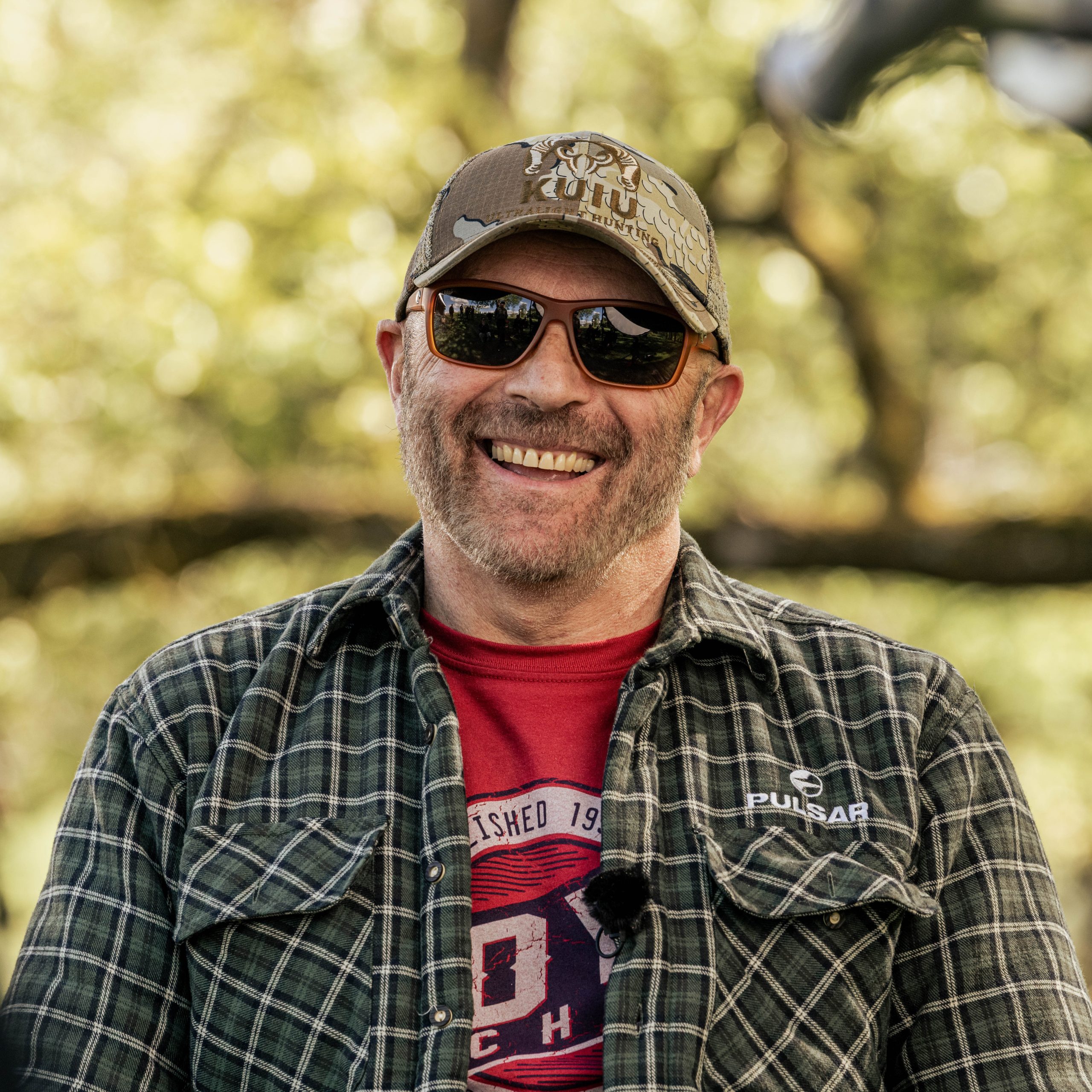
Expert Contributor:
Riccardo Tamburini
Riccardo Tamburini is a lifelong outdoorsman, hunter, fisherman, and professional wildlife photographer and filmmaker.
With over 35 years of experience across plains and mountains in Italy and abroad, he combines field expertise with a mechanical engineering background to explain the technology behind rifles, optics, and digital devices.

Co-Author:
Freya Askjaer
Freya Askjaer is a Danish huntress living in Sicily, with over a decade of experience hunting across the world.
She has tested Pulsar optics in snow-covered mountains, thick brush, and desert-like areas through every season.
Before purchasing any night or thermal vision device, please make sure you adhere to the local legislation and only use it when it is allowed. Our ambassadors come from various countries and travel a lot, which allows them to test different devices. We do not encourage or support the illegal use of our devices in any events. If you wish to learn more about export and sales restriction policy, please visit the following link: Export and Sales Restriction Policy.