
Expert Contributor:
Riccardo Tamburini
Estimated read time: 8 min.
How to Hunt Nocturnal Deer and Bucks at Night
Quick Answer
Deer often become nocturnal due to hunting pressure, predators, and changing light conditions. Understanding how to hunt deer at night starts with following local laws, as night hunting and the use of thermal or night-vision devices may be restricted or prohibited depending on the region. Where permitted, success relies on understanding deer movement, managing scent and wind, and choosing the right observation equipment.
For premium handheld thermal observation, the TELOS LRF XT50 – Pulsar’s newest flagship thermal monocular – combines a wide scanning view with HD thermal detail and integrated ranging, making it particularly well suited to observing deer across open fields and mixed terrain.
For longer, comfortable two-eye observation, Pulsar Merger LRF binoculars provide a dedicated thermal binocular solution, while Pulsar Thermion 2 LRF riflescopes support thermal observation, ranging, and shooting where their use for hunting is legally permitted.
For hunters who also need visual detail during daylight and twilight, the latest Pulsar Symbion multispectral binoculars combine thermal detection with high-resolution digital and night vision for observation from day through night.
Always check the latest local regulations before using thermal or night-vision equipment for deer hunting, especially rifle-mounted thermal devices.

Why do deer and bucks turn nocturnal?
Deer and bucks become nocturnal primarily because of hunting pressure, predators, and moonlight conditions.
As members of the Cervidae family, species like the whitetail deer (Odocoileus virginianus) and the mule deer (Odocoileus hemionus) show strong crepuscular activity patterns. Their circadian rhythm shifts under hunting pressure and changing moon phases, while thermoregulation in extreme temperatures further influences when they move and feed.
When hunters apply consistent pressure or human activity disturbs a habitat, deer — especially mature bucks — quickly adapt by moving under the cover of night. In heavily hunted areas, deer have been observed to significantly reduce daytime movement, shifting much of their activity into night hours.
Other factors play a role, too. Weather extremes, seasonal food shortages, and the safety of darker hours all encourage nocturnal habits. Moonlight is another important driver: during bright phases, deer feed and travel more extensively at night.
White-tailed deer in particular are well adapted to these conditions, with horizontally slit pupils and rapid image processing that make them adept at detecting motion in low light. This ability gives them a clear survival advantage when avoiding danger.
While these observations come primarily from the US, it’s worth noting that they’ve become pretty much universal. Here’s what Riccardo Tamburini, a lifelong outdoorsmen and hunter from Italy, has noticed:
These tips are relevant all over the world. I live in Italy, across the Atlantic ocean 10k km far from the USA and the situation is the same.
Here, hunting deer during the night is strictly forbidden; but, living in the most congested Italian region plays a crucial role in deer hunting because animals are very disturbed during the day and it’s impossible simply to see them; they live, feed, and breed during the night.
Thanks to thermal technology, we can get vital info about the distribution of sex and age class of the deer population in a certain territory, better understanding their behaviour and habits. Using a high end unit is also possible to evaluate the antlers of a big stag or of a roebuck.

Are you allowed to hunt deer at night? (Laws & Ethics)
In most regions, hunting deer at night is strictly regulated. Laws in the United States and Europe generally prohibit deer hunting after dark, with only limited exceptions.
- United States: Most states ban night deer hunting to reduce accidents and protect wildlife. Spotlighting (using artificial light) is almost universally illegal. A few states allow restricted night hunting for certain species under special permits, often with limits on weapon type and reporting requirements.
- Europe: Regulations also prohibit deer hunting after dark, though exemptions exist. In the United Kingdom, the Deer Act 1991 forbids shooting deer between one hour after sunset and one hour before sunrise. Licences may be granted only for crop protection or public safety, with strict limits on species, location, and rifle type.
Even where night hunting is legal, low visibility raises the risk of misidentification and accidents. Continuous pressure can stress deer populations and disrupt herd dynamics. For this reason, conservation ethics and the principle of fair chase remain essential.
If hunting is prohibited at night in your area, you can still legally engage in scouting activities using thermal monoculars or night vision devices to observe deer movement. These methods provide valuable insights for planning legal daytime hunts while staying fully within ethical and legal boundaries.
Read More: Night Hunting Laws
Best conditions for hunting nocturnal bucks
Knowing how to hunt nocturnal bucks starts with understanding the conditions that favor movement: bright moonlit nights, favorable winds, and key seasonal phases such as the rut or late-winter food shortages.
According to an extensive study by Mississippi State University, around 60% of bucks’ behavior during twilight hours is active — feeding, walking, or tending. Knowing this helps to schedule positioning and scanning times.
Key factors to consider:
- Moon phases: A full moon provides more light, encouraging deer to travel and feed, but it also makes them more alert and harder to approach. This happens because the moon phases alter the circadian rhythm of deer, often pushing movement into the night.
- Wind direction: Bucks rely heavily on their sense of smell. Always hunt with the wind in your favor to avoid detection.
- Seasonal shifts: During hot summers or harsh winters, thermoregulation needs also dictate how long whitetails and mule deer remain active in feeding areas.
- Rut (mating season): Bucks increase movement and are more vulnerable, regardless of time of day.
- Late winter: Food scarcity pushes deer to forage more extensively at night.
- Crop fields: Harvested fields become prime feeding grounds after dark.
- Weather changes: Deer often feed before heavy rain or snow, then retreat to cover. They are less active in extreme heat but move more during the warmest parts of the day in hard frosts.
To this list, Riccardo adds from his European experience:
In many European Countries, we are having an explosion of the wolf population. As hunters, we have to consider them as a potential competitor in hunting, understanding in which way they are changing the deer’s habits.
Recently, I read a study which demonstrates how deep is the impact of the wolf presence for the feeding hours of the roedeer, who is the easiest visible cervidae during the day: where there is the wolf, the roedeer seems disappearing but it’s onlyecause he prefers to stay and feed in the woods during the day.
By aligning hunting strategy with these natural rhythms, hunters can improve their chances of success — always ensuring that local regulations permit night hunting.
Essential gear for night hunting success
Hunting deer after dark, where permitted, requires equipment that enhances visibility, safety, and precision. Standard daytime gear won’t suffice. Night hunting demands tools tailored to low-light conditions.
Core equipment every night hunter should consider:
- Weapon and Ammunition: Legal, deer-appropriate calibres with expanding ammunition where required.
- Clothing: Camouflage and scent-control layers to remain undetected.
- Lighting: Headlamps or flashlights with red or green filters for navigation without spooking deer.
- Safety Kit: Hunting licence, night hunting permit (if applicable), compass or GPS, communication devices, and backup power.
- Weather Protection: Warm layers and rain gear for comfort and endurance.
- Optics: The most critical gear for night success.

Thermal vs. Night Vision
Thermal optics detect heat signatures, working in complete darkness and through vegetation. Night vision amplifies ambient light but requires some natural illumination or an infrared source. Each has unique strengths:
- Thermal: Best for scanning, identifying deer through cover, and ensuring safe target recognition. Also for bad weather conditions such as foggy or rainy nights.
- Night vision: Useful in regions where thermal riflescopes are restricted, offering clearer images under moonlight or IR illumination.
Read more: Thermal vs night vision: which to choose?
Adding to this, Riccardo also shares tips on selecting other types of gear that helps him remain successful:
As you read above, the deer pupils are made to see into the night, helping them to feel any movement. They also have large ears to get any sounds, so it is likely that you will be seen before seeing the deer.
Talking about clothing, it’s imperative to wear silent jackets and pants with no snap buttons, velcro cuffs or long zip closure. Hands and face have to be covered.
But what really makes the difference is the use of a thermal unit:
1) just after arriving in an open area, spend some time deeply seeing what is happening around you;
2) after viewing some animals, exploit the cover to reduce distance;
3) at around 100 meters, a mid-price unit is enough to get a lot of details or to observe the deer life discretely;
4) when you decide to end the session, come back using the same discretion and attention made approaching the animals.
Multispectral advantage for night deer hunting
When observing and tracking deer during dusk and nighttime, understanding behavior matters as much as detection. While thermal optics reveal heat signatures, they offer limited context about terrain and subtle movement patterns that influence how deer react.
The latest Pulsar Symbion multispectral binoculars combine thermal detection with high-resolution digital and infrared imaging, allowing observers to locate deer thermally and then assess posture, feeding behavior, and movement direction without disturbance. Picture-in-picture viewing supports monitoring as deer move between cover and open areas, while the integrated laser rangefinder helps maintain accurate, non-intrusive distance.
For extended observation sessions along field edges or travel corridors, Symbion’s binocular design and image stabilization reduce fatigue, providing a more informed and ethical approach to deer observation from twilight through full darkness.
Explore: Pulsar Symbion multispectral binoculars — In-depth review
Pulsar’s role in night hunting gear
- TELOS LRF XT50: Pulsar’s newest flagship thermal monocular and premium all-around choice for deer observation, combining a 1280×1024 HD sensor, wide 17.5° field of view, long-range observation, and integrated 1200 m laser rangefinder. It is particularly suited to scanning and evaluating deer across open fields and mixed terrain.
- Telos LRF XL50 / XP50: Premium thermal monoculars for more specific priorities: the XL50 for detailed longer-range observation and the XP50 when high thermal sensitivity in low-contrast conditions is especially important.
- Merger LRF XT50: Thermal binoculars with a wide field of view, ideal for long sessions in open fields.
- Pulsar Symbion LRF DXT50/DXR50: the latest multispectral binoculars for hunters and observers who need both thermal detection and visual context. Designed for day-to-night deer observation, Symbion allows users to locate deer thermally and then assess movement, posture, and surroundings using digital and thermal imaging — ideal for extended, low-impact monitoring.
- Thermion 2 LRF XL60: Thermal riflescope for precise, ethical shooting in regions where regulations allow.
- Axion XQ30 Pro Compact: Lightweight and ultra-portable monocular for quick scanning and tracking.
How does one choose between monocular and binoculars? It can be personal, but here’s what Riccardo noticed over the years of experience:
Stalking deers during the night, I prefer to use a monocular because I’ll always have an eye used to night vision. The bino is best when you’re seeing in the dark from a stand.
With the right mix of thermal and night vision optics, hunters gain not only visibility but also safety, ensuring every decision in the dark is based on clear information.

Comparison Table: Optics for nocturnal deer hunting and scouting
Choosing the right optics is the key to successful nocturnal deer and buck hunting. Different devices serve different purposes — from precision aiming with the best riflescopes to wide-field scanning with binoculars.
The table below compares the main options hunters rely on at night, outlining their strengths, limitations, and best use cases. For a detailed breakdown of strengths and limitations, see our guide on Thermal Monocular vs Binoculars.
| Category | Thermal Riflescope | Thermal Monocular | Thermal Binoculars | Night Vision Devices |
|---|---|---|---|---|
| Primary Function | Precision aiming, ethical shooting | Quick handheld scanning | Wide FOV, long observation | Amplifies ambient/IR light |
| Detection Range | Up to ~2,000 m | ~1,200–1,800 m | 2,000+ m | Limited by conditions |
| Performance in Darkness | Excellent, no light needed | Excellent | Excellent | Good in partial light |
| Best Use Case | Shooting (where legal) | Mobile scouting | Stationary hunts, open fields | Close-range, legal alternatives |
| Pulsar Example | Thermion 2 LRF XL60 | Telos LRF XP50 | Merger LRF XT50 | Pulsar Digex C50 |
Proven hunting strategies for nocturnal deer and bucks
Even with the best gear, success depends on applying strategies adapted to deer behavior after dark.
Field-proven tactics include:
- Stand Hunting with Thermal Optics: Setting up in high-traffic areas such as bedding-to-feeding routes allows hunters to monitor movement with minimal disturbance.
- Spot-and-Stalk: In open fields, thermal monoculars and binoculars help locate deer at long distances. In forest edges, slower, careful movement is essential.
- Trail Tactics: Mature bucks often follow predictable patterns from bedding cover to feeding grounds. Identifying and monitoring these routes with a thermal scanner increases the chances of an encounter.
- Pre-Storm Feeding: Positioning before approaching weather fronts can pay off, as deer feed more heavily in anticipation of sheltering.
For additional practical tips, we once again turn to Riccardo:
Generally speaking, I prefer to not stalk during the night. The risk to be seen is super high, and it’s possible to easily compromise a good hunting spot.
When I don’t have a comfortable hunting stand, I try to prepare a location where to see the animals, arriving before the twilight and having the chance to go away discretely.
During rut seasons, I use a call: it’s not so difficult to use and you can call stags up to a few meters from you.
Combining patience with the right optics ensures hunters spot deer earlier, approach more carefully, and make better-informed decisions in the field.
Understanding buck behaviour after dark
Mature bucks often adopt nocturnal habits faster than does because of the dominance hierarchy within deer herds. Older males rely on mature buck survival strategies such as avoiding open fields until midnight and restricting movement to thick cover.
These behaviors intensify during rut timing, when competition for does is highest and the risks of exposure are greater.
Key differences in behavior:
- Mature bucks vs. does: While does may remain somewhat active during daylight, older bucks often restrict their movements to full darkness once pressured.
- Dominance hierarchy: Mature bucks avoid exposing themselves during the day, leaving younger males more visible. This allows dominant animals to conserve energy and reduce risk.
- Rut influence: During the rut, bucks travel longer distances and are less cautious, sometimes abandoning nocturnal patterns to pursue does. Outside of this period, they are highly secretive.
- Use of cover: Bucks prefer edge habitats and dense vegetation at night, moving between bedding and feeding zones under maximum concealment.
Hunters who can identify bedding-to-feeding routes, anticipate seasonal shifts, and respect a buck’s heightened caution after dark will better understand how to hunt nocturnal bucks successfully. Riccardo advises to remember to stay alert of your surroundings, not just the animals themselves:
If you want to have success during the night observation, you have to be prepared before, getting as much info as possible during the day.Big mammals leave a lot of signs and tracks in the woods. The paths are always the same and they are quite visible even to a non-expert eye. It’s easy to understand if a grass open field is attended by deers because the buds of the plants will be eaten.
Then, you have excrements to analyze, lost fur and the signs on the ground (bedding), on the trees, or in the branches. You can also place some trail cameras which will do the dirty job for you, giving the possibility to easily understand if in that area there is the deer you are looking for.
Safety and ethics of night hunting
Hunting in darkness presents unique risks and responsibilities. Unlike daytime hunts, low visibility amplifies the chance of error, making safety and ethics even more essential.
Important safety practices:
- Always identify the target and what lies beyond it.
- Use reliable optics, such as thermal scanners, to distinguish deer from other animals or people.
- Maintain firearm discipline. Never point the rifle unless you are certain of the target.
- Carry navigation aids and communication devices to reduce the risk of accidents.
Ethical considerations:
- Fair chase: Avoid shortcuts such as spotlighting, which are illegal in most regions and considered unsporting.
- Shot placement: Ensure clean, ethical kills by using thermal riflescopes only where permitted and only within effective range.
- Recovery: Thermal devices can help track heat signatures and blood trails, ensuring no wounded animal is left behind.
- Respect for laws: Follow local regulations strictly; even the most advanced gear is no substitute for legal and ethical responsibility.
In short, responsible night hunting isn’t just about success; it’s about ensuring safety, respecting wildlife, and maintaining the integrity of the sport.

Tips to increase success
Preparation is often what separates a successful nocturnal hunt from a frustrating one. These practical tips can help hunters improve their chances after dark:
- Pre-season scouting: Use trail cameras to record deer activity without disturbing them. Comparing daytime and nighttime patterns reveals when bucks are most likely to move.
- Thermal scouting tools: Compact monoculars like the Pulsar Axion XG35 Compact, one of the best thermal monoculars for hunting, make it easy to scan fields and trails discreetly during scouting trips or before settling into a stand.
- Combine data sources: Merge insights from trail cameras with real-time thermal observation. In more complex environments, multispectral binoculars such as the latest Pulsar Symbion line can add valuable context by pairing thermal detection with visual confirmation of terrain, movement direction, and deer behavior, helping hunters decide when to wait and when to move.
- Post-shot recovery: Thermal optics can detect the faint heat of blood trails against cooler ground, helping hunters locate downed deer more quickly and ethically.
By integrating scouting, smart use of technology, and effective recovery methods, hunters can greatly increase their success rate while maintaining ethical standards. Riccardo is glad to elaborate on those:
Today, if nighttime hunting is allowed, the thermal scope is the most ethical and safe unit you can use. Many hunters don’t understand this or they don’t want to understand.
It’s ethical because it gives the maximum precision and absolute shot repeatability. It’s safe because it allows you to see for hundreds of meters behind the target, understanding if the line of fire is completely clear.
However, you always have to consider that what you see inside a thermal device is a rebuilt image. Sometimes, the dimensions of the animals are not real and the digital vision can change the distance perception. The depth of field is often compressed, so I suggest you do a lot of practice, because practice makes you perfect.
Recommended Pulsar devices for night hunting success
Different situations call for different tools. Pulsar offers a wide lineup of thermal and multispectral devices, each designed to solve specific challenges hunters face at night.
| Pulsar device | Type | Key strength | Best for |
|---|---|---|---|
| TELOS LRF XT50 | Premium thermal monocular with LRF | 1280×1024 HD imaging, wide 17.5° FOV, long-range observation and integrated 1200 m LRF | Premium all-around deer observation across open fields and mixed terrain |
| Telos LRF XP50 | Thermal monocular with LRF | High thermal sensitivity and wide-area observation | Low-contrast and challenging thermal conditions |
| Merger LRF XT50 | Thermal binoculars with LRF | Comfortable two-eye viewing and wide-area observation | Extended observation from stands and across open fields |
| Thermion 2 LRF XL60 | Thermal riflescope with LRF | Premium thermal imaging, ranging and shooting-oriented design | Precise shooting where thermal riflescopes are legally permitted |
| Pulsar Digex C50 | Digital night vision riflescope | Detailed digital night image with IR support | Digital night observation and shooting where legally permitted |
*Note: Thermal riflescopes are not permitted under night hunting licences in the UK and are restricted in many regions. Always check local regulations before use.
Alternatives to deer hunting
For those who cannot hunt deer due to legal restrictions or choose not to for ethical reasons, scouting and tracking offer meaningful ways to stay engaged with deer behavior and habitat—without ever taking a shot.
Scouting for patterns
Scouting helps identify bedding areas, travel routes, and feeding zones by studying signs such as rubs, scrapes, and trail crossings. Observing these patterns over time sharpens your understanding of deer movement, particularly during seasonal shifts.
Tracking and fieldcraft
Tracking deer tracks, droppings, and movement corridors enhances field awareness and teaches you how deer interact with their environment. These skills are essential not only for hunters but for wildlife photographers, conservationists, and land managers.
Read more: Tracking wounded game at night with thermal
Using thermal devices for observation
Compact thermal monoculars, like the Pulsar Axion Compact series, allow for discreet observation at night—without disturbing deer or breaking laws. These tools help you monitor behavior, scout safely, and document patterns that would be missed in daylight.
Read more: How to choose thermal monocular

Conclusion: Should you hunt deer at night?
Learning how to hunt deer at night requires more than patience. It demands an understanding of animal behavior, strict respect for legal boundaries, and the right technology to ensure safety and success.
Deer often turn nocturnal under pressure, but by studying their habits, aligning with moon and weather patterns, and using advanced optics, hunters can adapt to this challenge.
And if you can’t hunt deer at night, studying them during the dark hours pays off, too. Here’s why Riccardo believes that’s important:
Where I live, we have a super high risk of car accidents. In the province where I hunt, around 400 per year (more than 1 per day). During the rut season, the risk of making an accident with a big stag is much higher because males are moving following the herds of females. And the accident can be fatal due to the size of the stag.
This is why I spend tons of hours looking deers during the night with my thermal unit – because what I can get during the night will help me to get the deer during the day or twilight, reducing the risk of car accident. It’s one of the direct consequences of what I do for passion and for work which helps all the community, anti-hunting people included.
Pulsar’s devices provide a decisive edge in these conditions, from portable monoculars that support discreet scouting to binoculars designed for long observation and riflescopes built for precision. Yet technology is only part of the equation. Ethical decision-making, careful preparation, and respect for the principles of fair chase remain central to responsible hunting.
For those who approach nocturnal deer hunting with discipline, respect, and the right equipment, the rewards go beyond the harvest. They lie in the mastery of an environment where darkness sharpens every sense.
Before you head out, review local regulations and hunt ethically. To choose the right optic for your conditions, explore Pulsar thermal optics and compare detection ranges, sensors, and LRF options for safe, effective night hunting.
Ready to gear up for scouting or night observation?
Find your ideal thermal device at an authorized Pulsar dealer. Compare models, specs, and features to match your hunting style — and scout smarter, even when you’re not hunting.
FAQs
What time of night are deer most active?
Deer are typically most active in the early evening hours just after sunset and again before dawn. These periods align with their natural crepuscular rhythm. However, under heavy pressure from human beings or predators, bucks may shift movement deeper into the night, especially around midnight when human activity is lowest.
Do bucks really go fully nocturnal?
Mature bucks can become almost entirely nocturnal due to consistent hunting pressure or human disturbance. While they still move during daylight in secure habitats, heavily hunted areas often push them to restrict visible activity to the cover of night, especially outside the rut when they are less driven by mating behavior.
What gear is best for hunting nocturnal bucks?
The most effective gear combines scent-control clothing, quiet navigation tools, and advanced optics. Thermal monoculars and binoculars are invaluable for scanning and tracking, while thermal riflescopes provide precision shooting where legal. Pulsar devices such as the Axion XQ30 Pro Compact, Merger LRF XT50, and Thermion 2 LRF XL60 are designed specifically for these conditions. For hunters who also need visual context during dusk and nighttime transitions, multispectral binoculars like the latest Pulsar Symbion add value by combining thermal detection with digital and night vision for more informed tracking and observation.
Can you use thermal imaging for deer hunting at night?
Yes, thermal imaging is one of the most effective technologies for spotting deer in complete darkness, as it detects heat signatures rather than relying on light. However, hunters must follow local laws. In many regions, thermal riflescopes are restricted, though handheld thermal monoculars and binoculars are widely permitted for scouting and observation.
Is it better to hunt deer at night?
In most regions, night deer hunting is illegal, so daytime strategies remain the standard. Where permitted under licence, hunting at night can offer opportunities for pressured bucks that avoid daylight activity. Still, it requires specialized equipment, strict safety measures, and a strong commitment to ethical practices to ensure responsible outcomes.
How far do bucks travel at night?
Bucks can travel anywhere from a few hundred yards to several miles during night movements, depending on food availability, rutting activity, and habitat security. During the rut, mature bucks may cover extensive ground in search of receptive does, while in late winter, they often stay closer to reliable feeding areas.
About the Expert
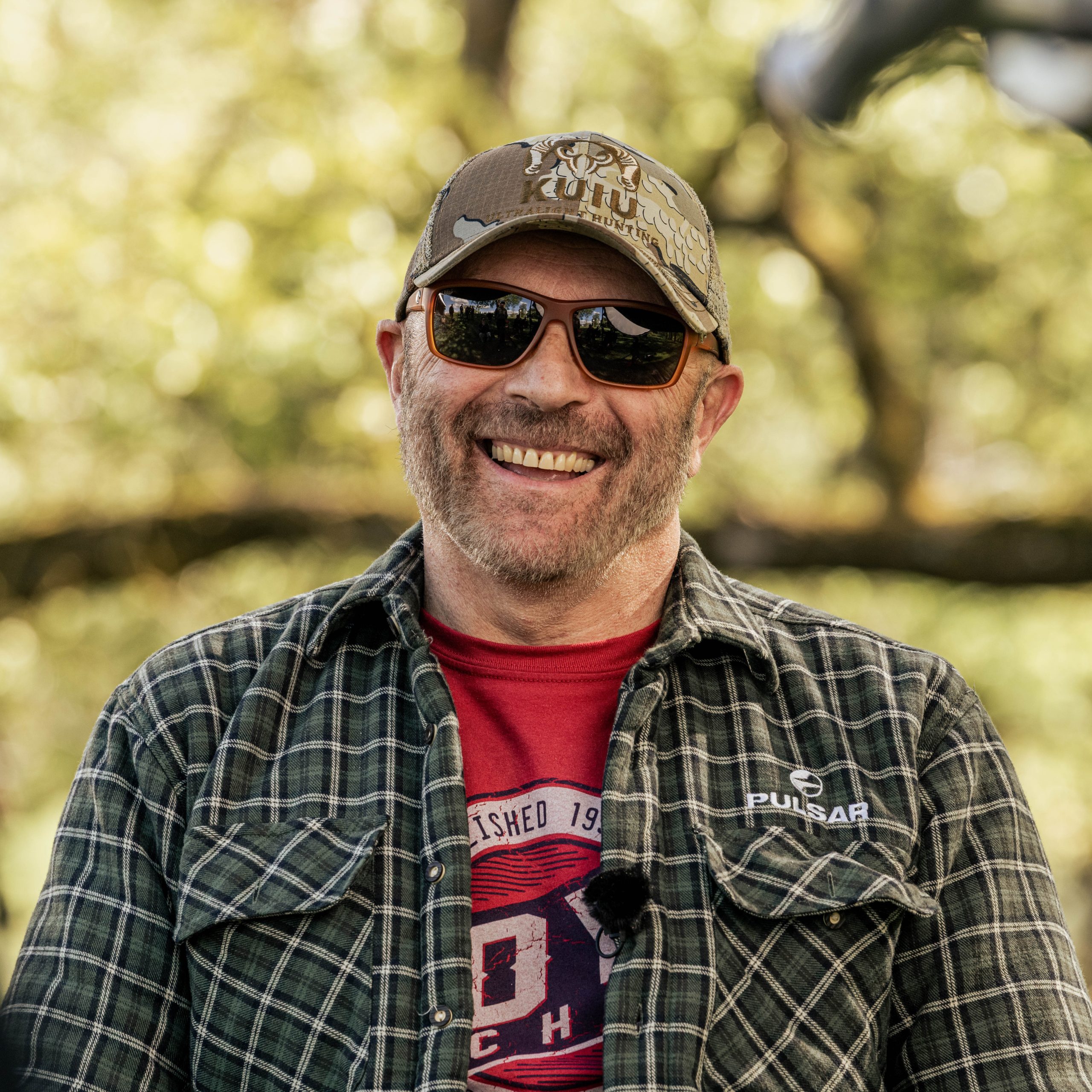
Expert Contributor:
Riccardo Tamburini
Riccardo Tamburini is a lifelong outdoorsman, hunter, fisherman, and professional wildlife photographer and filmmaker.
With over 35 years of experience across plains and mountains in Italy and abroad, he combines field expertise with a mechanical engineering background to explain the technology behind rifles, optics, and digital devices.
Before purchasing any night or thermal vision device, please make sure you adhere to the local legislation and only use it when it is allowed. Our ambassadors come from various countries and travel a lot, which allows them to test different devices. We do not encourage or support the illegal use of our devices in any events. If you wish to learn more about export and sales restriction policy, please visit the following link: Export and Sales Restriction Policy.