
Expert Contributor:
Riccardo Tamburini
Estimated read time: 7 min.
Losing track of wounded game after sunset is frustrating—and often unavoidable without the right tools.
In low light, visual cues like blood trails or broken branches disappear. But thermal devices detect residual body heat, allowing you to follow a clear path even in total darkness. Whether you’re using a handheld monocular or a riflescope, thermal tech reveals what the naked eye can’t.
With the right approach—proper settings, scanning technique, and situational awareness—you can dramatically improve recovery success. Thermal imaging turns guesswork into precision.
In this guide, we’ll show you how to track wounded game at night using a thermal device, step by step. From gear setup to field strategy, you’ll learn how to make every search count.
Quick answer
Tracking wounded game after dark is one of the most difficult—and emotional—parts of any hunt. If the animal disappears from view after the shot, recovery isn’t guaranteed. Once the sun sets, the challenge multiplies.
Thermal devices dramatically improve your chances by:
- Revealing body heat in total darkness—even through brush or tall grass
- Making downed animals stand out from their surroundings
- Showing residual heat signatures where animals paused or bedded
- Allowing discreet tracking without bright lights that could spook nearby game
To track effectively at night:
- Mark the shot and last seen direction
- Wait 30–60 minutes before tracking
- Use high-contrast palettes (White Hot / Black Hot)
- Follow natural paths; look for heat spots on the ground
- Don’t rely solely on thermal—combine it with traditional blood tracking
- Manage batteries and scan slowly
- Check local laws—thermals are typically legal for recovery, not always for shooting
While blood trails cool quickly, thermals help you detect other heat cues that traditional optics miss. Used correctly, a thermal device can make or break your hunt—especially when daylight runs out.

Why thermal devices are effective for tracking wounded game
Tracking wounded game becomes significantly harder once the sun goes down. Flashlights and visual cues quickly lose effectiveness in darkness, especially in dense or uneven terrain. This is where thermal devices offer a distinct advantage.
Thermal imaging detects heat signatures rather than light. This allows hunters to see warm-bodied animals clearly against cooler surroundings, even in total darkness or thick brush. A downed animal emits residual body heat for some time, making it stand out through vegetation, over hills, or across open fields—conditions where visual tracking would otherwise fail.
Traditional night tracking methods often rely on flashlights, some equipped with filters to make blood more visible. These tools help to some extent, but they keep your focus on the ground. During daytime tracking, best practices recommend scanning ahead often to avoid pushing a still-alive animal further into cover. Thermal devices make it possible to apply that same proactive strategy at night by letting you detect animals at a distance without relying on blood trails.
We’ll get into more details soon, but here’s a list of tips to begin with—brought to you by Riccardo Tamburini, a seasoned hunter who has lots of experience using thermal imaging.
Many people think that hunting in the dark is easy. But only because they’ve never done it. These are the tips I suggest following:
- If you are a beginner, please don’t shoot over than 100 meters in the night.
- Remember that rushing doesn’t help!
- Watch the shooting video using the Stream Vision 2 app and try to understand the animal way out and if it was hit seriously.
- Wait around 15-30 minutes. After 30 min, the blood track in the woods could be cooled, compromising the track.
- Generally speaking, don’t spend much time trying to find the blood track near the POI in an open field: it’s not easy to detect because the environment is flat and without landmarks.
- Use a device with a very low base magnification because it will help you to move better in the forest.
- Thermal device can also get the blood if it’s abundant. If not, use an LED torch.
- Be careful because a big, wounded boar can be very dangerous!
Compared to night vision, thermals also deliver better performance in poor visibility. Night vision depends on ambient light or IR illumination, which falters in fog, rain, or thick brush. Thermal devices function independently of lighting conditions and still identify heat sources through smoke, mist, or cover. While thermal images may lack detail, they excel at revealing movement and body heat — crucial advantages when every second counts during a nighttime recovery.
Read more: Thermal vs night vision for hunting

How to track wounded game at night step by step
Tracking wounded game after dark requires a different approach than during daylight. Visibility drops, blood trails fade fast, and mistakes can cost you the recovery. Below is a clear, step-by-step process optimized for night tracking—with a focus on how to effectively use thermal devices to your advantage.
-
Mark the shot and the escape path
Effective tracking begins the moment before the shot. As the animal is about to be shot, note its exact location. After the shot, immediately observe where it runs and disappears. Don’t just watch it run—mentally mark at least two reference points: where it was standing at the shot and where you last saw it. These landmarks will be your starting and directional guides.
-
Wait before tracking
After the shot, wait at least 30 minutes—preferably an hour—before starting your recovery. This pause reduces the risk of pushing a wounded animal deeper into cover. While thermal devices are excellent tools, they cannot detect heat in fresh blood spatter after just a few minutes, so rushing offers no advantage.
-
Start at the point of impact
Begin your search at the exact spot where the animal was standing during the shot. Look for initial signs like hair, blood, or disturbed ground using a flashlight. Optical tracking is still valuable here, especially in identifying the beginning of the blood trail.
-
Follow the animal’s path of travel
If you can’t find blood immediately, follow the direction the animal fled, using the landmarks you observed earlier. Animals may not bleed immediately, depending on the shot placement. Move slowly and deliberately. At night, switch to your thermal device—scanning ahead for heat signatures rather than relying on a flashlight. This helps prevent startling the animal and allows you to track from a safer distance.
-
Think like the animal
Wounded game usually takes the path of least resistance. Look for trails, natural funnels, or open lanes in the direction they were headed. If you’re not seeing a clear trail, use logic based on terrain and behavior rather than randomly scanning. This increases your odds of realigning with the blood trail or finding a heat signature.
-
Use thermals to detect rest stops and residual heat
If the animal stopped to rest or bedded down, your thermal device may pick up residual body heat left on the ground—especially if you arrive within a reasonable timeframe. These heat imprints fade quickly but can be visible for several minutes after the animal moves on. Continue scanning forward, not just down, and avoid tunnel vision.
-
Configure your thermal for maximum contrast
Before heading out, ensure your thermal device is set to a high-contrast color palette such as “White hot” or “Black hot.” These modes are best for initial detection and quickly distinguishing warm objects against a cool background. Proper configuration can make the difference between spotting your target or missing it entirely.
Finally, don’t forget to take weather into account. Riccardo explains why:
Hunting in the night during the warm season can be nice and easy. Temperature is good and it invites us to spend more time in the wild. But high temperature is the first enemy when a wounded animal doesn’t drop near the point of impact.
After one hour from the death, the body temperature increases, then it starts to slowly drop. It’s not possible to wait the following day to recover the carcass using a dog: the meat will be unusable because of the bacteria proliferation. This is why the blood tracking with a thermal device is very important hunting in the summer.
Choosing the right thermal device for game recovery
When selecting a thermal device for tracking wounded game, your main decision will be between a thermal monocular and thermal binoculars. While both are viable, the right choice depends on how you plan to use it in the field.
Thermal monoculars are the more popular option for recovery tracking. They’re lighter, more compact, and easier to use one-handed—ideal for mobile hunters covering uneven terrain. Monoculars are also typically more affordable, making them a smart entry point if you’re buying a thermal device specifically for recovery work. If you’re exploring options, check out our guide to the best Pulsar thermal monoculars for hunting.
Thermal binoculars, on the other hand, offer better depth perception and are more comfortable for extended viewing. If you already own a pair or plan to use thermals for glassing or longer observation sessions, binoculars can reduce eye fatigue, especially during long nights in the field. For top picks and use cases, see our breakdown of the best thermal binoculars for hunting.
Multispectral optics are another option for game recovery in some situations. They let you see heat and the real world at the same time, so you can track an animal while also seeing the ground, brush, and obstacles around you. This works 24/7 — during the day, at dusk, at night, and into the early morning — without needing to switch devices.
Once you’ve chosen a device type, it’s critical to understand three core specs that affect thermal performance:
- Detection range: This is how far the device can detect a heat signature. For game recovery, a range of 800 to 1,000 yards is more than sufficient. Higher ranges add cost but little tracking benefit in dense terrain.
- Sensor resolution: A higher resolution (like 640×480) provides a clearer, more detailed image, helping you distinguish between animals and background heat sources. Lower resolution (320×240) may struggle in complex environments.
- Refresh rate: Measured in Hz, this determines how smoothly the image updates as you scan. Look for devices with 50–60 Hz for real-time motion clarity. Lower rates (30 Hz) can cause lag, making it harder to spot moving targets.
If you’re shopping specifically for game recovery, prioritize portability, clarity, and ease of scanning over long-range or tactical-grade specs. A well-configured monocular with solid resolution and refresh rate will outperform more expensive gear used in the wrong context.
Speaking of configurations, here’re the settings our expert Riccardo recommends—together with some insight into the practical performance of a thermal device for wounded game tracking:
I made an experiment with my Telos XL50: I left a boar carcass in the woods for 24 hours trying to understand if it was detectable by a thermal unit. I got a picture every 4 or 5 hours, comparing them one by one. After 24 hours, the carcass was still detectable, but it started to blend with the background.
Obviously, it depends on the season: during summer, the temperature drop of the body is slower than winter. And it depends also on the settings you use during tracking: In my opinion, a device with a very low sNETD is better because the difference of detected temperature will be smaller.
I prefer to use a very low contrast (around 2-4/20) and mid brightness (8/20) because it reduces the false targets like tree stumps, rocks or any other things that could has absorb heat during the day. Also, the color palette is important: the White hot, or the Sepia are the best because with those settings a warm carcass will be like a light bulb in the dark.
Read more: Thermal binoculars vs monoculars
Read more: How to choose thermal monocular for hunting
Read more: How to choose thermal binocular for hunting

Pulsar thermal devices for tracking wounded game
With dozens of thermal optics on the market, selecting the right one for recovery tracking can be overwhelming. Below are two standout options from Pulsar, each tailored to different tracking styles—whether you prioritize depth perception or portability.
| Device | Device Type | Key Strengths | Best Use Case |
|---|---|---|---|
| Merger LRF XP35 | Thermal binoculars | Wide field of view, precise long-range detection, built-in laser rangefinder | Ideal for tracking wounded game in open terrain or forested areas where depth perception and exact range estimation are important |
| Axion XQ19 Compact | Thermal monocular | Compact, lightweight, fast deployment, versatile mounting options | Best for mobile hunters needing a compact device for quick scanning and rapid recovery |
For a deeper look into real-world performance and use cases:
Whether you’re glassing from a distance or tracking through brush, Pulsar offers reliable thermal tools that elevate your recovery effectiveness in low-light conditions.
Compare devices: Use our tool to find and compare Pulsar thermal optics
Ethical and legal considerations in night tracking
Using a thermal device to recover wounded or expired game is not only ethical—it’s responsible. Recovery ensures that the animal is not wasted and prevents unnecessary suffering. If a thermal device improves your chances of finding a downed animal, its use supports the core principles of fair chase and ethical hunting. The key distinction is intent: using thermal technology to recover an animal—not to continue hunting beyond legal hours.
Legal considerations in the U.S.
Laws surrounding thermal device use vary significantly by state. In most U.S. states, it’s legal to use thermal imaging to recover game—but not to pursue or finish off wounded animals after legal shooting hours. Some jurisdictions strictly prohibit carrying a rifle while using thermals at night, even if your intent is recovery. To avoid issues:
- Check your state’s hunting regulations on thermal optics
- Leave your rifle behind or carry only a legal sidearm (where allowed)
- Be visibly geared for recovery, not active hunting
Legal considerations in Europe
In many European countries, nighttime use of thermal devices is tightly regulated. While some jurisdictions permit thermal optics for tracking or recovery, suspicion of illegal use can lead to penalties. As a best practice:
- Do not carry a rifle when using thermals at night
- Make your recovery intent clear by carrying only tracking tools
- Always verify local laws—restrictions vary widely across EU nations
Using thermal devices for tracking must always stay within legal and ethical bounds. If there’s any doubt, prioritize transparency and err on the side of caution to preserve both your hunt and your license.
Riccardo also advises always putting your safety first:
If your local laws prohibit bringing the rifle during tracking the animal, probably it would be better to avoid or give up and wait for the following day because it could be very dangerous to follow a wounded, big and wild animal in the dark.
I lived a situation like that with a big boar tusker: hit on the lungs, he ran away into the forest. Together with a friend, I tried looking for it, but we weren’t able to find it. We called a dog handler the following day, and he found the wounded boar, hidden in a bramble, few meters from the path we had followed the night before. It charged the dog two times and only a shot well placed has put the word “end” to this story.

Common mistakes when using thermal devices for tracking
Thermal devices are powerful tools for night tracking—but they’re not foolproof. Many hunters make avoidable mistakes that reduce their effectiveness in the field. Here are the most common pitfalls and how to avoid them.
Over-reliance on devices without scouting
Thermal devices are great, but they can not find the animal for you. You need to make sure you know the area where animals may run to and how they behave. Tracking is a skill that takes years to master; there are no shortcuts to it.
Misinterpreting heat signatures
Just because you are using a thermal device to track a wounded animal does not mean that the first heat signature you see is going to be your animal. You will likely be tracking just as the sun goes down, and many objects outdoors can retain heat for hours after sunset. Before you rush over to a heat source, take some time to study it and ensure it’s what you are looking for.
Poor battery management during tracking
The only thing worse than not using a thermal device to aid tracking at night is using one and having the battery die. If your device accepts external batteries, make sure to bring a backup for when you need it most.
Practical tips to maximize success when tracking at night
Thermal optics can significantly improve your tracking success at night—if used correctly. Below are focused, actionable tips to help you get the most out of your gear in real-world conditions.
-
Dial in your thermal settings by environment
- Open terrain: Use a White-hot or Black-hot palette with medium brightness and lower gain. This minimizes glare and helps you detect distant heat sources without oversaturation.
- Forested or dense cover: Switch to a high-contrast color palette like Red Hot or Rainbow. Increase sensitivity and contrast to pick up subtle heat variations through foliage or partial concealment.
Correct settings are critical—poor calibration leads to missed signatures or false positives.
-
Use a tripod for stability and accuracy
A stable thermal image allows for slow, methodical scanning. If your device supports tripod mounting, use it—especially during prolonged tracking sessions. A tripod:
- Reduces motion blur
- Helps you scan wider areas slowly without fatigue
- Preserves battery by eliminating over-scanning
Avoid rushing—thermal tracking is about patience, not speed.
-
Don’t rely solely on thermal—pair it with visual tracking
Thermal devices won’t detect blood trails. Always combine thermal use with traditional tracking skills:
- Mark visual blood signs early with flagging tape or markers
- Use thermal to scan ahead for the animal while continuing to inspect the ground manually
- If the blood trail disappears, use terrain logic and thermals together to re-acquire the trail
Thermals enhance traditional tracking—they don’t replace it.
Finally, take a moment to calm your mind. As our expert Riccardo shares, stress and tension can do quite some harm:
Finding a wounded animal in the dark is not easy because the hunter’s state of mind is not balanced; they are always worried to find the carcass as soon as possible. Rushing brings mistakes, of course.
If the hunter is not calm, they could approach the situation in the worse way: moving with tripod in a dense wood could be not so easy and the hunter’s hands can start shacking. Pulsar introduced a very helpful feature in its thermal handheld units: the image stabilization. It works great and it can help to have a better view, in a scenario rich of details, like a forest.
Final thoughts on nighttime game recovery
Recovering wounded animals at night is a difficult task—but with the right techniques and thermal gear, it’s completely achievable. From marking the shot and understanding terrain, to optimizing your thermal settings and tracking patiently, each step matters. A thermal device won’t replace good tracking skills, but it can significantly increase your chances of success in low-visibility conditions.
For hunters who need a fast, portable solution, a thermal monocular offers the best mobility and ease of use. The Pulsar Axion XQ19 Compact stands out as a lightweight, budget-friendly option designed for quick scanning on the move.
If you prefer binoculars for improved depth perception and longer observation, the Pulsar Merger LRF XP35 delivers premium performance. It combines a wide field of view with high-end thermal specs and a built-in laser rangefinder—ideal for open terrain or complex recoveries.
Both devices bring serious advantages to nighttime recovery. The right choice depends on your style, terrain, and tracking strategy.
For those who want one device that can be used both during the day and at night, multispectral binoculars like the Pulsar Symbion offer another option. By combining thermal detection with a digital viewing channel, Symbion allows hunters to track heat while also seeing terrain and surroundings, which can be especially helpful when recoveries begin in daylight and continue into darkness.
All of these tools bring real advantages to game recovery. The right choice depends on your terrain, tracking style, and whether you prefer a dedicated thermal solution or a single device that covers both day and night conditions.
Find a local dealer: Locate authorized Pulsar retailers near you

FAQ
Can you track a wounded deer at night with a thermal device?
It is generally legal to track wounded deer at night with a thermal device if you do not use the thermal device to aid in follow-up shots or to take other game. Although laws vary by state and country, and should be followed accordingly.
What is better for tracking game — thermal monocular or binoculars?
Thermal monoculars are better for mobile hunter tracking game at night, who want to be able to scan quickly. Thermal binoculars are ideal for hunters who want to see more detail while tracking at night or prefer a more comfortable experience.
How far can a thermal device detect a wounded animal?
Most high-quality thermal devices can detect heat signatures at distances exceeding 800 yards. However, as a rule of thumb, the distance you would be able to discern if it is your wounded animal or not would be about half the device’s detection specification.
Are thermal devices legal for tracking wounded game?
It is typically legal to track wounded deer at night with a thermal device as long as you are not using the thermal device to aid in follow-up shots or to take other game. Laws vary across different states and countries and should be adhered to accordingly.
What Pulsar thermal is best for night recovery hunts?
If you prefer a thermal monocular, the Axion XQ19 Compact is a great choice for night recoveries. Hunters who prefer the comfort and performance boost of thermal binoculars would do well with the Merger LRF XP35 for a tracking mission.
Read further:
About the experts

Co-Author:
Patrick Long
Patrick Long is a lifelong hunter, writer, and outdoorsman who splits his time between chasing bears, bucks, and birds. He is the founder of the Omega Outdoors blog and the Editor-in-Chief of Crosshair Content Co. (C3), where he leads a team dedicated to producing expert-driven outdoor and firearms content.
Expert Contributor:
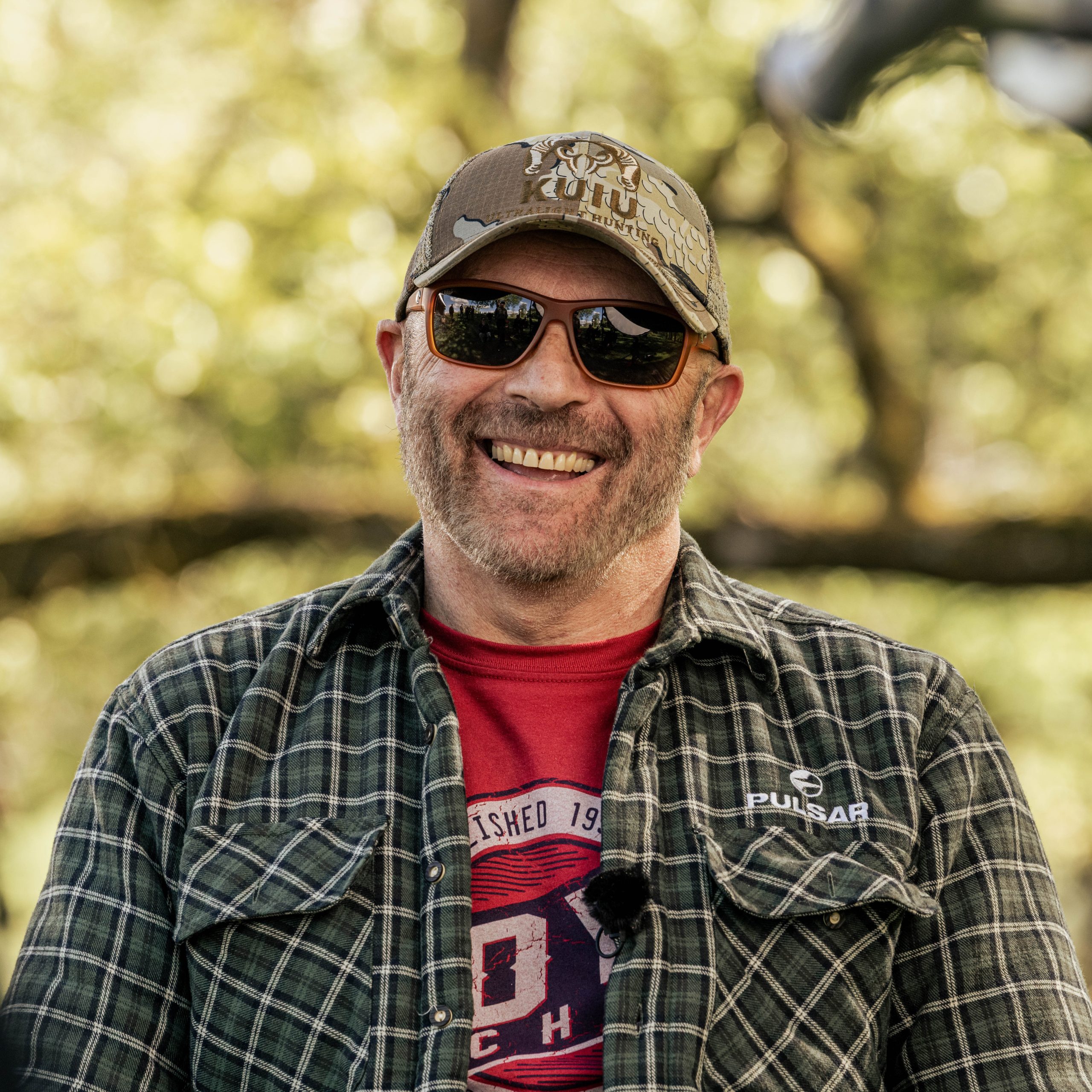
Riccardo Tamburini
Riccardo Tamburini is a lifelong outdoorsman, hunter, fisherman, and professional wildlife photographer and filmmaker.
With over 35 years of experience across plains and mountains in Italy and abroad, he combines field expertise with a mechanical engineering background to explain the technology behind rifles, optics, and digital devices.
Before purchasing any night or thermal vision device, please make sure you adhere to the local legislation and only use it when it is allowed. Our ambassadors come from various countries and travel a lot, which allows them to test different devices. We do not encourage or support the illegal use of our devices in any events. If you wish to learn more about export and sales restriction policy, please visit the following link: Export and Sales Restriction Policy.